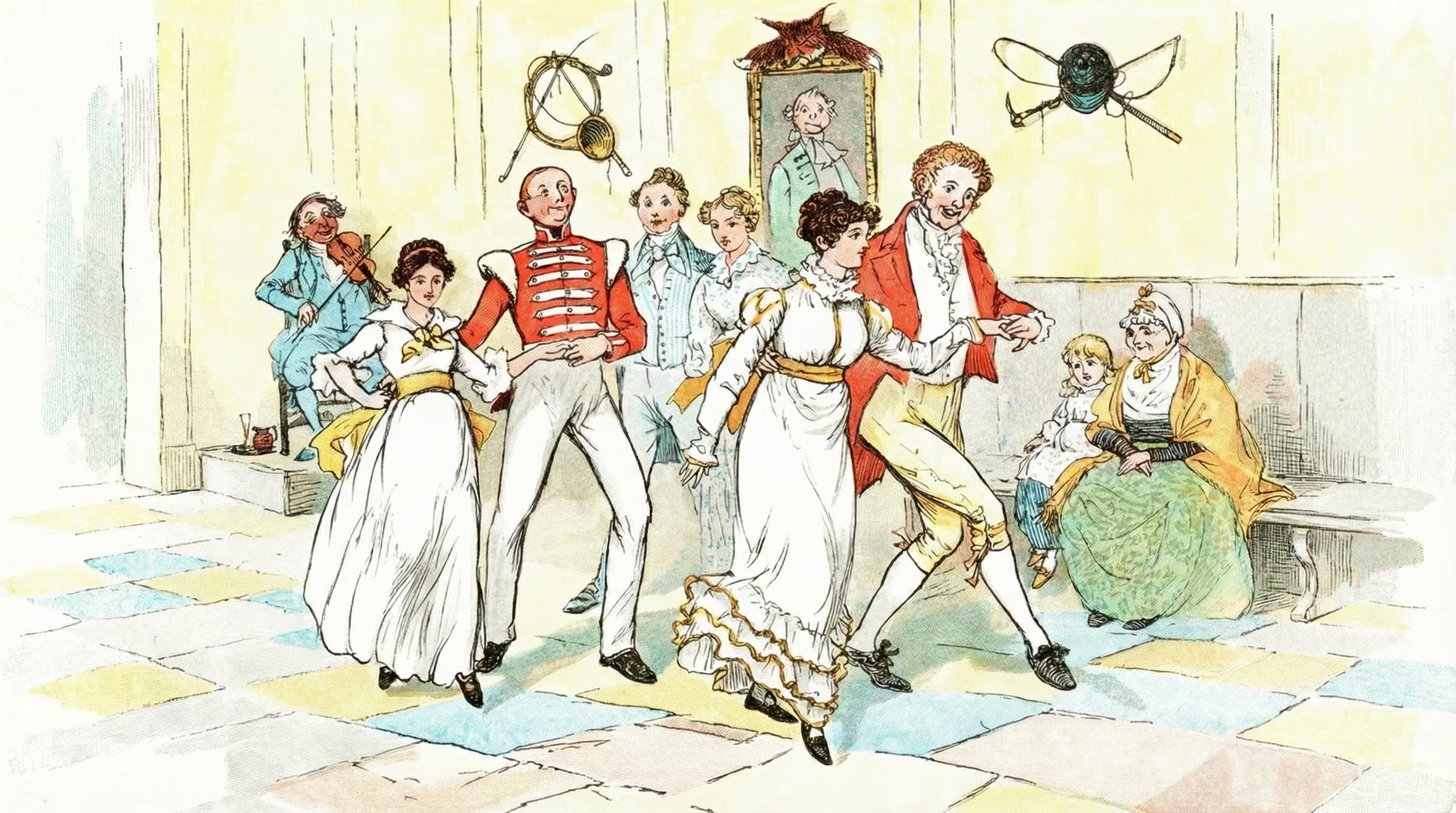
The Regency periodor the period of the Regencyis a phase of English history that goes from 1811 to 1820, years in which King George III was declared unfit to lead the country due to his mental illness and power was assumed by his son, George Augustus Frederick, Prince of Wales. Back in fashion thanks to the success of the Netflix series Bridgertonwas a short but very intense period, in which England and the whole of Europe were transformed, also following the end of the Napoleonic wars. In recent years, the English company it was organized in a strict manner, with great social disparities and an aristocracy extremely tied to formalism.
In this context they developed fashions inspired by classical and Egyptian antiquity; the system of marriages of convenience; Attention to the Gothic spread and science fiction was born, which led to the writing of Frankenstein (1818); there were social revolts leading to conspiracies such as the Cato Street conspiracy.
- 1The marriage market and debut in society during the “London Season”
- 2Social riots and conspiracies, such as the Cato Street conspiracy
- 31816, the year without a summer that inspired novels like Frankenstein
- 4Egyptomania and the macabre passion for mummies
- 5The influence of French fashion and the “Empire” style
The marriage market and debut in society during the “London Season”
In the time of year between November and June in London the so-called “Season”, a custom established in 1780 and ended with the Second World War: these were the months of parties and balls, social occasions for aristocratic families to meet and dedicate themselves to business, including marriage agreements. At the end of the Season, the families went to their summer homes in the countryside. The balls, which were held in London villas, were in fact the perfect time to do debut in society the younger girls, to introduce from year to year the girls who had yet to get married.
Marriage, in the Regency period, was in fact entirely a project that had to be planned: we cannot speak of “arranged” marriages, as in other cultures, but it is more correct to consider that they were real “marriages of convenienceIn fact, it was necessary to marry within the same social class and thus guarantee the financial security of both parties: according to the rule of turndown – legal doctrine recognized by Common Law – at the time of marriage the woman was “covered” by the name and financial status of her husband, who absorbed her dowry. This, consequently, could have been a blessing – or an opportunity to settle unfavorable economic conditions – for both sides.
Social riots and conspiracies, such as the Cato Street conspiracy
Precisely because the social gap and class division was very clear, English society in the Regency period was anything but peaceful. The London of that period was not only salons, aristocracy, weddings and balls, but also strong social problems and skyrocketing crime: one of the most striking episodes is the conspiracy of Cato Streeta plot elaborated by a group of reactionaries in 1820, immediately after the death of King George III, to kill all the ministers of the United Kingdom, including the then prime minister Robert Jenkinson. Cato Street is the address of the apartment that the conspirators rented to develop their plan: here they were then arrested – only to be tried and sentenced to death or deported – thanks to the collaboration of an infiltrator who reported the plan to the police.
Today the Cato Street conspiracy is remembered as symbol of profound malaise that permeated the glittering London society of those years. The failure and arrest of the conspirators, driven by hunger, hardship and democratic and secular principles, put an end to English counter-revolutionary ideas for a few decades. At the end of the century London became very dangerous again due to real wars between criminal gangs, including the famous Forty Elephants.
1816, the year without a summer that inspired novels like Frankenstein
In 1816, in the midst of the Regency period, the eruption of the Tambora volcano in Indonesia caused a climate change of great impact throughout the world, so much so that that period went down in history as “the year without a summer”.
The problems caused by the eruption were enormous: the sun was obscured by dust, temperatures dropped considerably, famines occurred caused by poor crops and unhealthy air.
Recently, a study conducted by the University of Illinois linked the year without summer to the development of a very specific gothic imaginary which gave rise, among others, to exceptional novels such as Frankenstein by Mary Shelley, in which gothic, horror and the first intuitions of science fiction coexist.
In fact, it is hypothesized that Mary Shelley – although not directly mentioning the eruption – had the opportunity to reflect on the fragility of human life in the face of natural disasters. Added to this fear are the deaths and wars of twenty years of Napoleonic campaigns. The reflection on the impossibility of man to escape his destiny therefore becomes omnipresent.
Egyptomania and the macabre passion for mummies
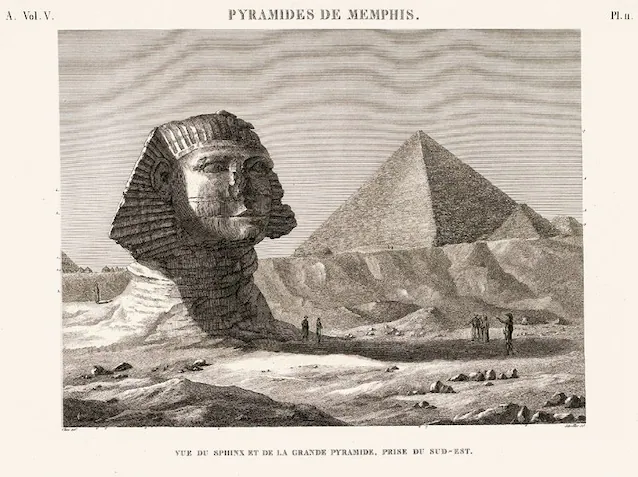
During the Regency period, an immoderate and sometimes morbid attraction to the world ofAncient Egypt: Napoleon’s Egyptian expeditions, which took place between 1798 and 1801, played a fundamental role. This territory, about which relatively little was still known, was seen as exotic and mysterious: in 1809, after the expeditions, the monumental work was published in France Description of Egyptcurated by over 160 archaeologists, which also had extraordinary success in England. The spread of this interest caused a real “Egyptomania”: aristocrats wanted to own objects and jewels, urban architecture was enriched with obelisks and sphinxes and the concept of “immortality” and “journeys after death” became almost an obsession.
Precisely for this reason, an excessive attention was born towards mummies: not only were they imported into Europe in large quantities, but they were also the main attraction of festivals – the so-called “mummy unwrapping parties” – Where the mummy was “unrolled” live, before the eyes of curious and scholars.
The influence of French fashion and the “Empire” style
Attention to archaeological discoveries brought back widespread interest in the classical worldwhich was reflected in both the art and fashion of the Regency period. Not only architecture with columns and obelisks, but also clothes – especially women’s – inspired by the clothing of the Greek and Roman periods.
In the years of the Regency, in fact, women dressed in dresses still today called “Empire style”, tight under the breasts and which then fell long and softly along the hips. It is a silhouette of clothes that pays attention to proportions, which highlights and enhances the female form and which, for this very reason, was considered rather provocative at the time.
The expression “Empire silhouette” (literally “empire line”) made its appearance during the First French Empire, when Josephine Bonaparte, Napoleon’s wife, influenced fashion and aesthetic and artistic tastes in all European courts and salons.
London high society fully embraced this style in the Regency years, also to show off sophisticated fabrics such as silk, muslin and cottonwhich represented high social status and an inclination towards good taste.