Foods that are considered to be on our table today great luxurylike the truffle, the oystersthe lobstersthe steaks of large denomination and the caviaruntil the last century they were instead poor and “second class” foods, sometimes considered suitable only for the working classes and prisoners. This happened because availability was much higher than now and also because cooking, before the advent of haute cuisine, was conceived in a different way. The opposite also happened: foods like sugarThe black pepperthepineapplethe potatoes and the cocoanow very common and generally low priced, upon their arrival in Europe they were considered very precious and unusual, and appeared only on the tables of nobles.
1. The truffle, once considered a second-class mushroom
Until 18th centurythe truffle was a food present only in cuisine of farmers and woodcutterswho collected it in rural areas where it grew spontaneously. Since it did not require any type of cultivation, and did not have particular nutritional elements to supplement the diet, it was considered an additional resource to add to the basic dishes of popular cuisine. The truffle did not have then no economic value: then, with the advent of French haute cuisine and Italian gastronomic schools, between the end of the 19th century and the beginning of the 20th century, it began to attract attention thanks to its intense and decidedly particular aroma. Given the difficulty of finding it, the demand became increasingly greater, to the point of making it a valuable foodwith prices ranging between 2,000 and 10,000 euros per kg.
2. Oysters, once food for the working class
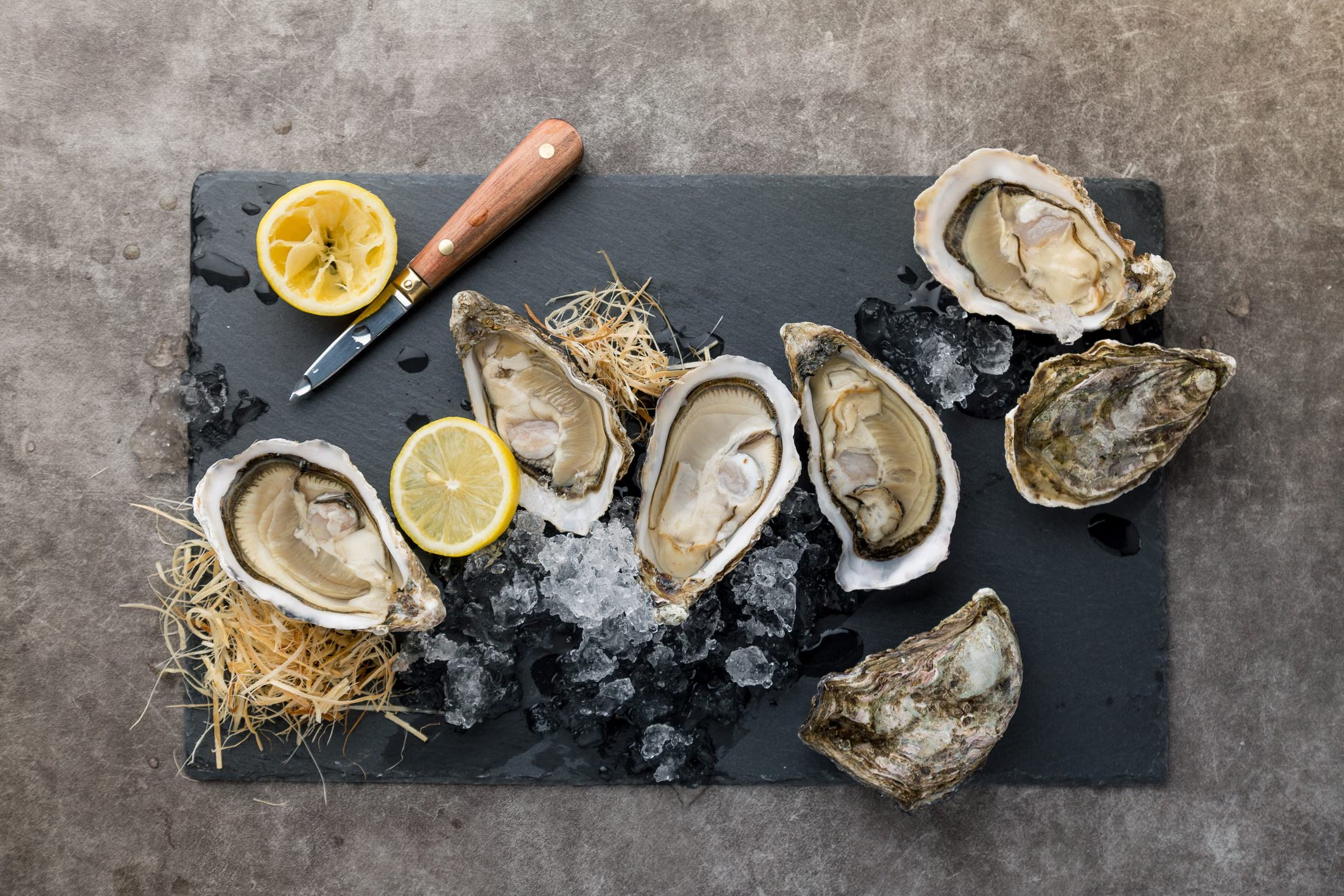
Until 19th century oysters, a food rich in proteins and minerals, were present in large quantities along the European coasts. In large European cities, such as London and Paris – but also in America – were consumed in large quantities given the ease of findingand were sold in the markets and by street vendors: the main consumers were workers belonging to the working classwho had to have a quick and cheap meal during the working day on the construction site. With the advent of intensive fishingclose to 1900, oysters began to become scarce and, just as happened with the truffle, they attracted the interest of high gastronomy, to the point of becoming a food associated with special occasions and luxury.
3. Large-cut beef steaks, once considered a coarse food
There meat it has always been a food associated with wealth and prestige, present much more on the table of the rich than of the common people. Despite this, until the 19th century, on the tables of the aristocracy no large-cut steaks appearedconsidered today instead as a true luxury, but rather elaborate roasts, game seasoned with herbs, rare birds that are difficult to hunt. The classic beef steakhowever satisfying and nutritious, was associated with the animal that was used for work in the fields, and was not taken into consideration. Precisely because cattle were essential for agricultural work, they were also slaughtered at the end of their “career”, and therefore their meat was often hard and stringy: for this very reason, when you ate a steak, it was certainly not refined meat, but coarse, another reason why it was certainly not a favorite food of nobles.
4. Caviar, in the past served in fishermen’s taverns
There history of caviar – food obtained from the processing and salting of sturgeon fish eggs – is similar to that of oysters and truffles: once very abundant in the sturgeon fishing areas, it was served especially in fishermen’s taverns to make you more thirsty, being salty, and therefore encourage customers to consume beer and other drinks. With the advent of intensive fishing and farmingcaviar it became an increasingly rare fooduntil it became so exclusive that it reached astronomical figures: caviar beluga premiumthe highest quality, exceeds 20,000 euros per kg.
5. Lobster, once considered inedible
Between the XVIII and XIX centuries the lobstersespecially on the north-east coasts of the USA and Canada, were so abundant that they washed up on the coasts after storm surges: they were therefore considered a kind of “sea waste” and were then collected and used as animal feed, as fertilizer in pastures and as substandard food to be given to servants, the hungry poor and, in some areas, even to prisoners.
As with other foods, lobster has become a prized food when it started to run low: now it is not exclusive to haute cuisine, but when it appears on the menu it has a rather high price.
6. Sugar was valuable and very expensive
Until Middle Agessugar was an almost unknown food in Europe, then introduced thanks to the Arab trade routes. Era rare and very expensivemore expensive than some spices: its production was very limited and, during the Renaissance, it only appeared on the table of sovereigns and nobles. It was used as a “plus” to embellish and amaze, so much so that they were made in large courts large sugar sculpturessymbol of prestige and abundance. When sugar began to be cultivated in America between the 16th and 19th centuries plantations exploiting African slaves, production became intensive and the price of sugar collapsed.
7. Black pepper, which cost like gold
The history of black pepper is similar to that of sugar: in the Middle Ages it arrived in Europe after crossing the trade routes from Indiathe only place where he grew up. Its price, therefore, was exorbitant, like that of gold and precious stonesso much so that it can also be used as currency And commodity of exchange high priced. When the great maritime powers – Dutch, English, French, Portuguese, Spanish – began to open the routes between Europe and Asia, pepper became less exclusiveuntil it gradually loses its exceptional value.
8. Pineapple, a favorite fruit of aristocrats
THE’pineapple it was introduced to Europe following the arrival of Columbus in the Americas, and was immediately considered an extremely fruit fascinating and curious. Since growing it required a particularly mild climate or even the construction of greenhouses, it was obviously very poor: initially, aristocrats used it to embellish the table, without even eating it. This predilection has contributed to the growth of the pineapple’s fame as symbol of abundance and welcomeuntil it became a for a long time absolutely exclusive foodso much so that it could also be rented for parties and banquets.
9. Potatoes, once regarded with great curiosity and skepticism
Today, potatoes are an absolutely common food, but they were not considered that way when they appeared in Europe after the colonization of South America in the 16th century. The potatoes had a bizarre shape, they were ugly to look at, but at the same time they were extremely nutritiousmuch more than wheat, and also easier to grow, because they are very resistant to the cold. In fact, during the 1700s they were look with skepticismand brought to the table only after careful cooking and processes that embellished them and they made them a exclusive dish.
When you understood the potential of the potatothis tuber was cultivated en masse until it became a symbol of the diet of the poorer class, who began to prefer this food precisely because it was able to reduce hunger even with small quantities.
10. Cocoa, a mysterious and noble food
For the Mayans and the Aztecswho had cultivated cocoa since ancient times, this food had a very high value: used during rituals, the prerogative only of the highest classes, it was truly the “gold” of ancient populations. Beloved for its beneficial properties and the great energy it provided, when it was brought to Europe by the Spanish it arrived as an exclusive and fascinating food. Precisely for this reason, before the advent of the chocolate industry in 1800, cocoa, just like sugar before it, was only found on the table of aristocrats.