With the growth in energy costs and jet fuel prices and with the uncertainty relating to airline flight bookings – so much so that companies, on some routes, are paradoxically lowering prices to encourage people to buy tickets – in addition to general economic uncertainty, the number of people who are considering closer holidays this summer and instead traveling by train is growing, according to a trend that was already growing in 2025.
The European Commission has recently launched the idea of a Passenger Package with the aim of making travel in Europe easier, proposing a single ticket for train travel which speeds up and simplifies the booking of rail services and gives more rights to passengers, with assistance and refunds. Europe has already activated programs such as DiscoverEU in 2026, which provides thousands of free or subsidized passes for train travel throughout Europe to those born between 2007 and 2008, in addition to Interrail Youth Pass discounts for those under 27.
The European Commission and the single train ticket to encourage mobility
The European Commission has just presented a new initiative, the “One journey, one ticket, full rights” package (One trip, one ticket, full rights), a single travel booking and management system managed by different operators, in multiple countries and on different platforms. This system aims to facilitate passengers in booking of rail travel within the European Union, regional, long-distance and cross-border, allowing for a single transaction rather than multiple ones. Passengers would thus be able to search, compare and purchase multiple combined services from different railway operators in a single transaction, by accessing any ticketing platform, whether independent or managed by a national railway company.
According to data in the Eurobarometer shared by the European Commission in 2025, 25% of Europeans interviewed had declared difficulties in booking train tickets with multiple operators, and, for this reason, 43% had not made any reservations. This method could encourage train mobility. “By reducing fragmentation and making borders less visible, we strengthen our internal market and ensure that living in a border region or rural area is not a disadvantage,” said Executive Vice President Raffaele Fitto. European Commissioner for Sustainable Transport and Tourism Apostolos Tzitzikostas added that, according to forecasts, the system could increase the number of passengers on trains and bring economic benefits both to them, who would see a drop in prices, and to businesses, who could fill the carriages more.
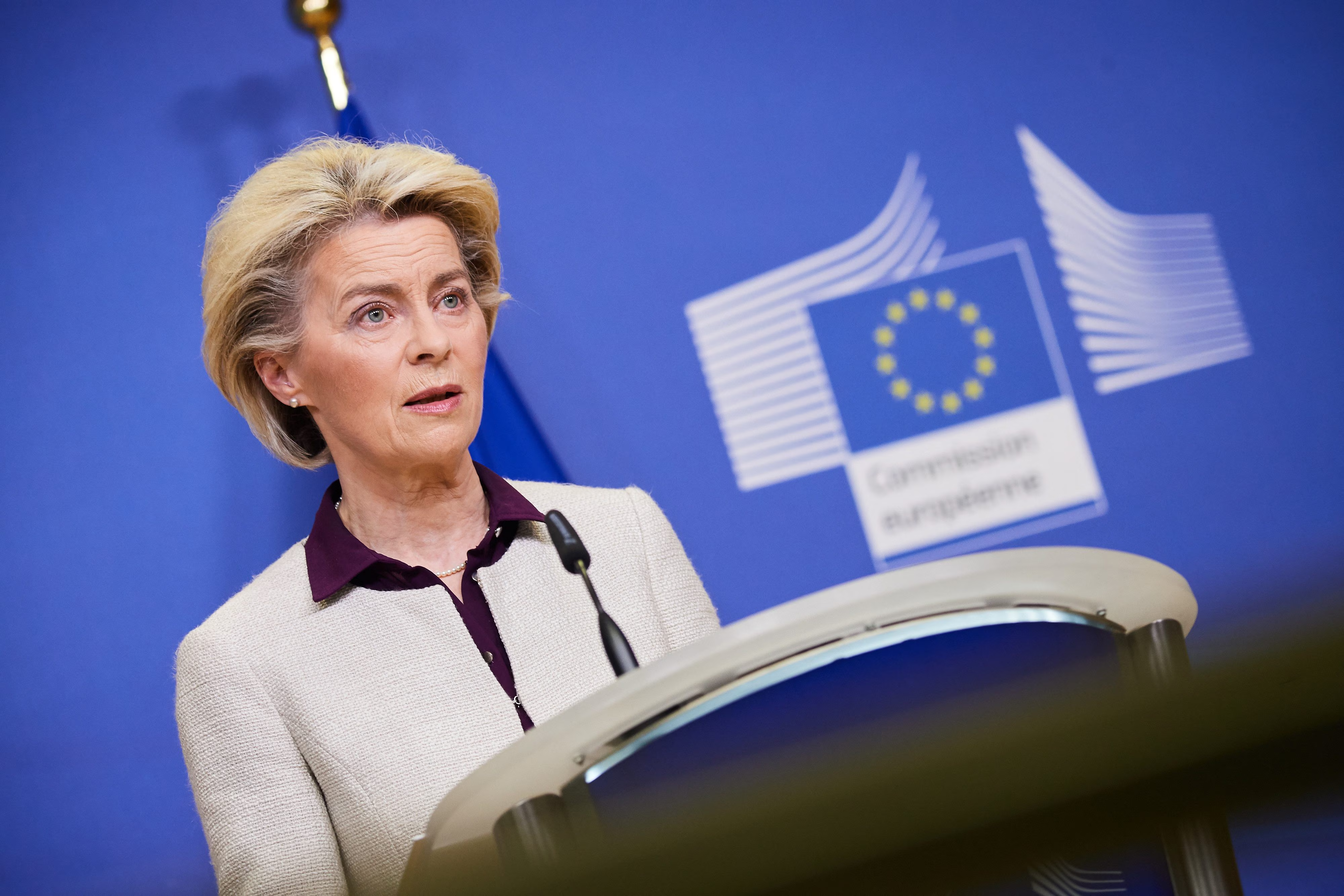
Already in 2024, the President of the European Commission Ursula von der Leyen had already included the proposal in the programmatic lines for her second mandate. Now the presented proposal will be submitted to the European Parliament and the Council of the European Union, as per the legislative process. If it were to become effective, railway operators will have to make their tickets available to online ticketing platforms that wish to sell them, including competitors’ offers in their searches, in total transparency and neutrality and avoiding favoritism towards their own railway company.
Furthermore, this system promises greater protection for passengers in the event of cancellations and missed connections, with assistance, reorganization of trips, refunds and so on.
The new European train routes inaugurated and announced in 2026
New international routes to Europe have been announced for this year, with direct long-distance rail links that could provide alternatives to planes, although not necessarily cheaper: indeed, trains are often more expensive, but more sustainable and less prone to cancellations amid uncertainty surrounding the fuel crisis. While some routes have been suspended due to maintenance work on the lines, others are being created, especially with night options.
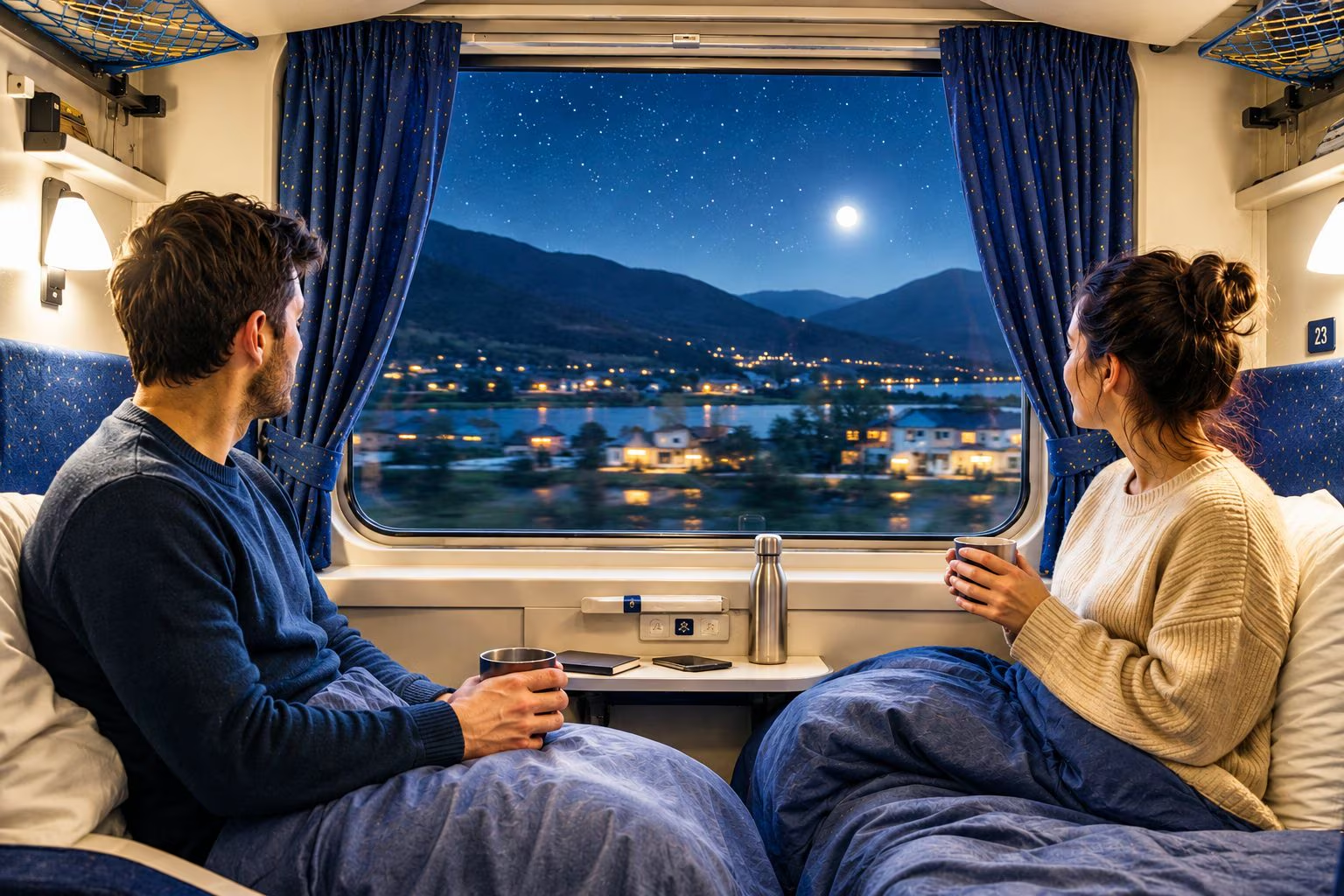
Night trains through special sleepers and carriages allow you to optimize the long distance by sleeping during the journey: since March 2026, with European Sleeper, the Paris-Berlin night line via Brussels has been active again, three times a week, lasting 14 hours. In addition to the already existing route connecting Brussels to Prague via Berlin, the route connecting Brussels and Milan should also be active starting from September 2026, with intermediate stops in Cologne, Zurich and Como. Traveling from Milan to Brussels will take 13 hours, and there will also be Women Only compartments for solo travellers. The European Sleeper will depart from Brussels on Monday, Thursday and Saturday evenings, arriving in Zurich and Milan the following morning, while the return service from Milan will operate on Wednesday, Friday and Sunday nights.
The Nightjet night trains of ÖBB (Austrian railways) in collaboration with Trenitalia connect the cities of Rome, Florence, Bologna, Venice, with Vienna and Munich (and, from these hubs, with Brussels, Amsterdam, Berlin, Prague and other European cities). Within DecemberFurthermore, the ETR/Frecciarossa (among the fastest trains in Europe) promises to connect Monaco and Milan in just 6.5 hours (saving over an hour compared to EuroCity trains) and Munich and Rome in around 8.5 hours.
The Basel-Malmö night section of the Swiss EuroNight was supposed to be activated in April, 1,400 kilometers of tracks through Switzerland, Germany and Denmark, up to southern Sweden, but then the Swiss Federal Assembly cut the funding, and the project was not completed. However, the Zurich-Vienna route will be active, with a night option in 12 hours, or a day option in 8 hours. Berlin and Paris already enjoy a high-speed connection in just 8 hours; Since May, Prague and Copenhagen have also been connected by a direct daily train, via Berlin and Hamburg, on the ComfortJets of the Czech Railways (ČD), latest generation trains with restaurant cars and also a cinema area for children. The duration of the journey, for the first time after 10 years in which there was no direct connection, is 11 hours.
If the single ticket proposal were to pass, managing combined bookings on this type of ticket should also become easier, allowing for easier travel across Europe.