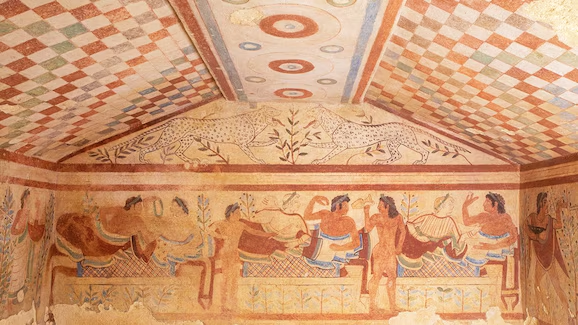
The frescoes of the famous François Tomb of Vulci, a masterpiece of Etruscan art, officially become part of the heritage of the Italian State and will soon be visible to the public. To celebrate the acquisition, which cost 15 million euros, a large exhibition will be inaugurated on June 25th at the National Etruscan Museum of Villa Giulia, in Rome, destined to become its home. Dating between 340 and 320 BC, it is a multi-chambered Etruscan tomb in the Ponte Rotto necropolis and the cycle of frescoes it houses is among the most famous of not only Etruscan but ancient painting, in which an episode from the Iliad is also represented.
What is the François Tomb and why the paintings are important
We are talking about one of the most important masterpieces of Etruscan painting and ancient painting in general. The tomb was discovered on 1 May 1857 by Alessandro François (archaeologist and royal commissioner of war and navy of the Grand Duchy of Tuscany) in the lands of Prince Alessandro Torlonia, in the necropolis of Ponte Rotto a Vulci (in the province of Viterbo). The funerary monument is made up of several rooms dug into the tuff: the tomb belonged to the Saties, one of the most important aristocratic families of Vulci. The rooms are richly decorated with thirty-seven painted panels and two stone stones found in the access corridor.
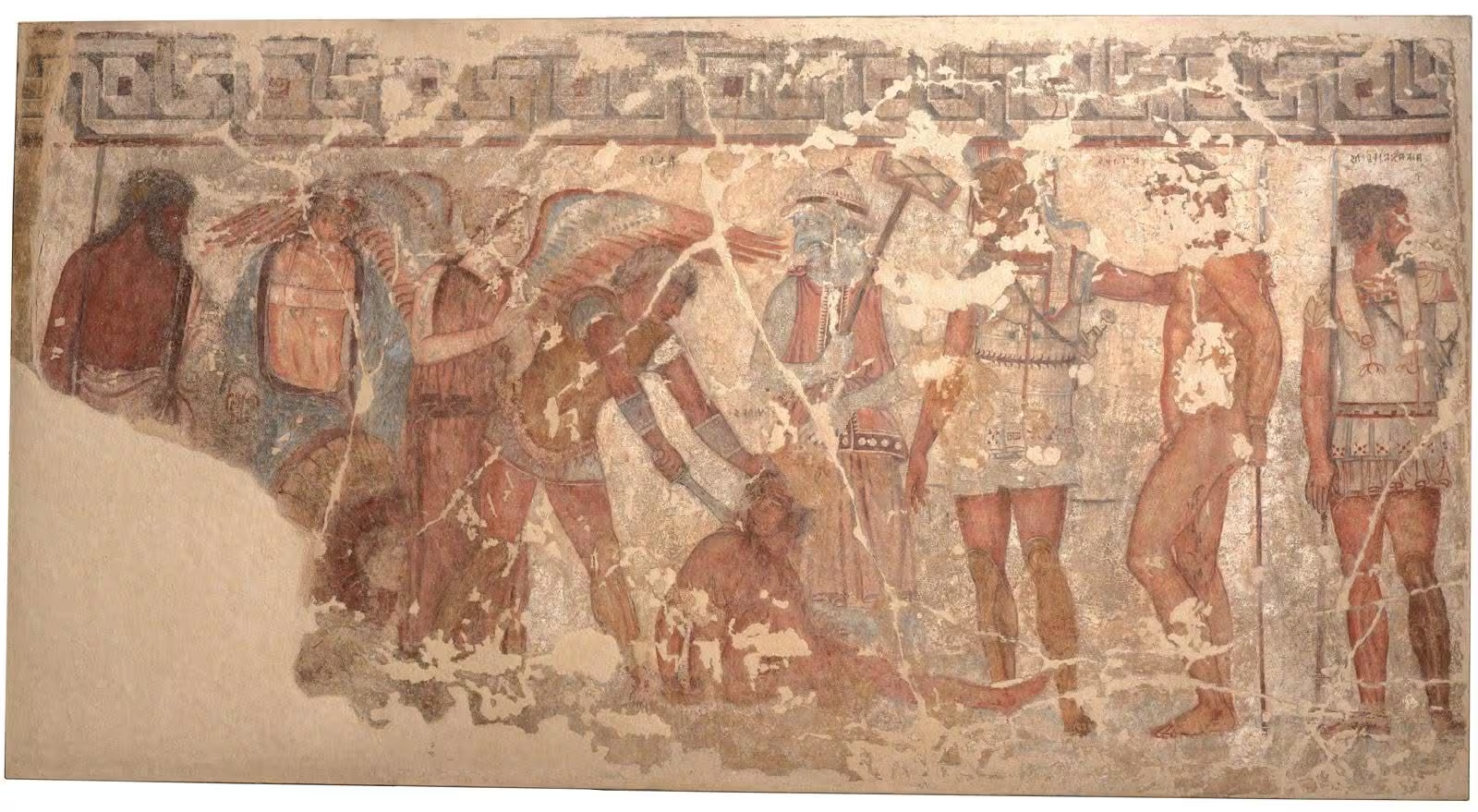
Created between 340 and 320 BC, the frescoes depict scenes inspired by Greek myth (in particular taken from the Trojan cycle and the Theban cycle), local Etruscan traditions and memories and aristocratic characters from Vulci. Thanks to the inscriptions painted next to the characters, it is still possible today to recognize names, faces and episodes of stories and legends.
Detached from the walls in 1863, the frescoes were divided into panels by order of Prince Alessandro Torlonia and transferred to Villa Albani in Rome, in the Torlonia collection, while only a few pictorial fragments remained in the tomb. The tomb can be visited within the Vulci naturalistic and archaeological park. If visitors wanted to see the reconstruction of the Tomb as originally frescoed and life-size, you could go to the Museum of Archaeological Research in Vulci in the former convent of San Francesco a Canino.
The most beautiful frescoes of the Etruscan masterpiece
Among the most famous images of the tomb is the large panel with an episode from the Iliad, that is, the sacrifice of the Trojan prisoners at the tomb of Patroclus. But it’s not all Homeric material: the Greek myth is here reinterpreted according to Etruscan sensitivity, evident from the presence of the demon Charun, a bluish-skinned being armed with a hammer, accompanied by the winged figure of Vanth.
Also represented are the liberation of Caelius Vibenna by his brother Aulus and Macstarna (identified by tradition with the future king of Rome Servius Tullius) and the longest known animalistic frieze of antiquity, animated by griffins, lions, panthers, deer, wild boars and other real and fantastic creatures.
The purchase for 15 million euros and the large exhibition at Villa Giulia in Rome
The operation, made possible thanks to the collaboration of the heirs of the Torlonia, Sforza Cesarini and Gaetani families, owners of the work, represents one of the most important investments made in recent years by the Ministry of Culture in the field of heritage acquisitions: the completion of a process started over a century ago, in 1921, when the State expressed interest in the acquisition.
Thanks to the collaboration of some of the most prestigious Italian and international museum institutions, it will be possible to recompose the original context of the monument in the exhibition opening on 25 June 2026. The Musée du Louvre in Paris, the British Museum in London, the Royal Museum of Art and History in Brussels, the Musée cantonal d’archéologie et d’histoire in Lausanne, the Vatican Museums and the German Archaeological Institute in Rome have in fact granted exceptional loans which they will allow us to bring together finds, documents, historically accurate copies and works from the grave goods or in some way connected to his story.