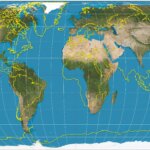
According to 2026 data from World Population Review, the average global literacy rate exceeds 87% among the population over 15 years old: in other words, almost 9 out of 10 people can read and write. The average figure, however, hides enormous differences between different countries: while in many states the rate is close to 100%, in some of the poorest countries in the world less than half of the adult population has basic skills.
At the bottom of the ranking we have South Sudan, Chad and Mali. And in Italy? Literacy is very high, we are at 99.35%, but the situation changes when we measure the ability of adults to concretely use their functional skills. We see it in this article.
Ranking of countries by literacy rate
According to the World Population Review’s 2026 ranking, the average global literacy rate is 87.74%. At the top of the ranking are several countries with a rate of 100%: Uzbekistan, North Korea, Norway, Finland, Luxembourg, Andorra, Greenland, Liechtenstein, Palau and Tuvalu
Russia and San Marino follow (over 99.9%). Large industrialized countries, such as the United States, Japan, Germany and the United Kingdom, have a rate of 99%. This slightly lower percentage, however, can be explained by the fact that in some states the definition of literacy is more stringent.
At the other end of the ranking we find mainly countries in sub-Saharan Africa, as well as some states characterized by poverty, conflicts and difficulties in accessing education. The countries with the lowest literacy rate are:
- South Sudan (27%)
- Chad (31%)
- Mali (35%)
- Niger (36%)
- Yemen (37%)
- Afghanistan (37%)
In all these countries, fewer than 4 in 10 adults have benefited from at least basic literacy.
When interpreting these statistics, however, it is important to take into account that the percentages used by World Population Review to draw up this ranking refer to the most recent data available for each nation: for example, the data for South Sudan is from 2008, while that for Uzbekistan is from 2022.
The theme of functional illiteracy
Knowing how to read and write does not necessarily mean also knowing how to understand a more complex text, compare information, interpret instructions or obtain data from a document. For this reason, alongside traditional statistics on literacy, there are specific surveys that measure adults’ functional literacy skills.
In particular, UNESCO defines
Functional illiteracy: the condition of a person incapable of understanding, evaluating, using and being involved in written texts to actively intervene in society, to achieve their goals and to develop their knowledge and potential.
And Italy?
According to the World Population Review ranking, Italy does not present a significant problem of basic illiteracy compared to international standards: the literacy rate is equal to 99.35% (data updated to 2019), and is quite homogeneous between males (99.48%) and females (99.22%).
However, the situation changes when measuring the ability of adults to concretely use their functional skills. According to the OECD PIAAC 2023 survey, Italy is positioned at the bottom of the rankings of industrialized countries, with approximately 35% of the adult population (16-65 year olds) classified at a low or very low level of functional literacy. At the other extreme, only 5% of Italian adults reach the highest levels of functional literacy, compared to 12% of the OECD average.
The global picture therefore shows two different problems: on the one hand there are still hundreds of millions of people who do not possess basic literacy skills; on the other hand, even in countries where almost everyone can read and write, the challenge remains of developing sufficient functional skills to understand, evaluate and use information.