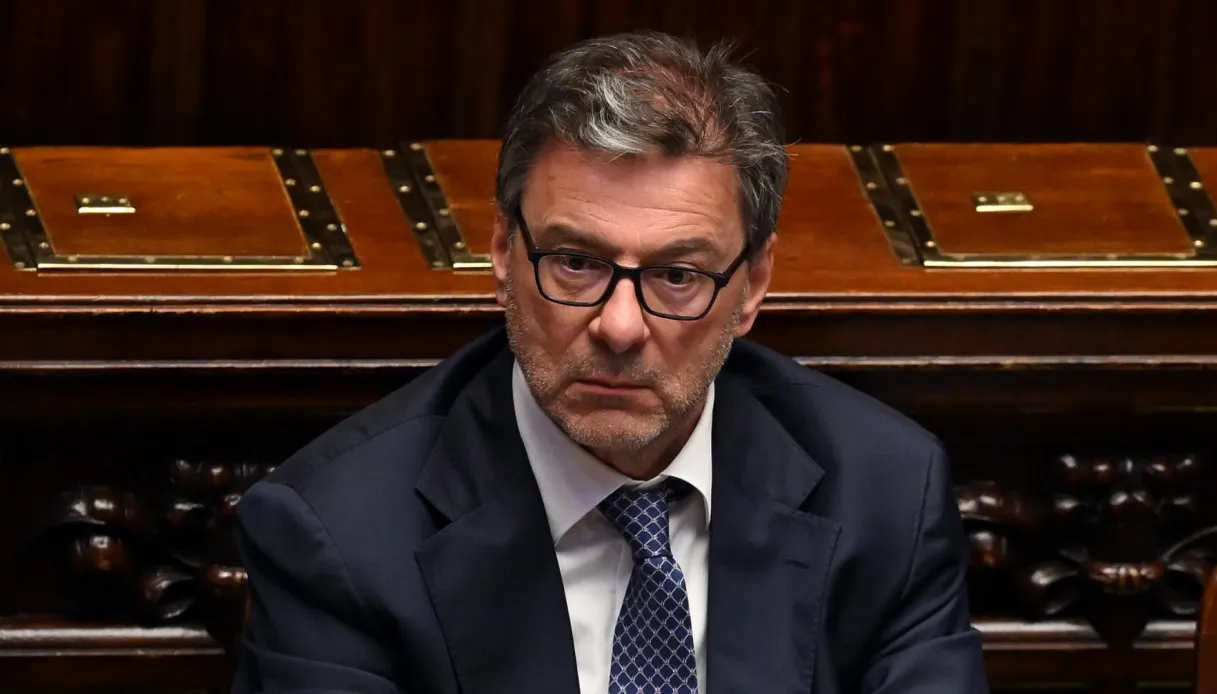
What will the next maneuver focus on? The Minister of Economy Giancarlo Giorgetti, in his speech at the UDC party, spoke of the middle class and young people, of eco-building and high fuel prices. According to Giorgetti, it is in these moments – and the reference is to the rise in interest rates – that “we understand how important it is to keep debt under control and have the trust of markets and savers to place it”.
The minister focuses on debt, flat tax on salary increases for young people and, last but not least, on the urgency of high fuel costs with the hypothesis of a one-off bonus of 100 euros below a certain ISEE threshold. We are looking at the middle class, therefore, but also at energy efficiency. Let’s take stock.
What the new Maneuver will be like
The Minister of Economy Giancarlo Giorgetti spoke via video link at the UDC party, where he spoke about urgencies and planning. In particular Maneuver, which could be the last Budget Law of the Meloni government.
Giorgetti’s attention is focused on reaching out to the social classes and classes who “did not have the attention they deserved”. He proposes making a sort of inventory of measures to avoid duplicating aid for some income classes and excluding others.
Flat tax on salary increases
Giorgetti focused on a measure of the Budget designed for young people, who together with the middle class should be the focus of the new Budget Law. The idea he put on the table for young people is a 5% flat tax on salary increases.
He stated:
I remember the great success of the government’s initiative last year to recognize a 5% flat tax on contractual increases. I think that this success can also be transferred, with the necessary precautions, to any salary increases granted to young people in companies.
Support for the middle class
The League seems to want to aim for a broadening of the audience to avoid what Matteo Salvini defined as “bonus collectors”. We need to put a roof on it, he declared, commenting positively on Giorgetti’s words on the need to control the measures launched so far.
The risk, says Salvini, is that “the entire middle class, families and pensioners remain excluded from the vast majority of public contributions”.
Hence the hypothesis of an intervention on the second bracket: the 33% rate could be extended up to 60 thousand euros, broadening the range of beneficiaries.
Energy efficiency interventions
There is also something else on the table, such as increasing the deduction for energy efficiency measures from 50% to 65%.
Deputy Minister of the Environment Vannia Gava recalls that this fiscal space is possible thanks to the 14 billion budget flexibility linked to the energy transition granted by the EU.
An operation, he adds, which would have a direct effect on saving families on bills and, at the same time, supporting businesses and jobs by creating an economy.