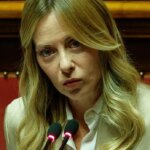
The cost of energy returns to the center of the Government’s economic agenda. Giorgia Meloni has in fact indicated the cost of energy as “the issue that today weighs most heavily on our economy and on the competitiveness of businesses”.
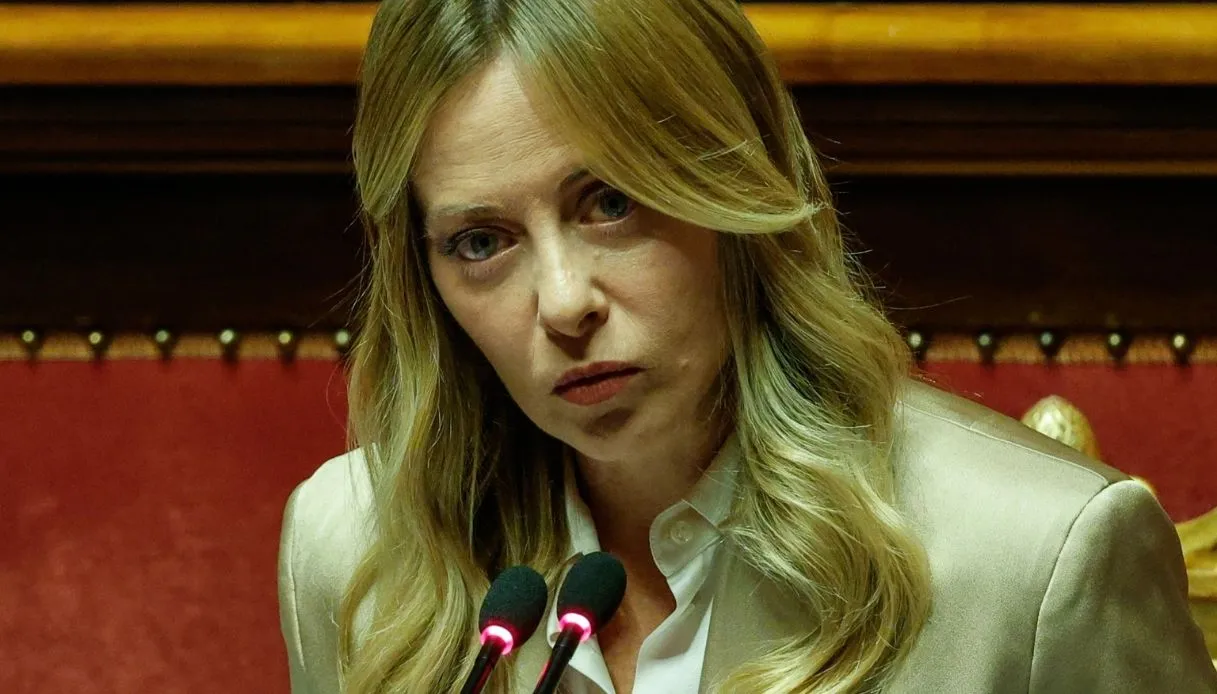
He did so during the communications made to the Senate, in view of the European Council of 15 and 16 October. He explained the need for “a coordinated and rapid response” on a continental scale, because “no one can respond effectively alone”.
Alongside the energy dossier, the Prime Minister touched on two other very delicate economic issues:
- negotiation on the next multiannual budget of the European Union;
- debt repayment calendar linked to the Next Generation Eu (instrument on which the National Recovery and Resilience Plan also depends).
Squeeze on methane: postponement for one year
Speaking of energy rules, the Prime Minister wanted to explicitly claim a goal achieved in the European field:
There are also developments on the EU regulation on methane. (…) The new requirements foreseen for importers would risk further restricting the available supply and creating new pressure on prices. This is why we have asked for a temporary suspension of some obligations.
Meloni claimed the result as an Italian success, recalling how difficult it seemed to advance the proposal. Now, however, the scenarios are different and “the European Commission has decided to postpone the entry into force of the regulation for a year”.
In fact, Brussels has announced its intention to postpone the obligations linked to the imports of gas, oil and coal from 2027 to 2028, so as to “avoid further pressure on security of supply”. The measure, however, is not yet definitive. The proposal will have to be formally approved by the European Parliament and the Member States.
Dear energy, Italy’s requests
There is a clear need to review European rules, explained Meloni. They were in fact designed in a completely different context from the current one, he reiterated. If kept as they are, they risk “exacerbating the effects of the crises we are experiencing”.
On the economic front the speech was very clear:
Our businesses today face increasingly aggressive global competition, and every additional cost that Europe imposes on itself is an advantage that it gives to its competitors.
The request brought to the Council table is therefore twofold:
- common intervention on energy prices;
- regulatory simplification that does not penalize the European production system.
European budget, Italy does not sign
The clearest passage of his speech, however, concerns the European budget, or the next Multiannual Financial Framework:
The Irish presidency and the European institutions have indicated the aim of reaching an agreement by the end of the year. We are not against it in principle. (…) However, we will not sign an unprofitable agreement to respect a date.
In fact, there will be an agreement, but only “when it is right for Italy”. Two very clear boundaries have been drawn. On the one hand, Italy will not accept a budget that reduces the common agricultural policy, fisheries and cohesion. On the other hand, however, the Government has “several reservations” about the new own resources proposed by the Commission. The aim is to “lighten the burden on national budgets as much as possible, without new taxes”.
Pnrr and Next Generation Eu: more gradual reimbursements
On the common debt front, the Prime Minister asked to “also think about a more gradual repayment” of the Next Generation Eu (the instrument that financed the Pnrr). It is essential to prevent reimbursements from “compressing other European policies”, “precisely when it is necessary to invest more”.
In fact, the Italian proposal is to dilute the repayment over time so as not to take away space for national investments. Meloni also said she was open to discussions on the matter, without closing the doors to new forms of common financing, as long as they do not result in an additional burden on Italian accounts.
On the purely internal front, Meloni indicated the extra VAT revenue as a lever to be allocated to families and businesses. A bridging passage that connects his long European speech to the budget law in progress.
In fact, the resources available for measures such as the Irpef cut will also depend on the margins negotiated in Brussels, as well as on the revenue trend. All this is underlined at a crucial stage, with the executive dealing with limited coverage and a macroeconomic framework that remains under observation.