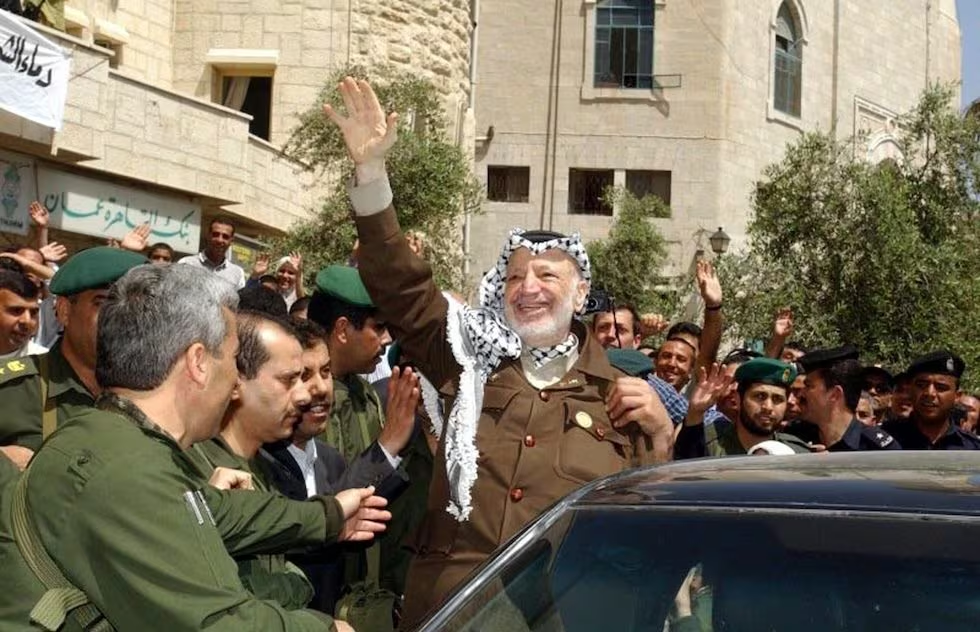
Yasser Arafat, born in 1929 and died in 2004 and also known as Abu Ammar, was a Palestinian politician, founder of the Fatah party, president of the Palestine Liberation Organization and of the Palestinian National Authority. In the 60s and 70s he was the main architect of the “Palestinian rebirth”, that is, the consolidation of national identity and the development of the war against Israel.
For many years, Arafat led the armed struggle for Palestine from his headquarters, located first in Jordan, then in Lebanon and finally in Tunisia. In the 1990s he undertook the peace process with Israel and was awarded the Nobel for this together with two Israeli political leaders. The peace process, however, failed, and in the early 2000s Arafat suffered a siege by Israeli forces at his residence in Ramallah.
Today the memory of Arafat is very popular in Palestine and, despite some controversies, it is also alive in the rest of the world, while it is judged negatively by the majority of Israel’s supporters. His successor is Mahmoud Abbas, known to the world as Abu Mazenwho succeeded him as president of the Palestinian Authority.
The birth of Yasser Arafat and the beginning of the struggle for Palestine
Yasser Arafat was born on August 24, 1929 in Cairo (other sources indicate Jerusalem, as claimed by Arafat himself, or Gaza). What is certain is that he belonged to a Palestinian family.
From a young age Arafat developed a nationalist ideology and began to fight for his land. In 1948 he took part in the first Arab-Israeli war, fighting near Gaza. Returning to Cairo after the war, he enrolled in the faculty of civil engineering and was elected president of the General Union of Palestinian Students, holding the position from 1952 to 1956.
The founding of Fatah
As the years passed, Arafat, despite having obtained a degree in engineering, became increasingly involved in political commitment in support of the Palestinian cause.
However, until the end of the 1960s, the war against Israel was conducted mainly by the Arab states, while the Palestinian population played a secondary role. Arafat was instead convinced that the liberation of Palestine should be the work of the Palestinians themselves.
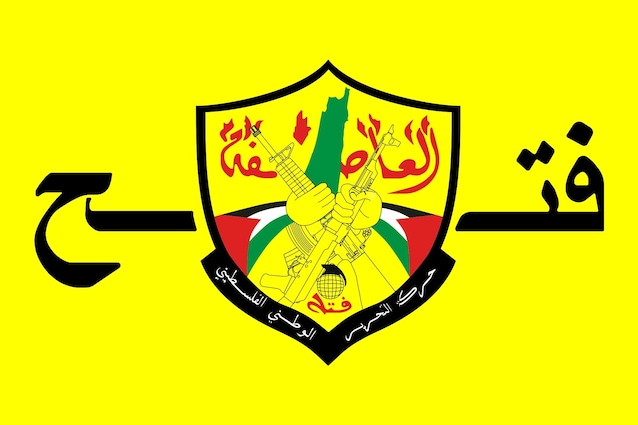
At the end of the 1950s he gathered a group of followers around himself, forming ties with numerous Palestinian refugees and with two people destined to remain close to him for many years: Salah Khalaf “Abu Iyad” and Khalil al-Wazir “Abu Jihad”. Together with them he founded al-Fatah, a reverse acronym for Palestinian National Liberation Movement, an organization determined to conduct the fight for Palestine autonomously from the Arab countries.
The Palestinian rebirth and the PLO
In 1967, as is known, the Six Day War broke out: Israel defeated the armies of Egypt, Syria and Jordan, occupying East Jerusalem, the Gaza Strip, the West Bank, the Golan Heights and the Sinai Peninsula (the latter returned to Egypt in the 1980s).
From the defeat of the Arab States, the “Palestinian rebirth” began: the Palestinians, residing in the West Bank, Gaza and other countries, developed a greater awareness of their identity and began to personally lead the fight against the Israeli occupation. Precisely in those times the Palestinian flag spread on a large scale.
Arafat was a central figure in the Palestinian renaissance and soon assumed a role as leader of his people. His image, with his head covered by the black and white keffiyeh, became popular throughout the world.
In 1969 he was elected president of the Palestine Liberation Organization (PLO), founded in 1964, which since then became the political representative of the Palestinian people.
Arafat’s leadership was not uncontested: other parties were part of the PLO in addition to Fatah; Furthermore, there were extremist Palestinian factions, which did not recognize Arafat’s leadership and used terrorist means.
The fight against Israel, recognition and the Intifada
Arafat established his headquarters in Jordan, from where he organized militia infiltration and sabotage operations in Israeli territory.
In September 1970, the “Black September”, the Jordanian monarchy ordered a military offensive against the Palestinian organizations operating in the country, because they had become too powerful, killing thousands of militants.
A few months later Arafat moved his headquarters to Lebanon, from where he continued the struggle. Operations against Israel included infiltrations and attacks against Israeli targets, both military and civilian.
As the years passed, Arafat gained international recognition as a representative of the Palestinian people, established relationships with numerous governments – becoming popular especially in socialist and Third World countries – and in 1974 he gave an important speech at the UN.
Since 1975, however, the PLO was involved in the Lebanese civil war, and seven years later Arafat was forced to move his headquarters again: in fact, when Israel invaded Lebanon and besieged Beirut, the PLO had to transfer command to Tunis.
Over the years, both Fatah and the PLO were victims of numerous attacks by Israel and, in some cases, even by Palestinian terrorist groups. Arafat was also targeted several times, as in the case of the Israeli bombing of the PLO headquarters in Tunisia in 1985, but he always managed to survive.
In 1987, the Intifada, a vast uprising of the Palestinian people against the occupation, broke out in Gaza and the West Bank. Arafat, who followed events from Tunis, took a very important step in 1988: he proclaimed the birth of the State of Palestine on the territories of the West Bank and Gaza, effectively recognizing the State of Israel within the borders it had before the Six-Day War. In this way, a concrete possibility of peace opened up.
Three years later, however, the Palestinian leader made a serious mistake: when the Gulf War broke out, he did not condemn the invasion of Kuwait and maintained a position favorable to Saddam Hussein, thus alienating many sympathies in the West.
The Oslo Accords and the Second Intifada
In the early 1990s, thanks to the end of the Cold War and the Intifada, the peace process between Israel and the PLO began.
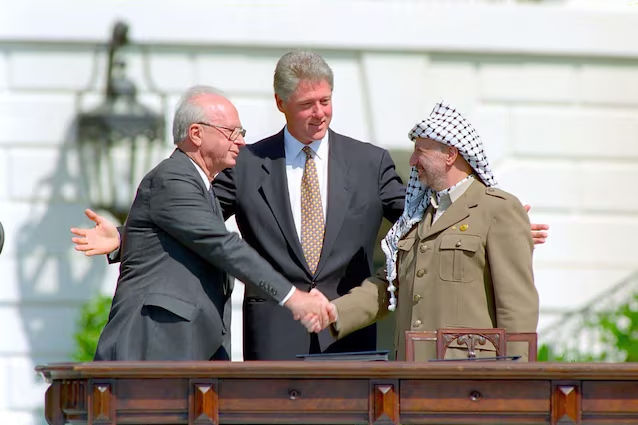
In 1993 the two parties signed the Oslo agreements, which provided for the gradual establishment of a Palestinian political entity in the territories of the West Bank and Gaza, but left the main issues unresolved, such as the definition of borders, the status of refugees and the question of Jerusalem.
Arafat and Israeli Prime Minister Itzhak Rabin shook hands in a famous ceremony on the White House lawn.
After the agreements, the Palestinian National Authority was born, charged with administering the territories of which Israel had ceded direct control.
Furthermore, in 1994, Arafat was awarded the Nobel Peace Prize together with Rabin and Shimon Peres. Subsequently, he was elected president of the PA and was able to return to Palestine after a 27-year exile, settling first in Gaza and then in Ramallah, in the West Bank, where he established his headquarters.
The peace process, however, foundered: both among the Palestinians and among the Israelis there were factions hostile to the compromise, who used terrorist actions to sabotage the peace process.
In the years 2000-2001 Arafat met the new Israeli Prime Minister Ehud Barak several times, but, despite American mediation, the two did not find a solution.
There is no agreement on who between the two had greater responsibility for the failure of the negotiations: the fact is that tension increased, and at the end of 2000, following a provocation by the general and future Israeli Prime Minister Ariel Sharon, the second Palestinian Intifada began, and the situation worsened.
From 2002 onwards, Arafat remained at his headquarters in Ramallah, surrounded by Israeli forces.
The death of Arafat
In 2004 Arafat became seriously ill from complications of the flu.
On October 29, he left Ramallah and was transported to Clamart, France, for hospitalization. The treatments, however, were useless: on November 11 Arafat died. An immense crowd attended the funeral, celebrated in Ramallah.
In some circles the suspicion was raised that he had been poisoned by the Israeli secret services, but this has never been proven.
Today the figure of Arafat has a central role in Palestinian national memory and in the rest of the world he is popular in circles sympathetic to the Palestinian cause. In Israel, however, a negative opinion prevails and a substantial part of public opinion associates it with the armed struggle waged by the Palestinians.