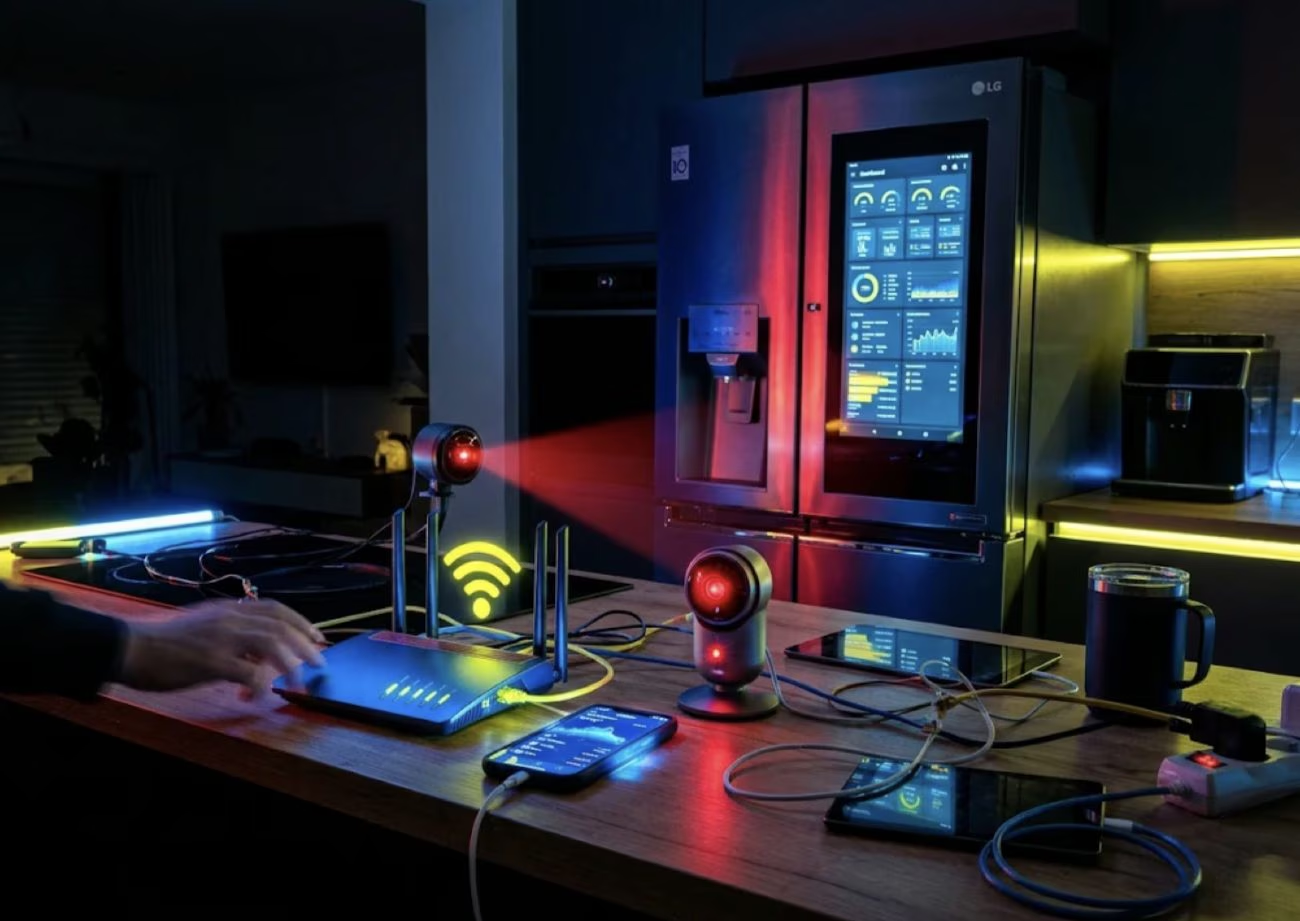
Objects that we use every day in our home – from routers to surveillance cameras, through smart refrigerators, smart sockets, etc. – could become the next targets of the hackers who in recent days have raised the shadow of the risk of a hybrid war. The alert was launched by Juhan Lepassaar, executive director ofEuropean Union Agency for CybersecurityENISA, according to which after the recent attacks on the refrigeration systems of various European supermarkets, home automation devices could also end up in the crosshairs. «Today it was refrigerators, tomorrow it could be routers, the day after tomorrow it could be appliances», said Lepassaar in an interview with the agency Afp. Without falling into easy alarmism, let’s see what potential dangers we are facing and, above all, how we can prepare ourselves now.
Because even smart appliances can become a target according to the EU
Connected devices represent an increasingly large attack surface, this is nothing new. The more objects are connected to the network, the greater the access ports that need to be protected. An outdated router, a camera protected by the factory-set password, an appliance that uses outdated firmware, can become weak points in the entire home network.
The problem is part of an already particularly delicate European scenario. According to ENISA’s EU Cybersecurity Index 2026, the average level of preparation of Member States reaches 71.53 points out of 100. This is an improvement compared to the past, this is true, but it does not mean that the threats have decreased, on the contrary. In 2025 and 2026, cyber intrusion activities remained intense and diverse, and as if that weren’t enough, geopolitical tensions continue to influence attacks.
Artificial intelligence contributes to making the scenario even more complex. According to ENISA, more advanced models such as Mythos (a frontier model developed by Anthropic) can accelerate the identification of vulnerabilities, i.e. defects in software or systems that could be exploited by “good” hackers to correct them, by “bad” ones to compromise systems marked as weak. This means that the time available to fix a flaw before it is used by an attacker could become increasingly shorter.
But what could actually happen if a hacker managed to compromise one of the devices in our homes? A smart appliance, being connected to the Internet, could be used as a sort of access point to the home network or inserted into a botnet, a network of devices infected and controlled remotely without the owners realizing it. These devices can then be exploited to conduct DDoS attacks.
How to protect routers, cameras and smart appliances from hacker attacks
To prepare for a similar scenario, the first step is to make a list of all the devices we have at home that are connected to the Internet, and then check them one by one.
Starting for example from the router, you need to access its management panel and check that the firmware, i.e. the software that controls its operation, is updated to the latest version available. If you have not already done so, activate the automatic installation of updates and use an administration password different from the one pre-set by the device manufacturer.
Speaking of software updates, if you happen to install one manually, don’t delay restarting the device, since by postponing this moment the update will not be applied for all intents and purposes. Still regarding the router, make sure you have set the WPA3 security protocol, much more secure than the previous WPA or WPA2.
The same principle applies to cameras, video surveillance systems, smart speakers and smart appliances of various kinds: periodically check the availability of updates and change the initial credentials, choosing long and difficult to guess passwords and replacing those set by default by the manufacturer of each individual connected appliance.
Another precaution consists in connecting smart objects to a Wi-Fi network separate from the main one (easily done by creating a guest network), so as to keep more “sensitive” devices safe, such as the computer dedicated to your work or your personal smartphone. This separation, in fact, limits the possibility of movement of a possible attacker between the devices.
Also pay attention to objects that you no longer use: a connected device left on and without updates can continue to represent a potential risk. If the manufacturer no longer distributes security updates, consider replacing it with a more recent one.
Walter Narisoni, Director Sales Engineering of Sophos, a company specializing in cybersecurity, explained in this regard:
We often forget that these objects are in effect small computers which, if not adequately protected and updated, can be compromised to collect information, manipulate certain features or attempt to access other devices on the home network. Cybersecurity must (…) become a purchasing criterion as important as price, performance and consumption. Manufacturers must ensure updates and protections over time, while consumers can reduce risks by taking simple precautions: changing default passwords, turning on automatic updates, and avoiding unnecessarily exposing devices to the Internet.
The prevention of cyber attacks aimed at home automation, therefore, already starts from the choices we make when purchasing the accessories to be connected: it is better to direct your choice towards reliable brands also with regards to security updates and long-lasting support over the years.