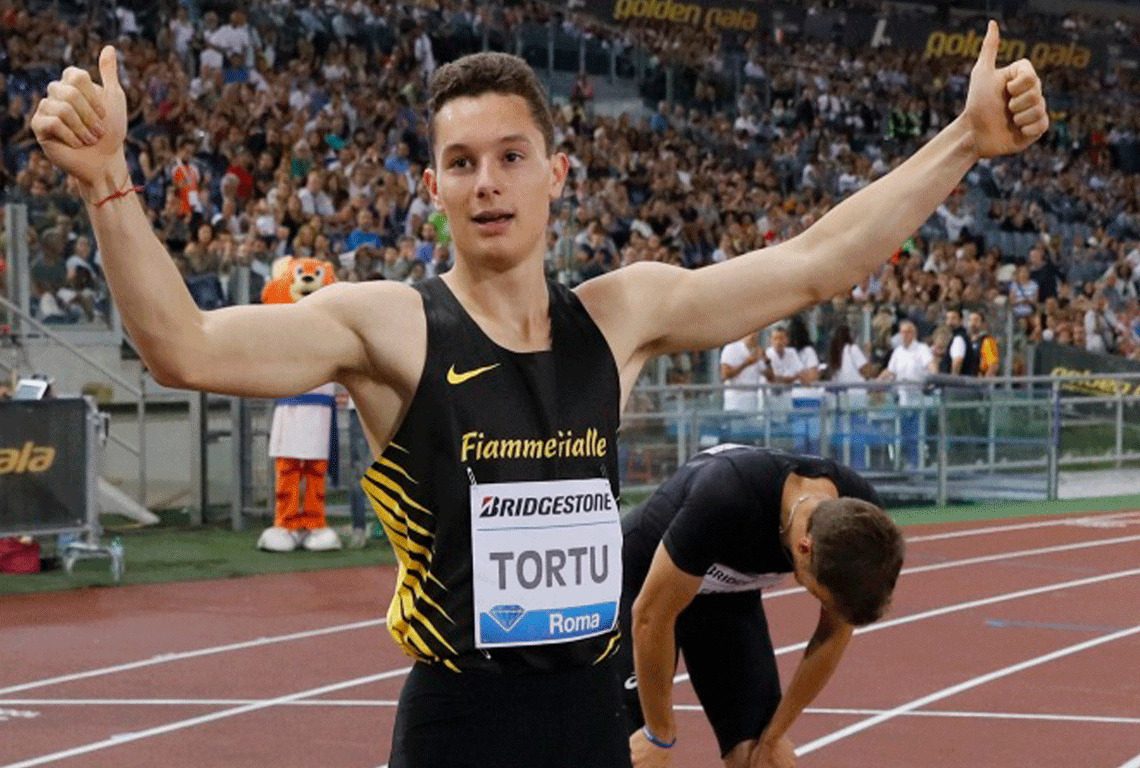
During the Olympics, World Championships or European, it often happens that an athlete competes for the “Fiamme Oro” or for the “Yellow Flames”. It is not a secondary detail, but an all -Italian tradition of tradition: in Italy most athletes are enrolled in bodies such as police, carabinieri, army or finance guard. The why is to be traced back to a above all economic question, as unlike sports such as football, tennis, basketball and others, in less “rich” sports – such as athletics, fencing or swimming – sponsors and prizes are not enough to live and train full time. For this reason, many Italian champions enter the sports groups of the state bodies: in particular army, state police, carabinieri, finance guard, aeronautics, navy, prison police and firefighters.
Because Italian athletes enter the police: the advantages
Being “athletes-military” or being part of a police force offers concrete advantages: a fixed salary, cutting-edge training structures, technical support, access to qualified physiotherapists and athletic trainers, and the possibility of dedicating themselves completely to sport without having to work elsewhere.
Being part of one of these sports groups is also a guarantee of having a professional continuity and safe income even after withdrawing from competitive activity. At the last Olympics in Paris, about 73% of the blue delegation belonged to a military sports group or civil bodies of the state: on the 403 athletes of Italy team, 296 also wore the uniform. A constant growth data: at the summer games of Atlanta 1996, only 32% of the 111 blue athletes belonged to a military sports group. In the following years, the percentage grew constantly, reaching 70% in Tokyo 2020 with 268 military athletes. The trend shows a clear and evident growth, with some exceptions: 34% at Sydney 2000, 33% at Athens 2004, 51% in Beijing 2008, 63% in London 2012 and 44% in Rio 2016.
This peculiarity of athletes-military has ancient roots. Already in the late 19th century, athletes enrolled in the army, Marina and Guardia di Finanza participated in international competitions. At the London Olympics 1908, for example, Italy won gold in the Greek-Roman struggle with Enrico Porro, a sailor of the destroyer Castelfidardo.
The sporting situation in Italy and how the double uniform is obtained
In Italy, many athletes choose to support military career or in the civil bodies of the state, a typically national phenomenon linked to practical and structural reasons. In Italy, only four sports still enjoy a recognized professional status: football (up to Serie C), golf, cycling and basketball (men’s series only). All the others, even those practiced at the highest international levels such as the Olympic disciplines, remain officially amateur.
The sport reform has tried to introduce more “corporate” and professional models for companies and associations, but reality remains largely artisanal, with a decisive role of voluntary work. Added to this is the absence of a structured school sports system: about 60% of primary schools do not have gyms, making it impossible to replicate the model of US colleges.
In military sports groups and in the civil bodies of the State, the entrance takes place through public competition, similar to that of the police, but designed for those who have already achieved important results in sports at national or international level, certified by Coni. Those who exceed the competition are enrolled as a fixed -term volunteer for four years (every two years the athletes are subjected to checks to confirm the permanence in the group), with a salary equal to that of the staff of equal degree, and assigned to the reference sports center.
At the end of the competitive career, the possible roads are different: you can remain in service as an instructor or athletic trainer, work in military schools and sports centers, participate in internal competitions to advance in his career, or choose to take leave.
From the carabinieri on Fiamme Oro: the Italian champions who made the history of military sport
Over the years, the Italian military sports groups have produced a large number of samples, from historical heroes to contemporary athletes. Alberto Tomba, the legendary skier who after the Olympic golds came to the rank of Marshal, Raimondo D’Inzeo, the Olympic and World Cup, and Armin Zoeggeler, myth of the sled with six Olympic medals, passed through the carabinieri.
Among the financiers, names such as Isolde Kostner, one of the first women in the body and ski champion, Domenico Fioravanti, the first Olympic Olympic gold of Italian swimming at Sydney 2000, Giuseppe Gibilisco, World Gold in the jump with the auction, Tania Cagnotto and Arianna Fontana, stand out in swimming and short track. To them are added Filippo Toru, an Olympic sprinter and Italian record holder of 100 meters.
In the Fiamme Oro (State Police), historic champions such as Livio Berruti, Olympic gold on the 200 meters in Rome ’60, Carlo Pedersoli (Bud Spencer) and Loris Capirossi have made school, while today Marcell Jacobs, Olympic gold in the 100 meters, Valentina Vezzali, Bebe Vio, Elisa di Francisca, Gianmarco Tamberi, Massimo Stano, Federico Pellegrino and Sofia Raffaeli, stand out today. The Army Sports Center, born shortly before the 1960 Rome Olympics, also includes non -Olympic disciplines linked to training, as parachuting and Winter Triathlonand formed champions such as Marco Albarello (Nordic skiing), Marta Bassino (Alpine skiing), Diana Bacosi (shooting shot), Michela Moioli (Snowboard) and Fabio Basile (Judo).
The blue flames (penitentiary police) count in cycling, athletics and ice sports, above all Carolina Kostner, while the red flames (firefighters) have had the jury cheach as a flagship in gymnastics.