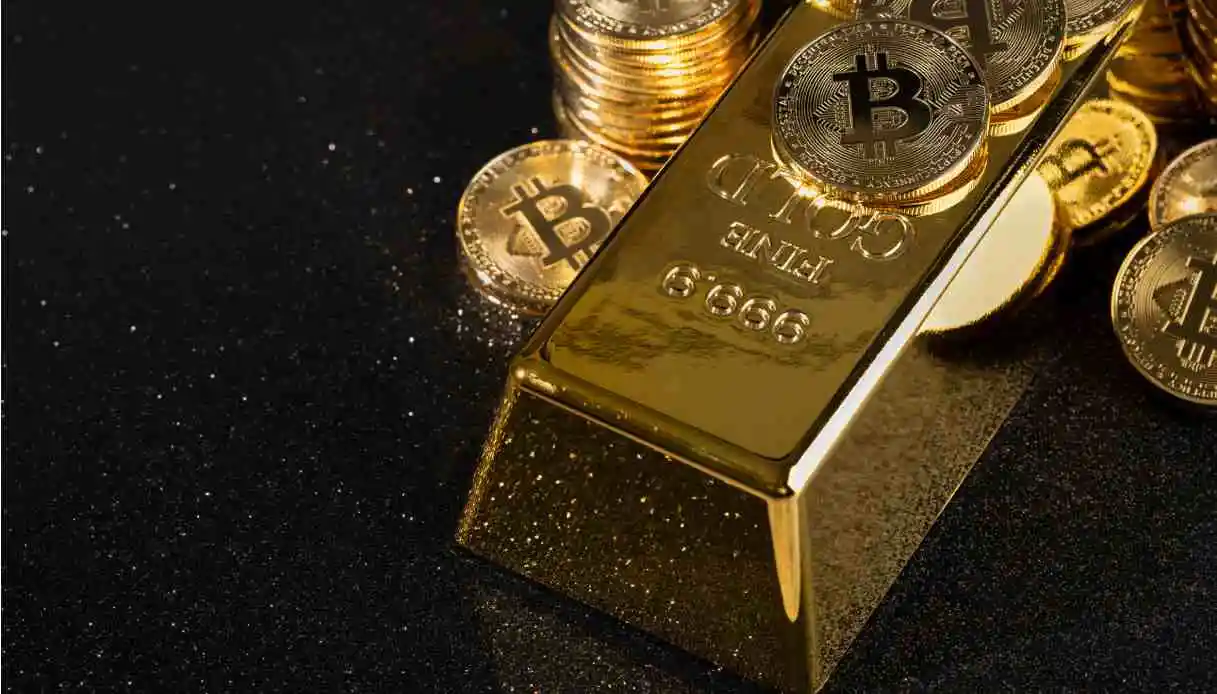
The new wave of tensions in the Middle East continues to push investors towards assets considered safer. Gold, a traditional safe haven asset, has seen a new increase in prices. According to Morgan Stanley experts, the recent sales do not represent a change in sentiment, but rather the need for immediate liquidity at a time of strong stress on the markets. Structural demand remains solid.
Silver also saw significant movements. UBS analysts predict high volatility, with fluctuations comparable to those of Bitcoin, but estimate a return towards an equilibrium level around 85 dollars in the long term, after having almost reached 100 following the worsening of the conflict.
In this context, the search for protection is diversifying: alongside precious metals, attention towards alternative assets is growing.
Bitcoin enters the safe haven debate
An important contribution comes from the analysis of James Butterfill, Head of Research at CoinShares, who observes how the geopolitical crisis is redefining the behavior of Bitcoin in moments of global tension.
Tensions in the Middle Eastern area – with Iran garrisoning the Strait of Hormuz, a crucial hub for 21% of global oil trade – have increased the risk of the conflict widening. Despite this, Bitcoin has shown unexpected resilience.
According to Butterfill, the cryptocurrency market was already in the process of rebalancing after months of selling by whales, with reduced leverage and valuations at multi-year lows. This eased selling pressure just as ETFs began to see significant inflows again at the start of the escalation.
The result is behavior increasingly similar to that of a safe haven asset, favored by the non-sovereign nature and scarcity of the asset.
Recovering inflows and more solid positioning
Historically, Bitcoin has tended to suffer during risk aversion phases, also because it is one of the few liquid assets that can also be traded on weekends. This time, however, the dynamic is different: the cryptocurrency remained stable and even recorded an increase.
Butterfill underlines how the absence of significant liquidations, despite the increase in yields and geopolitical tensions, indicates a more balanced positioning than in the past. After around 30 billion dollars in flows from the main operators of
market over the last five months, the technical and fundamental lows had already been surpassed, reducing the marginal selling pressure.
Last week there was a reversal of the trend: 1 billion dollars flowed into investment products after five consecutive weeks of outflows, to which another 500 million were added on Monday alone. Investors appear to be interpreting the correction as an entry opportunity and a hedge against geopolitical uncertainty.
The macroeconomic picture complicates reading the markets
However, the macroeconomic context remains challenging. The producer price index rose by 0.5% on a monthly basis, above expectations, while the core component reached 0.8%, driven by commercial services. Rising energy prices could further delay rate cuts, tightening financial conditions.
In a scenario of persistent energy inflation and tighter monetary policy, traditional risk assets could come under new pressure. However, if geopolitical tensions intensify and confidence in global financial and trade infrastructure – particularly along critical routes such as the Strait of Hormuz – continues to deteriorate, scarce, non-sovereign assets such as Bitcoin could benefit in the medium term.