After the clashes and looting in Milan and the unrest in various Italian cities, the government led by Giorgia Meloni is evaluating the adoption of a new Security Decree: this is the sixth measure of this type adopted by the executive, considering the rave decree, the Cutro decree, the Caivano decree and the last two on security matters.
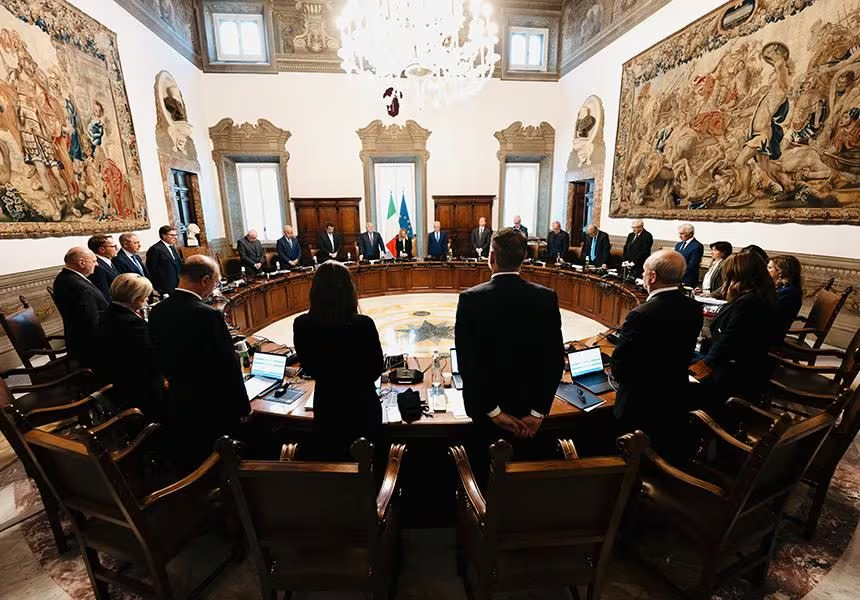
The Council of Ministers, convened for today 20 October at 5.30 pm, will therefore work on drafting a law decree to strengthen the tools to combat street disorder and strengthen judicial and police tools. 500 soldiers have been deployed in the Lombardy capital to guard the city, although it is not yet clear how they will be used.
In a post on Again according to the Minister, the objective of the Council of Ministers would be to allow the military to act as the police force for the next 3 months to provide support to the Carabinieri, Police and Financial Police.
By law, in fact, the military can identify people and carry out immediate searches of people and vehicles to prevent or impede behavior that could endanger people or places under surveillance. The Army soldiers, however, do not have judicial police functions and cannot therefore carry out independent investigations or make arrests in the exercise of these functions. However, they can intervene in the event of a flagrant offence.
In any case, some measures that will be discussed for the new Security Decree have already been anticipated. In addition to the temporary expansion of the army’s functions, there would also be:
- The extension of preventive detention up to 24 hours also for minors;
- The expansion of the crime of aggravated damage;
- The ban on gatherings for people considered dangerous to public order;
- The possibility of deferred arrest within 48 hours for those who commit group damage.
According to some rumours, the obligation for social platform providers to communicate any useful information to the judicial police for identify messages relating to episodes of violence, for example, reporting the use of violent hashtags. It must be said, in fact, that the vandalism episodes that occurred over the weekend in Milan demonstrated that the preventive investigation tools used by intelligence agencies are in fact backwards, having failed to promptly intercept new violent movements that arose spontaneously on social media.
Finally, there would seem to be a tightening of the rules on road blocks on the table: again today, 20 October, the meeting between the Minister of Infrastructure and Transport, Matteo Salvini, and the national trade associations and representatives of spontaneous mobilizations should take place in Milan, to discuss possible measures to support the hauliers sector which has been striking for days in Southern Italy.
In the meantime, the President of the Republic Sergio Mattarella declared that “the full solidarity of the national community goes to the police – in particular to the almost 200 of them injured in recent days”, underlining that “an intelligent and in-depth analysis is needed and careful vigilance must be developed capable of counteracting violence that seems to explode unexpectedly from unknown subjects”.