Covid-19 is circulating again in Europe, with a growth in infections recorded in France at the beginning of autumn. According to the latest bulletin of Santé publique France, published on 23 September and relating to the week from 14 to 20 September 2026, consultations of the SOS Médecins network for suspected Covid-19 increased by 76% compared to the previous week.
The increase affected all age groups, with 390 more medical procedures. The overall number of consultations, however, remains lower than that observed in the same periods of previous years.
The data is increasing
Medical consultations and emergency room visits for suspected infections are increasing, but for the moment there are no signs of a new health emergency comparable to that of the pandemic years. The increase mainly affects the most vulnerable people, while hospitalizations for serious forms remain low.
Growth was also recorded in emergency rooms. According to data from the Oscour network, accesses for suspected coronavirus infection increased by 16% among children and 67% among adults. Even in this case, the increase in indicators does not coincide with an equivalent growth in serious cases or hospital admissions.
The increase in cases and requests for assistance has also been reported in other European countries, the United States and Asia. For Antoine Flahault, epidemiologist and professor of public health at Paris-Cité University, it is “a seasonal and global resurgence in the circulation of the virus, similar to that already observed at this stage of the year”.
The new variants of Omicron
At the moment, no single variant that is particularly dominant or associated with increased aggression has been identified in France. According to experts’ hypotheses, the increase in circulation of the virus could be linked to the spread of new subvariants of Omicron, the strain present in Europe since 2022.
These subvariants appear to be slightly more transmissible and capable of more easily overcoming immune barriers developed after vaccination or previous infection. This may encourage new increases in infections, especially when people return to spending more time in closed environments, such as schools, offices and means of transport.
Who risks more
For the majority of people, Covid today manifests itself with symptoms similar to those of a seasonal respiratory infection: fever, sore throat, cough, tiredness and general discomfort. However, the risk is not the same for everyone.
The categories most exposed to complications include:
- elderly people, especially with other pathologies;
- immunosuppressed subjects due to illnesses or therapies;
- patients with comorbidities;
- pregnant women.
The situation, however, appears more stable among adults without particular health problems. The epidemiologist underlines that in this range there is no significant recovery in hospital admissions linked to Covid.
The role of vaccination
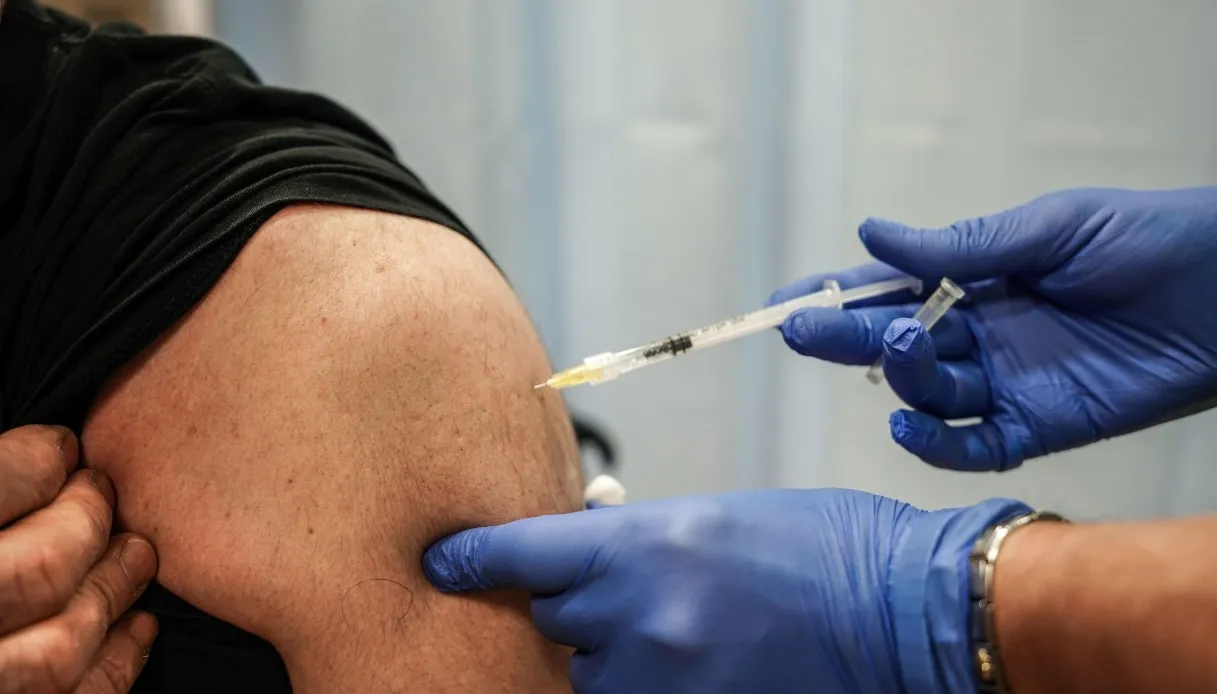
In this context, France is preparing for a new vaccination campaign against Covid and influenza, which should start on 13 October. The campaign will give priority to older people and those considered vulnerable.
One of the problems concerns the poor adherence to vaccination booster campaigns. The World Health Organization sets a target of 75% coverage for flu vaccination among vulnerable people, particularly those over 65. In the UK, coverage reaches this target, while in France it is around 50%. For the anti-Covid vaccine the percentage is even lower.