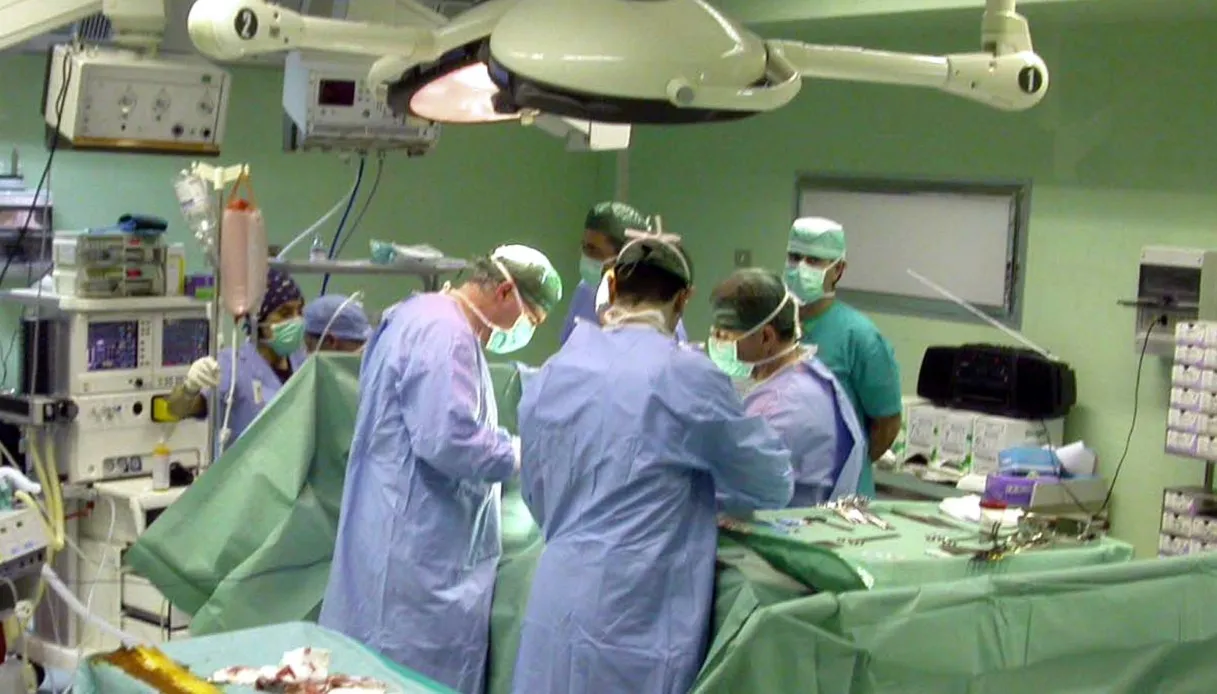
The Government has proposed an amendment to the Milleproroghe decree which, in fact, extends the possibility for doctors to continue working up to 72 years of age. The measure dates back to 2024 and is an exception to the law which provides that doctors cannot continue to serve in hospitals after turning 70.
This is a law that should have been extraordinary, but many Regions have asked the government to renew it so as not to further aggravate the healthcare crisis. Even the extension of doctors’ careers becomes an example of why, every year, a law such as the Milleproroghe decree is necessary.
Doctors will be able to continue working until they are 72
The new amendment that the Government wants to introduce in the Milleproroghe decree would extend the rule introduced in another Milleproroghe, that of 2024, which acts on the maximum age of doctors in Italy. In fact, the law provides that, in our country, one cannot practice the medical profession in the National Health Service beyond the age of 70.
In detail, the law provides that doctors who work for the NHS, for local health authorities, for the Ministry of Health and for universities (provided that they also provide assistance in hospitals) can choose to continue working up to the age of 72 on a voluntary basis. For every doctor who decides to continue working, authorization from the relevant local health authority is required. Hospitals will also be able to recall retired doctors who have not yet turned 72.
Italy has the oldest doctors in Europe
The rule was introduced in 2024, valid until the end of 2025, to avoid thousands of doctor retirements throughout Italy every year. The Regions, which in our country are responsible for managing healthcare, have asked the Government to renew it for 2026 too, due to the lack of staff in hospitals.
Italy has approximately 5.3 doctors per 1,000 inhabitants, a figure higher than the European average of 4.07. However, doctors are also one of the oldest workforces in our country. Almost half of them are over 55 and one in five is over 65. This explains why a law is needed to extend the maximum age up to which doctors can work.
Structural emergencies and the Milleproroghe decree
However, the amendment on the age of doctors is also a clear example of how the Milleproroghe works. Every year Parliament approves this decree, which contains, as the name suggests, very different rules which serve to extend various laws. A tool that has become necessary over the years, because governments often tend to act with emergency laws, which stop crisis situations without providing a structural solution.
As for doctors, the law responds to a need for a greater number of doctors. Instead of promoting the training of new doctors, an expensive but above all long operation, given that it involves a decade of university studies and specializations, the Government has made a stop by delaying, on a voluntary basis, the retirement of doctors already in service.
Two years after that decision, the situation has remained unchanged and the Regions have therefore asked the Government to extend the rule again, without which the emergency, still present as it has never really been addressed, would worsen.