Nothing done by the ECB, which confirmed the current level of interest rates, with a rate on deposits indicated at 2%, widely confirming the expectations of the market. It is the second time that Eurotower maintains the cost of money after a cycle of eight consecutive cuts, starting from the 4% peak reached in September 2023.
The new projections on growth and inflation
The ECB also provided the new projections of economists, which trace a picture of inflation in line with that of June, indicating a total inflation to 2.1% in 2025, 1.7% in 2026 and 1.9% in 2027; Inflation net of the energy and food component would take a average of 2.4% in 2025, 1.9% in 2026 and 1.8% in 2027.
The economy of the euro area, on the other hand, is expected to grow by 1.2% in 2025, with a correction compared to the 0.9% expected in June. The growth scheduled for 2026 was slightly reviewed at 1%, while for 2027 it remains unchanged at 1.3%.
ECB keeps rates stopped
The ECB monetary policy committee has today confirmed the interest rate on deposits at the Central Bank at 2%, the one on the main refinancing operations at 2.15%and that on marginal refinancing operations at 2.40%.
The progressive withdrawal of quantitative Easing measures is also confirmed. The program of purchase of activities (Paa) and purchase program for the Pandemic emergency (PEPP) are reducing to a measured and predictable rhythm, given that the Eurosystem no longer reinves the capital repaid on the expiring titles.
The reasons for the decision
The board is said to be “determined to ensure that inflation stabilizes on the goal of 2% in the medium term” and confirms “an approach led by the data on the basis of which the decisions are adopted from time to time at each meeting”. In particular, the decisions of the Board of Directors on interest rates will be based on the assessment of the prospects of inflation and the risks associated with them, considering the new economic and financial data, as well as the dynamics of the basic inflation and the intensity of the transmission of monetary policy, without binding a particular path of the rates.
The Council reiterates that it is “ready to adapt all its tools in the context of its mandate to ensure that inflation stabilizes on the goal of 2% medium -term and to preserve the orderly functioning of the transmission mechanism of monetary policy” and confirms that “the tool for the protection of the transmission mechanism of monetary policy can be used to combat unjustified, disordered market dynamics that seriously jeopardize the transmission of the monetary policy. in all countries of the euro area “.
Lagarde: disinflation process is finished, we are in a good position
“The disinflation process has ended, and I refer to the causes of inflation that we have experienced in the last quarters. So we are still in a good position, also because inflation is where we wanted it to be”.
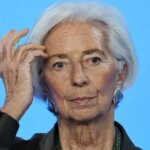
This was stated by the president of the European Central Bank (ECB), Christine Lagarde, in the press conference that followed the decision to leave the rates unchanged for the second consecutive meeting.
“We continue to be in a good position, but we are not on a predetermined path”
he underlined, adding that
“I don’t want to exaggerate with the general agreement, but we had a decision unanimously today on leaving the rates unchanged.”
Pressed by journalists on the situation in France, Lagarde refused to release comments on a particular country, but specified that
“We always monitor the market trend. And the government bonds of the euro area are ordered and work without hitches, with good liquidity.
This is what we see, but our goal is, as you know, the stability of prices, but we need financial stability for this. And this requires a well -functioning monetary policy transmission mechanism. And we believe we have all the tools necessary if this transmission does not prove efficient throughout the area “.
The Transmission Protection Instrument (TPI), an ECB tool created in 2022 to counter speculative attacks against European government bonds, “was not discussed in the least in our meeting,” said Lagarde.