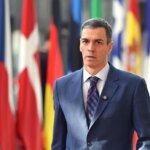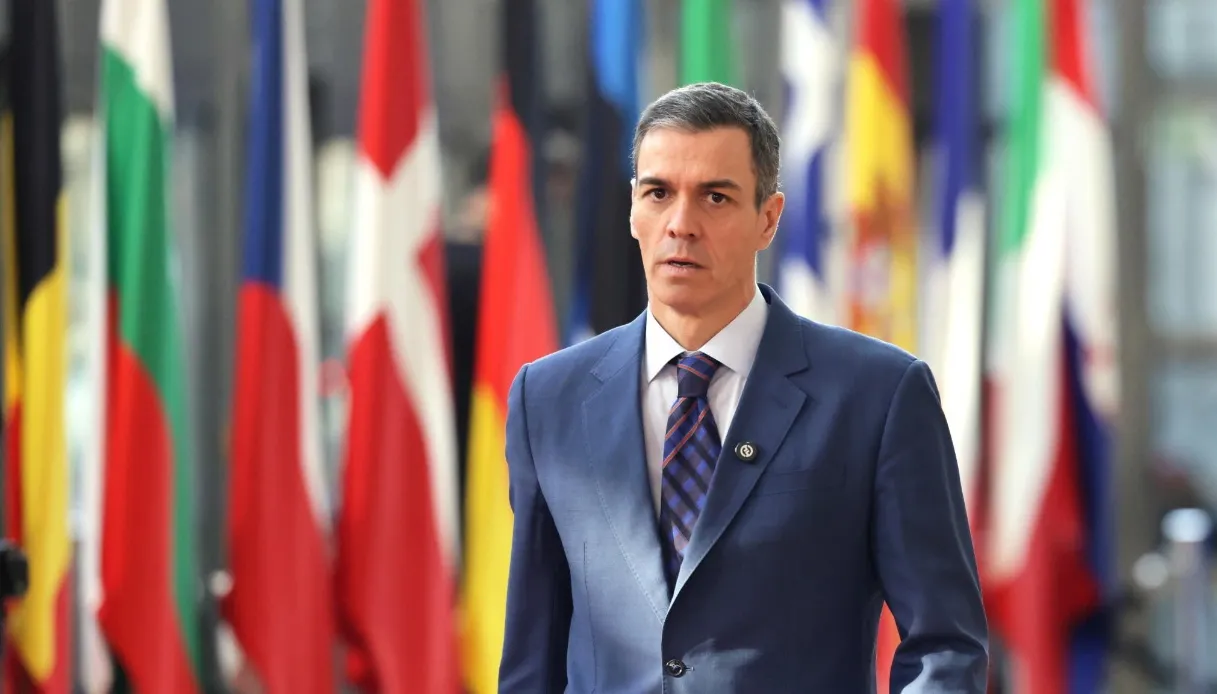
Pedro Sánchez took home a significant image result when, at the European Council on 19 March, he was able to demonstrate with clear numbers that renewable energy policies work. With the crisis triggered as a consequence of the attack by the United States and Israel on Iran, the cost of energy has increased because it is linked to the price of oil and gas. The former increased above 100 dollars a barrel, while natural gas practically doubled compared to February. And European citizens pay the bill, except the Spanish. Sánchez reminded everyone how Spain can demonstrate that renewables allow it to have less impact from war.
When interviewed, he replied that Spain “can teach a lesson”, it can be an example for the rest of Europe, because it bet on renewable energy eight years ago and now the results are visible. The price of electricity last week was 14 euros per megawatt hour, while in Italy, France and Germany it had exceeded 100 euros per megawatt hour. Sánchez is right, this is confirmed by the executive director of the think tank on climate change E3G, who points out that countries heavily dependent on gas, such as Italy, are the most exposed to the increase in costs of fossil fuels and its macroeconomic repercussions. And Italy is among the countries that consume the most gas.
What Sánchez said
The Spanish Prime Minister, Pedro Sánchez, has claimed Spain’s role as a model for the European Union in managing the energy crisis. It did so by comparing the energy costs of Spain and European economic powers such as France, Germany and Italy.
Sánchez’s speech is a speech against political movements within Europe that want to slow down or block the ecological transition and the objectives of the Green Deal.
Interviewed, he stated:
I believe that Spain can provide excellent examples of how this energy transformation, how this bet on renewable energy is ensuring that our fellow citizens, our industries, our businesses, our workers and our families suffer less impact on the price of gas.
This happens because in Spain 60% of electricity comes from renewable sources. Thus, last Saturday, Spain recorded an electricity price of 14 euros per megawatt hour. In Italy, Germany and France it was above 100 euros per megawatt hour.
Sánchez explained that it is not a coincidence, but is due to the fact that in the last eight years the Spanish government has consistently focused on the renewables sector. “Which has brought us today, unlike eight years ago, to the forefront in the diffusion of renewable energy, thus gaining strategic autonomy and protecting our economies, our families, our industry, our workers and our businesses,” he concluded.
Why does Italy pay so much?
Italy presented itself to the same European Council with a different tone than Spain, i.e. with the request to suspend the ETS emissions trading system. It did so because Italy is paying a much higher price for energy than other European countries.
In fact, Italy is among the most exposed countries, and it is because it is highly dependent on gas. According to E3G data, it is at the top of the ranking of the countries that consume the most gas.
The national federation of electrotechnical and electronic companies has published a report in which it highlights how in Italy, in 2025, just 6.2 GW of renewables were installed, a decrease of 8.2% for the first time. In general, renewable energy projects are awaiting response and in many cases delayed. Legambiente, last March 6, published another important report which tells us that 69.3% of projects from renewable sources are still awaiting the conclusion of the technical investigation: there are 1,234 out of 1,781.
Prices in the rest of Europe
Spain will continue to focus on renewable energy. This is the declaration of Prime Minister Pedro Sánchez, who claims to have transformed weaknesses into strengths, starting with energy costs. Now Spain is more competitive, it can sustain lower prices and it does so thanks to renewables. Thus an important result is achieved: energy 20% cheaper than the European average.
This is a result that brings together renewable energy and the exploitation of nuclear energy, but Sánchez is clear on this point: the government will continue to pursue the program of closing the power plants. The reason is that green energy is cheaper, especially in the long run. Sánchez also puts it on an ethical level, because the objectives of the ecological transition are “what we need to leave our sons and daughters a habitable world”.
The surge in prices caused by the war in Iran instead has consequences on the rest of Europe, an uneven impact that affects some countries more than others. Among these certainly Italy, but also Germany and France. In detail, energy prices for these countries are:
- Northern Italy pays 129 euros per megawatt hour;
- Hungary pays 128 euros per megawatt hour;
- Poland pays 124 euros per megawatt hour;
- Germany pays 103 euros per megawatt hour;
- France pays 72 euros per megawatt hour.