With the start of spring and the progressive increase in temperatures, radiators will gradually turn off throughout Italy. But what are the good practices to follow once the heating systems are stopped? This is explained by the guidelines created by various bodies such as ENEA (National Agency for new technologies, energy and sustainable economic development), which has created a handbook as part of the National Information and Training Program on Energy Efficiency.
At the end of the cold season, in fact, there are various activities that are advisable to carry out to preserve the energy efficiency of the heating system and above all not to compromise its functioning in the future, from external cleaning of the radiators to the correct positioning of the thermostatic valves.
When the heating turns off: the climate zone calendar
The date on which central heating systems stop being active in Italy depends on the climate zone you are in: it goes from zone A (hotter, in which the heating turns off earlier) to zone F (colder, in which there is no deadline). Here is an approximate map of the climate zones in Italy (zone A in orange, zone F in blue):
Below we report the calendar of the switching off (and on) date of the heating depending on the climate zone.
| Climate zone | Shutdown period |
|---|---|
| TO | 15 March – 1 December |
| B | March 31st – December 1st |
| C | March 31st – November 15th |
| D | 15 April – 1 November |
| AND | 15 April – 15 October |
| F | No limits for switching off |
Good practices to carry out after turning off the heating
As reported in the handbook drawn up by ENEA, once the heating switch-off date is triggered (which, as we have explained in this article, depends on the climate zones), the first thing to do is obviously to physically switch off the system. This happens differently depending on whether it is a centralized or autonomous system: in the first case, in fact, the building manager is responsible for programming the automatic switching on and off of the heating; in the second case, however, the procedure can be managed manually by the owners or tenants. More specifically:
- If the boiler only works for heating, it must be turned off or turned OFF.
- If, however, the boiler works both for heating and for the production of domestic hot water, then only the part relating to heating must remain off. Very often modern boilers are already equipped with manual selectors that allow you to set the “winter” or “summer” mode.
At this point, there are three main activities to carry out, two of which are optional – but still recommended to guarantee maximum efficiency of the system in the following season – and one mandatory by law.
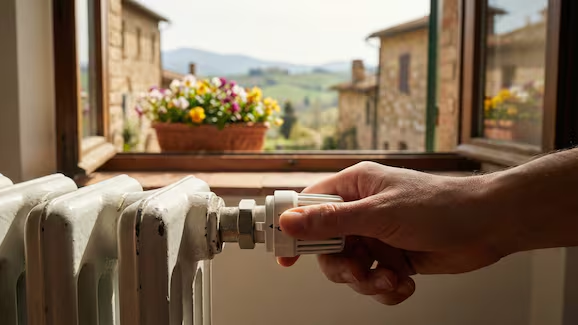
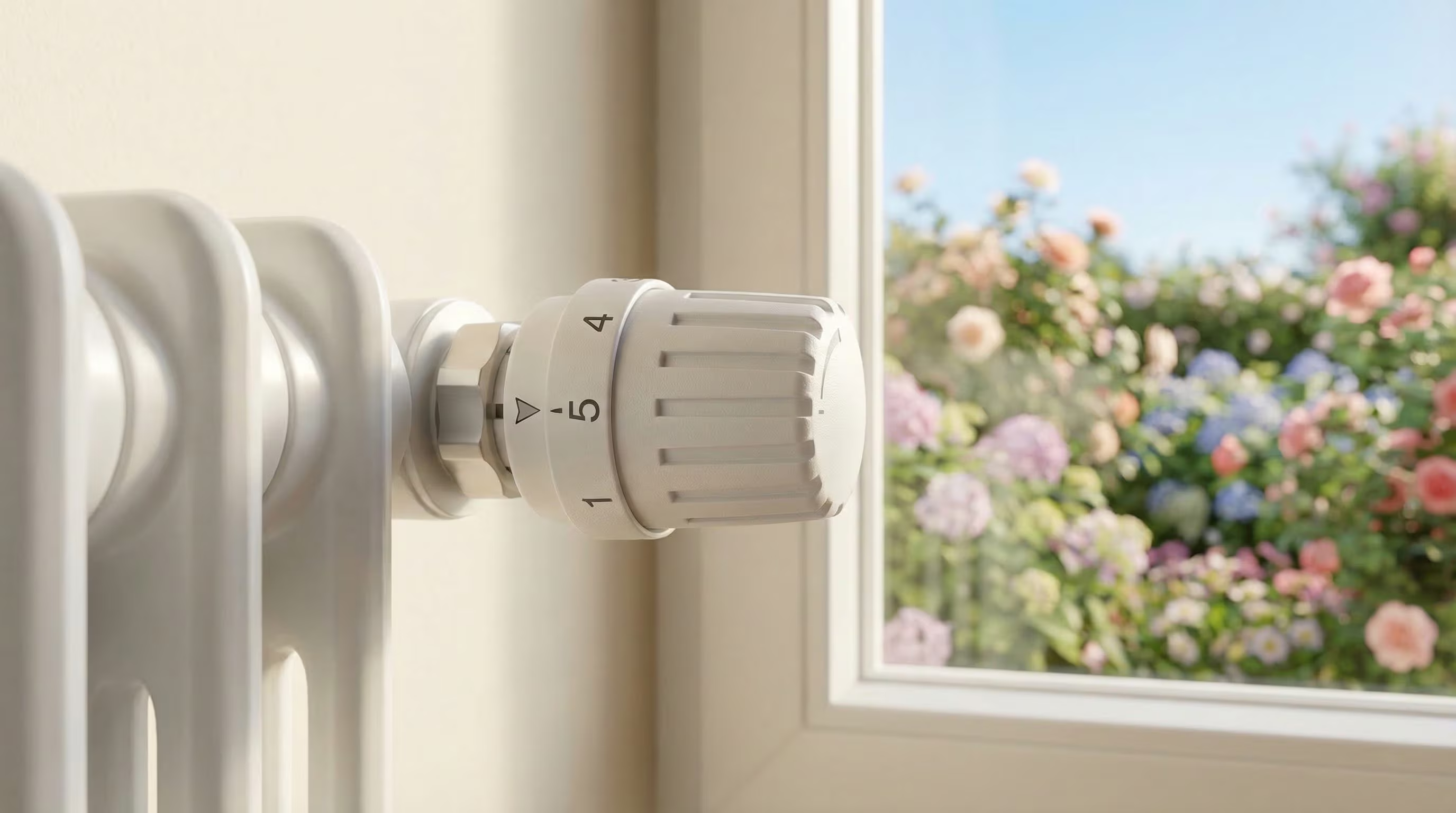
Position the thermostatic valves on the highest setting
Contrary to what you might think, once the heating system is turned off, it is advisable to position the thermostatic valves on the maximum value (usually level 5): these are the knobs located on the radiators – mandatory in all condominiums with central heating since 2017 – which allow you to manually adjust the temperature in the rooms based on your needs.
Opening the thermostatic valves to the maximum, in fact, avoids the limestone sedimentation, which could damage the system: in particular, it prevents limescale from depositing inside the piston that regulates the thermostatic valve during the period of inactivity of the radiators. Otherwise, the blocking of this piston when the system is turned back on would prevent the passage of hot water and, consequently, prevent the radiator from heating.
Clearly, since the system is turned off, the position of the valves on the highest value does not equate to energy consumption.
Clean the surface of the radiators
The second recommended activity is cleaning the surface of the radiators, both externally and internally, where dust has probably accumulated during the winter season: this procedure serves to improve the energy efficiency of the systems, given that the dust could form an insulating layer which would prevent the heat from spreading correctly, reducing the thermal power of the radiator.
At the same time, when the radiators are turned back on, it is possible that the dust accumulated in the radiator will end up being spread into the environment, worsening the air quality. In this case, the guidelines recommend cleaning both the outside of the radiator, using a damp cloth, and the inside of the radiator cracks, trying to push the dust downwards using a thin brush.
Carry out mandatory maintenance on the heating system
The maintenance of the heating system (generally annual or biennial) is the only mandatory activity to be carried out, according to the provisions of Presidential Decree 74/2013: for those who do not carry it out, among other things, a fine starting from 500 euros is foreseen. The law, however, does not explicitly require carrying out this check during the warmer months: however, it is advisable to request the intervention of professional technicians while the heating system is off and companies, being the low season, have greater availability.
The maintenance procedure, in addition to a general check of the boiler, can also include a check of the radiators, checking for any leaks, eliminating the air present in the system and checking the thermostatic valve devices. This maintenance, which must always be carried out by professionals in the sector, also serves to improve efficiency: a system, in fact, consumes and pollutes less when it is correctly regulated, is clean and without limescale encrustations.