The European Central Bank met yesterday March 19 to decide how to set interest rates on deposits and refinancing, which determine the cost of money in the Eurozone. The attitude that has prevailed in the board of directors is wait-and-see, with stable rates and constant monitoring of the situation.
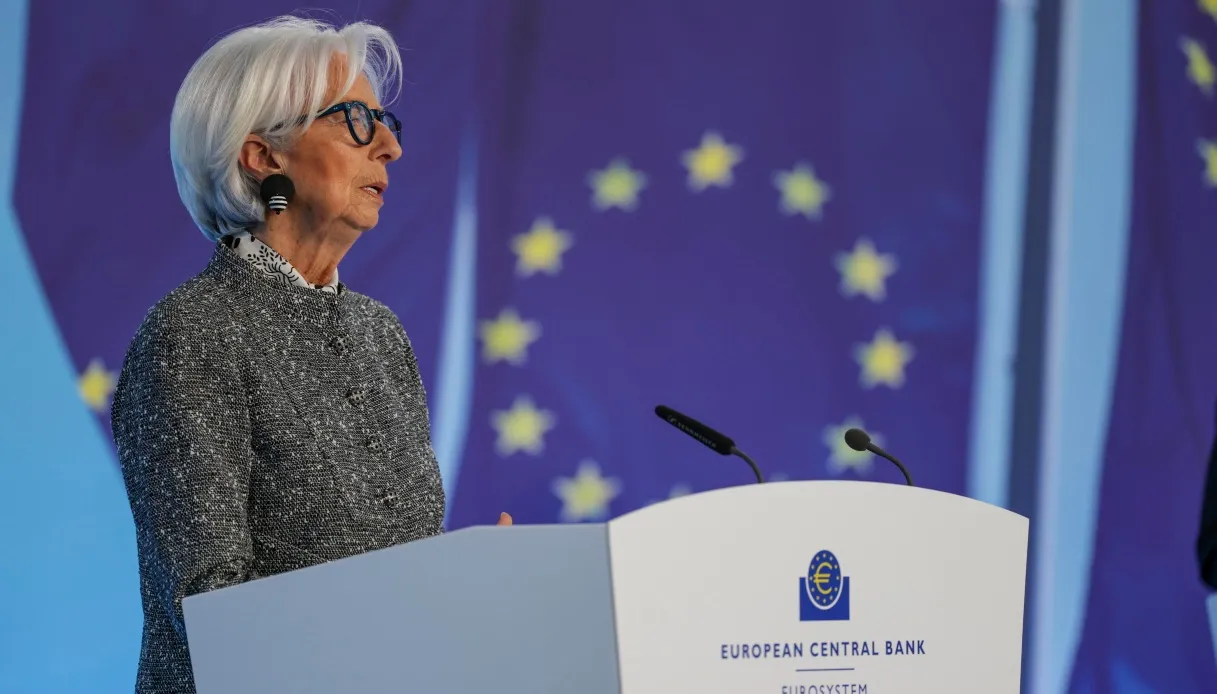
However, in the subsequent press conference, ECB President Christine Lagarde explained that the data available to the Eurotower did not include the effects of the war in the Middle East. If the conflict, and the resulting oil crisis, were to continue, restrictions on European monetary policy are not ruled out, a not particularly positive prospect for Italy.
What the ECB decided
The ECB has therefore decided to leave deposit rates at 2%, refinancing rates at 2.15% and overnight rates at 2.40% for the time being. A decision awaited by analysts, given that February inflation data signaled a recovery in prices, after the drop in January, which had even led to speculation of a possible new cut.
Since then, however, the situation has changed radically, as indicated by the ECB’s economic forecasts, which take into consideration the effects of the war in the Middle East:
- inflation in the Eurozone is expected to reach 2.6% in 2026;
- economic growth is expected to slow to 0.9%, from December’s forecast of 1.2%.
The prospects of the ECB
The scenario is not the most optimistic, but the war in the Middle East makes this type of revision inevitable. According to the ECB:
The conflict has made the outlook significantly more uncertain, generating upside risks for inflation and downside risks for economic growth. The conflict will have a significant impact on short-term inflation through increases in energy prices.
The one included in the new forecasts is not even the most pessimistic scenario. As specified by the Eurotower press releases, in fact:
A prolonged disruption to oil and gas supplies would lead to higher inflation and lower growth than the baseline projections. Changes in inflation depend crucially on the extent of the indirect and second-round effects of a stronger and more persistent energy shock.
Because a monetary tightening is not convenient for Italy
The ECB has also not ruled out future intervention. Analysts expect two tightening of monetary policy in 2026, especially if the war further impacts energy costs. This prospect is not positive for Italy. The increase in interest rates is decided to stop excessive inflation. Higher interest on loans slows the economy, investment and spending, limiting demand and therefore prices.
However, the Italian economy is currently characterized by already low inflation and growth:
- in the third quarter of 2025 GDP grew by only 0.3%;
- Inflation in February was largely under control at 1.6%.
Furthermore, a large part of the PNRR projects, which have helped Italian growth in recent years, will end in 2026. A monetary tightening would not have any particular positive effects on prices, which are already under control, but it would intervene by limiting the already low growth, with the risk of a reduction in the increase in GDP, forecast by the Government between 0.6% and 1%.