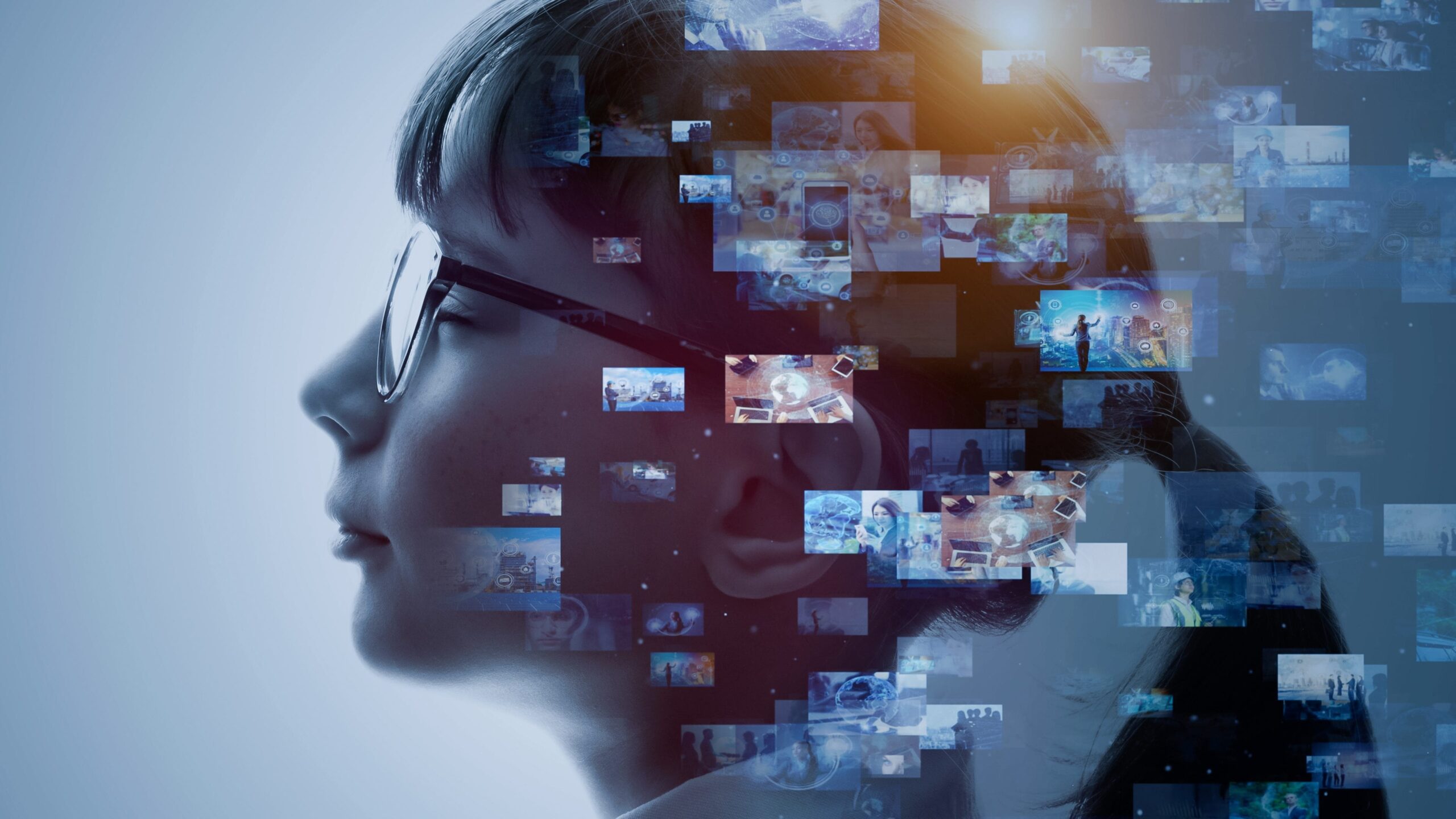
It may seem science fiction, but neurosciences are developing projects to reconstruct dreams using artificial intelligence. These “dream machines” – technologies to reconstruct the images of our dreamlike activity – make use of sophisticated tools capable of precisely measuring the activity of the cerebral, combined with powerful algorithms of machines trained trained to convert these complex data into images that depict the content of the dreams themselves. The first “dream machine” dates back to 2013: made by a group of researchers from the University of Kyoto, the system was able to produce static frames of what patients dreamed of. Today, in 2025 a study still under revision declares that it has reconstructed, thanks to artificial intelligence, of real films capable of reproducing the narrative sequence of dreams. However, to have a domestic “dream machine” is still early: the participants in the studies are still very few and the technologies available still limited.
How the “dream machine” works: record them is (theoretically) possible
Recording and decode the content of our dreams, in theory, is not an impossible undertaking, but it is certainly very complex. The dreams, on the other hand, belong to such an intimate and hidden dimension of the mind that often escape ourselves, that we forget them shortly after awakening. Neuroscientists, however, today very powerful machinery available, such as functional magnetic resonance imaging (FMRI), capable of rigorously measure the brain activity both from wake -up and during sleep, allowing you to dig thoroughly in the human mind.
To reconstruct the content of a dream starting from a complex series of data and brain activation maps we can exploit a fascinating property of the dream world: its similarity with the real one. In fact, when we observe something in a dream (a house, a friend, or maybe a starry sky), our brain behaves similarly to when he observes the same elements during the vigil, activating areas in part overlapping.
This means that if we record a person’s brain activity while observing certain objects or people when it is awake, we can obtain highly specific neural activation patterns. In short, we know which areas of the brain are active when we look at a friend or a glass.
These “cerebral activity labels” can then be used to train machines learning algorithms (real “dream machines”) to recognize the same elements when they appear in a dream, converting them directly into the corresponding images. In practice, we teach the machine that a certain scheme corresponds, for example, to the image of our dog: if this same scheme is proposed when we are sleeping, the car connects it directly to our four -legged friend.
The first “frames” of dreams: a goal obtained in 2013
The stratagem just described was successfully applied by a research group of the University of Kyoto, led by the neuroscientist Yukiyasu Kamitani, who for the first time in 2013 managed to take real “screenshots” of the visual imagination of dreams.
The researchers focused on a sleeping phase called hypnagogical state, a moment of transition from wakefulness to sleep in which dreams appear as vivid images, almost hallucinations, which can be easily remembered when you awakening.
In the study, published in the well -known Science magazine, three participants were awakened about three hundred times each and invited to describe the visual scenes they had just “observed” in a dream. To decipher them, the researchers trained Machine Learning algorithms to connect the data recorded during sleep from the FMRI with the cerebral activity patterns collected when the same subjects observed similar images from awake. Thanks to this sophisticated technique, scientists have managed to create the first pioneering machines of dreams: systems capable of recording static frames of the dreamlike content, which were probably corresponding to the stories of the participants.
If you are curious to see how a dream is studied, the Kamitani group has published on YouTube a video showing all the delicate and innovative passages of the experimental protocol used in the study.
A 2025 study tried to transform dreams into movies
Being able to capture the “snapshots” of our dreams is already an extraordinary technological revolution in itself. However, it’s a bit like saying that you have seen a film based only on the trailer. On the other hand, dreams are often not static images, but stories experienced in first person with a very precise narrative and narrative sequence.
A Japanese research team tried to take one more step and said she managed to convert dreams into real movies. The researchers measured the brain activity of three participants through FMRI during about three and a half hours of sleep, comparing it with a database called Natural Scenes dataset: a large archive of data that collects over 65 thousand images of objects and people, each associated with its “cerebral activity label” obtained by observing the images from awake.
By crossing the data, an algorithm of Machine Learning managed to reconstruct the progressive sequences of “frames” of the dreams of the participants, a bit like when using the “burst” mode of a camera.
At that point, the images were entrusted to Chatgpt, which developed a first -person screenplay, with a coherent plot, a succession of images and a sound substitute suitable for the scene. This script was then used to create short videos that reproduced, with a certain approximation, the content of the dreams of the three participants: kittens for subject 1, a snowboard descent for subject 2 and people who run for subject 3.
The limits of the study
So are we really close to seeing our dreams as if they were films in the cinema? For the moment, it will still be necessary to wait. The article in question has not yet exceeded the revision process, the tool through which the scientific community valid for the solidity of a study and the results obtained. In addition, the sample examined is still too small to draw generalizing conclusions and the algorithms used not yet powerful enough. Out of a total of five dreams analyzed, in fact, two (40% of the total) were not decoded due to their complexity.
In other words, the “dream machine” is not yet ready to get to our homes, but considering the speed with which progress runs, that moment is perhaps not so far away.