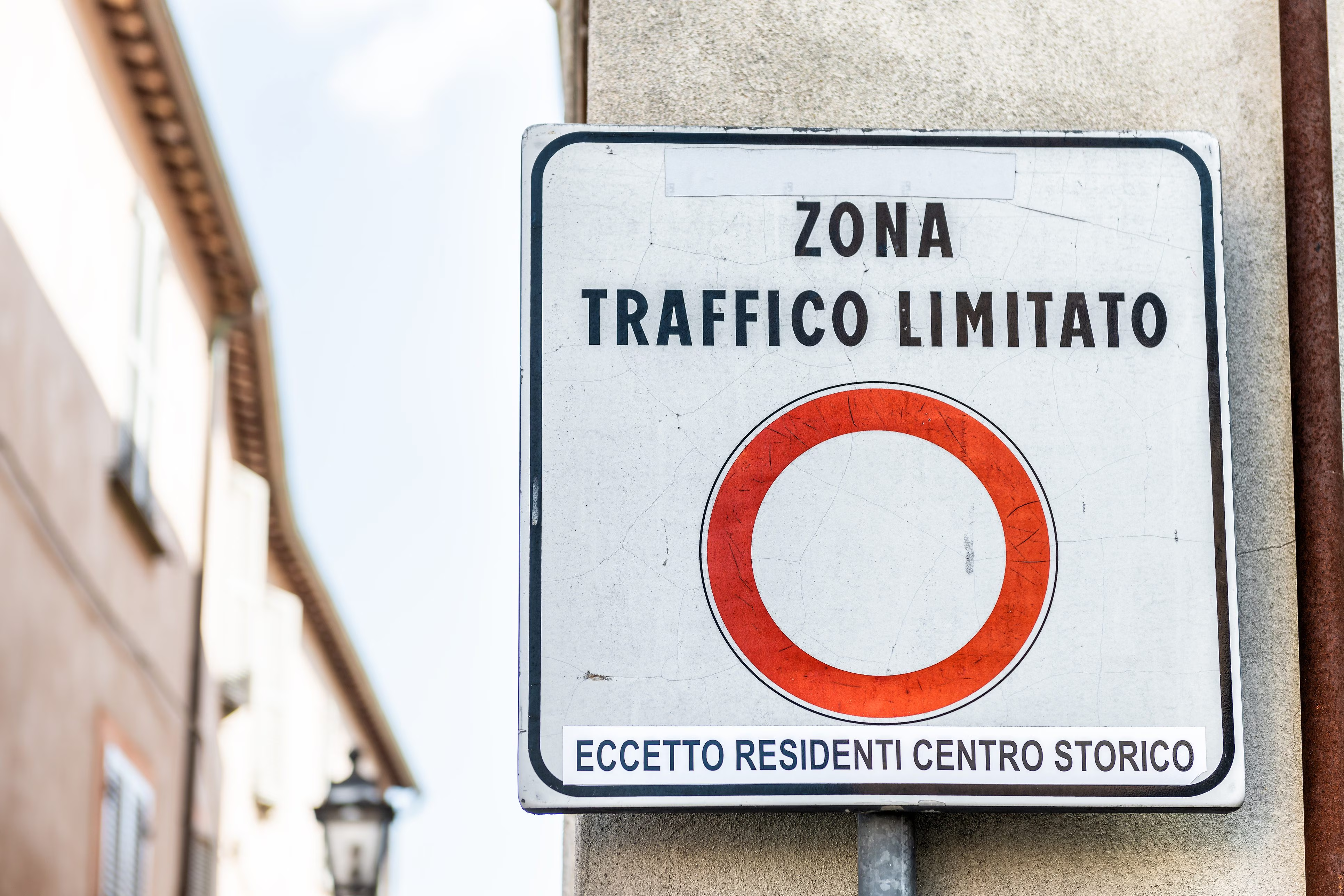
90% of European ZTLs are located in Italy, this is what the research reports Cars and cities, beyond the ban published in 2026 by the Auto and Mobility Observatory of the Luiss Business School. If we also consider other forms of restrictions on car access (such as low emission zones), in the Bel Paese there are as many as 485 overall restrictions on access to urban traffic (UVAR), equal to 56% of the European total.
Entering an Italian historic center by car often means encountering a sign with three letters written on it: ZTL. In fact, the Limited Traffic Zone is now a familiar presence in many of our cities, much more than in the rest of Europe. In Italy there are 446 ZTLs and the gap from other countries is notable: in second place in terms of number of ZTLs we find Spain (29) and on the lowest step of this podium is Portugal (9).
To understand this record we must look at the history of our cities. Many Italian urban centers have a medieval or Renaissance origin designed centuries before the invention of the automobile: narrow streets, alleys, small squares and very little space for cars, but still with a strong presence of commercial and tourist activities. It is no coincidence that the national record goes to Tuscany, with 72 ZTL. There is a map of the ZTL which, for each municipality, shows us where it is never possible to enter. where traffic is limited to specific times and where there are low emission zones.
However, if in common language we tend to call ZTL any area in which a car cannot circulate freely, technically the limitations can also be of another type. The term used internationally to indicate, in general, the measures with which a city regulates vehicle access to certain streets or urban areas is UVAR, an acronym for Urban Vehicle Access Regulations.
Since there is no univocal definition of the different categories of limitations that fall under this term, the authors of the Luiss research calculated the number based on these three categories:
- Congestion charging: these are areas whose access is linked to the payment of a toll, as occurs for example in the central areas of London.
- Low Emission Zone (LEZ): in this case access is prohibited only to vehicles that do not comply with certain environmental requirements, for example a specific emission class. In Italy, systems such as the Green Belt of Rome and Area B of Milan fall into this logic. Area C of Milan is instead a special case, because it combines a LEZ with an access fee typical of access systems Congestion Charge.
- Limited Traffic Zones (ZTL): in traditional ZTLs, access is generally allowed to certain categories, such as residents, traders or authorized vehicles, regardless of the vehicle’s emissions. Many Italian ZTLs, however, also integrate LEZ-type environmental restrictions, combining the two criteria.
Overall, in Italy there are 485 UVAR-type measures out of 863 registered in Europe, equal to 56.2% of the total.
Reducing the number of cars in certain areas can mean less congestion, fewer emissions, less noise and more space for pedestrians and public transport. Furthermore, making some urban areas more livable can also have repercussions on economic activities: safer and more pleasant streets can encourage the use of public spaces and commercial activities. However, one of the problems highlighted by the Luiss research is the fragmentation of the rules.
In Italy, restrictions are often set locally and can change from one city to another. And if for those who live there, these rules may be relatively easy to know, for those arriving from another municipality, or especially from abroad, it can become much more complicated to navigate timetables, authorized categories, vehicle requirements, payment methods and registration systems
Also considering that in 2026 the number of Municipalities authorized by the Ministry to install electronic access control systems has risen from 446 to 572, the question of how to standardize these limitations is therefore becoming increasingly important.
The Italian record, therefore, is not just a numerical record: it is also an indicator of how important it will be in the coming years to coordinate the transition towards more sustainable urban mobility with the economic and social needs of those who live, work and also pass by as tourists in cities.