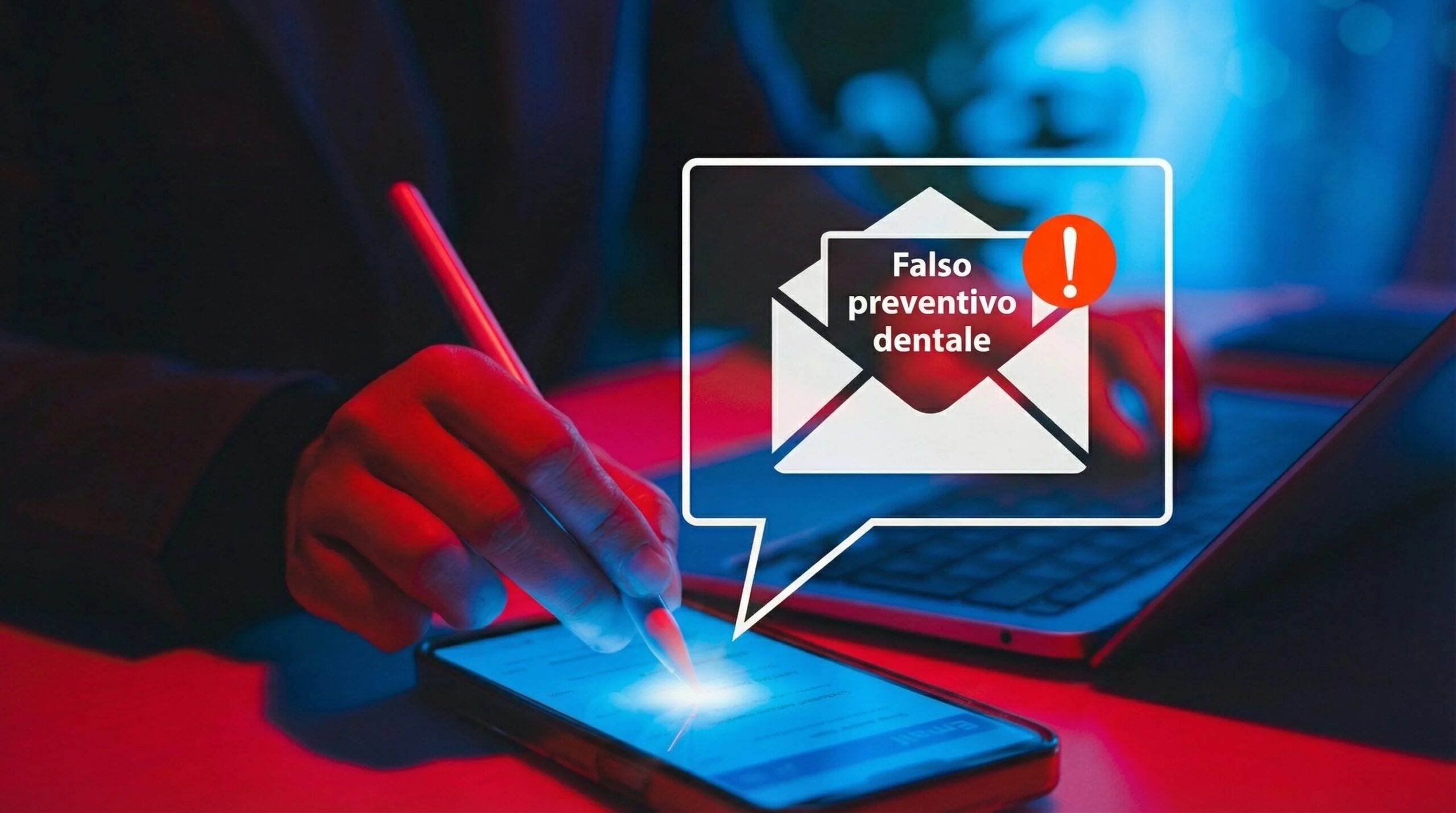
A new online scam is spreading on WhatsApp. This combines two elements that are now recurring in the panorama of digital scams: the theft of personal accounts and the improper use of reliable brands. In this case, the scammers exploit the popularity of a well-known dental group, DentalPro, to make credible requests for payment (from €450 up to €1,350) which, in reality, have no basis. The result is a seemingly plausible communication, often sent by known contacts, which prompts bank transfers to be made with some urgency. Analyzing the dynamics, we see that the attack starts from the compromise of a WhatsApp account, obtained by inducing the victim to share a verification code: a technical procedure that allows you to take control of the account itself. From there, the scammer contacts the entire address book, sending falsified documents that imitate quotes for urgent dental care. To defend yourself, you must learn to recognize the scam and always verify requests through official channels and carefully check the data in the documents.
How the DentalPro false quote scam works
The scam mechanism is based on phishing, a deception attempt aimed at stealing data or money by pretending to be a reliable person. In this case, however, the strategy is more sophisticated because it passes through real accounts. Scammers gain access to a WhatsApp profile by convincing the victim to share a code received via SMS, often under an innocuous pretext, such as voting for a mysterious online competition. Once inside, they send messages to all your saved contacts, making the communication credible because it comes from a known person.
The content of the message is constructed to appear coherent and urgent: payment of a supposed estimate for dental care is requested, accompanied by documents that improperly display the DentalPro brand. If observed carefully, however, the documents appear to be registered to non-existent professionals rather than to the company just mentioned, the IBANs indicated refer to individuals and not to corporate entities, and the company data is inaccurate. These elements represent useful indicators for unmasking the scam attempt.
A crucial aspect is the psychological lever used: urgency. Requests are formulated in a way that prompts immediate action, reducing time for reflection. This approach is typical of digital fraud, because it exploits a bias that leads to reacting quickly without analyzing the situation thoroughly. In the specific case, those who have recently had relationships with dental facilities can perceive the request as legitimate and proceed with payment without further checks.
How to protect yourself and what to do
To protect ourselves from scams, we need to take a methodical approach. First of all, no payment request received via WhatsApp should be trusted without proper verification. Contacting DentalPro directly through its official channels is the best way to check if there are any outstanding payments against you. Furthermore, it is important to always check the name of the payment: companies operate through company accounts, not personal ones.
Protecting your WhatsApp account is another key point. Enabling two-factor authentication significantly reduces the risk of unauthorized access. Likewise, you should never share codes received via SMS, regardless of the context in which they are requested. Other things to remember, it is better not to open links and attachments from unknown contacts or from trusted contacts who make unusual requests, such as requesting payments in your favor.
If you have received the scam message and have made the requested payment, contact the bank immediately to try to block the transaction. At the same time, report the incident to the authorities, for example the Postal Police, providing all available evidence, such as messages and receipts. This step not only helps in the recovery effort, but also helps to counteract the spread of the scam.