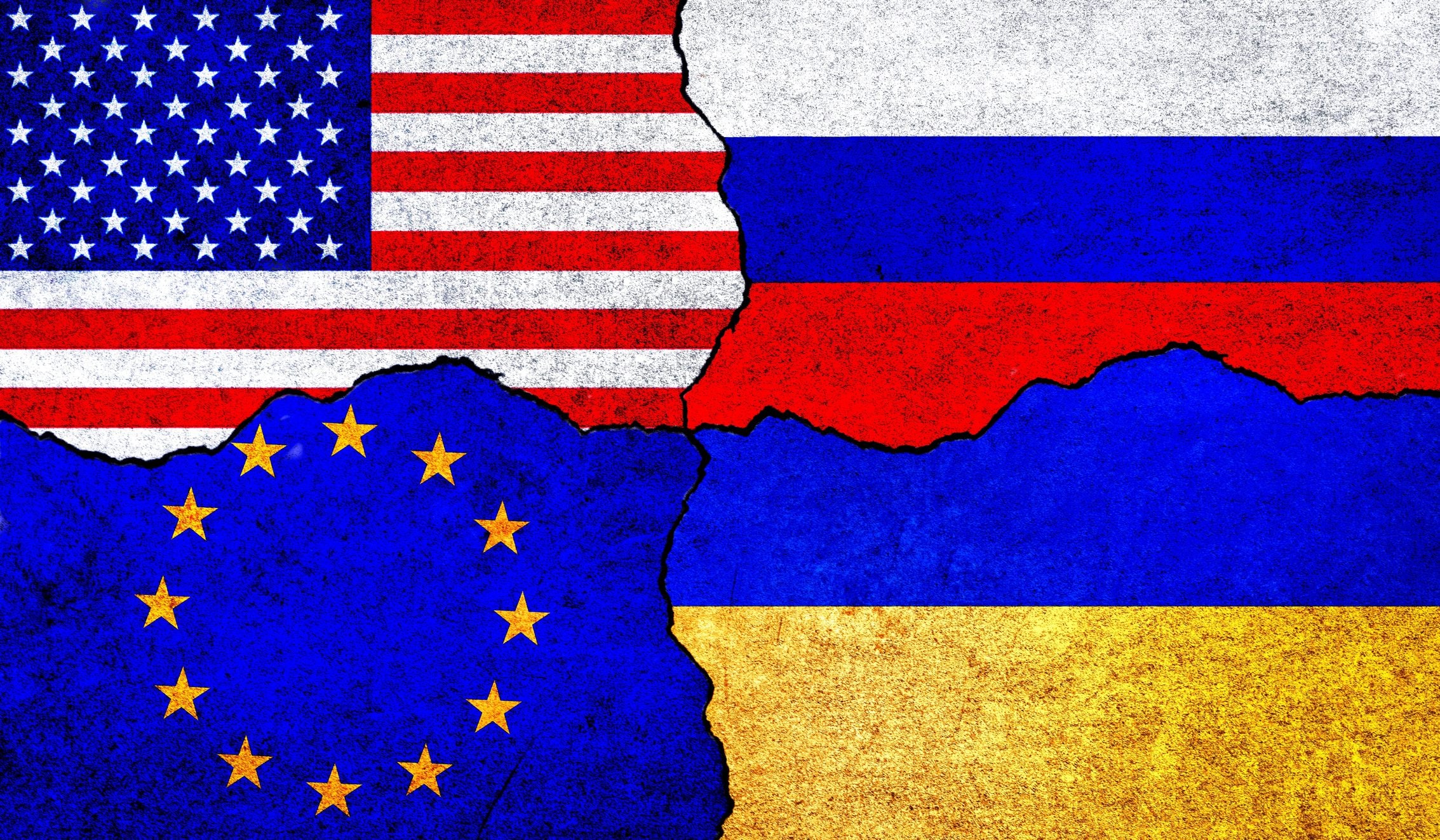
Russian diesel arriving in Europe sold by Washington, US (rather than European) weapons purchased to support Ukraine and a military standoff between Kiev and Moscow that no one seems to really want to resolve. The European Union finds itself caught between an ally that treats it as a client and a neighbor that considers it an adversary, without being able to formulate a foreign policy potentially resolving the conflict.
We interviewed Professor Aldo Ferrari, co-head of the ISPI Observatory on Russia, the Caucasus and Central Asia, to analyze the contradictions of the European position: the energy and military dependence on the United States, the real meaning of the hybrid threats attributed to Moscow and the absence of any credible strategy for a possible post-war period.
Let’s start with the recent agreement between the United States and Russia on diesel fuel. With the sanctions lifted by Trump, Moscow will release large quantities of diesel to the USA. Europe, which has stopped importing Russian diesel, will still end up buying diesel of Russian origin from the United States, but at a higher price. Why is our continent, despite being vulnerable from an energy point of view, not taking action to protect its interests?
The question is clear, it’s the answer that is problematic. I obviously respond and am responsible for what I say – and I don’t like saying it – but I believe that Europe has been completely wrong in policy for years, both with respect to the relationship with the United States, with Ukraine and with Russia. I am used to thinking of a Europe as an ally and within certain limits subservient to the United States: in an unequal alliance like the one with the United States, the latter commanded and we obeyed, because we liked the US political, cultural and social model.
But this meant following the United States in many senseless adventures, such as the war in Iraq that no one wanted in 2003 (except Great Britain), but in which we were forced to participate precisely because we were tied to the United States. Then Russia invaded Ukraine in violation of international law and we, understandably, sided with the invaded country. We support Ukraine economically and militarily, together with the United States, and we continue to support it even when – after Ukraine’s failed major counteroffensive in 2023 – it is clear that there is a military stalemate between Ukraine and Russia.
Meanwhile, Russia is devastating Ukraine, bombing it in a terrifying manner: not so much in the urban centers, because civilian losses are much more limited compared to the victims of the Second World War, but with devastating attacks on infrastructures, factories, roads, ports and so on, which will one day have to be rebuilt.
Meanwhile, the United States with Trump withdraws from the alliance and we Europeans decide to accept their imposition: they force us to buy their weapons to give them to the Ukrainians, rather than directly supplying them with those that we produce in Europe. Now we no longer import gas and oil from Russia, but buy gas from the United States at a price that is enormously higher than before.
As a European citizen, I feel like saying that this is a very serious situation, of course, because Russia invades Ukraine and because the United States bombs randomly, in particular Iran. But also because it seems that we Europeans have lost the diplomatic common sense that should guide countries, first and foremost in the defense of their own national, economic and security interests.
Regarding the news on Russian espionage and the alleged plans to attack European defense leaders, is there any logic behind these accusations?
Look, I think espionage has existed as long as the world has existed and all countries spy, including those of NATO. What we are talking about, however, is something different, namely the circulation of sensational hypotheses that often lack any logical sense. Regardless of the validity of the news, why would Russia want to exterminate European military leaders or even target them selectively? By invading Ukraine, Russia has committed a very serious act against international law, it has devastated a country and, in reality, it is also suffering very serious blows. But he did it because he had a historical-political logic that he explained to us for years, while we didn’t listen to him. We refuse to take into consideration the issue that is among the origins of the conflict, namely the expansion of NATO, with the possible entry of Ukraine.
But I would like to understand what it would be ratioreasonableness, the Russian interest in attacking European military leaders or invading a NATO country, in the face of an obvious impossibility of then countering NATO from a military point of view. Because the Russians are struggling, very hard to advance in Ukraine: so what sense would it make to take sides against a much more powerful military alliance? The question at this point is one: do we want to put an end to the war or, as it seems, do we just want it to go on forever, since it is Ukrainian citizens who are dying?
At this point what can we expect in the short term? Will the military stalemate continue or is there room for a change of direction?
One thing that could happen is an end to the military stalemate, meaning that Ukraine collapses at some point. Alternatively, it is possible that something unexpected could happen in Russia, such as Putin’s death, and this could have direct consequences on the progress of the war.
But these are all theories, they are possibilities rather than reality. What we have before us, in essence, is a situation of military stalemate (although the Russians on the field are moving forward very slowly, almost negligibly) and a complete diplomatic and, in my opinion, also intellectual paralysis on the part of the European Union, which acts in a rhetorical manner, harming both Ukraine and itself.
The main problem is that not only are we not doing anything effective to end the war, but we are not even thinking about how we will behave when the war is over, how we will help Ukraine in reconstruction, what our relations with Russia will be like and whether there will be any possibility of reviving relations (based mainly on our strong energy needs) with our main neighbor.