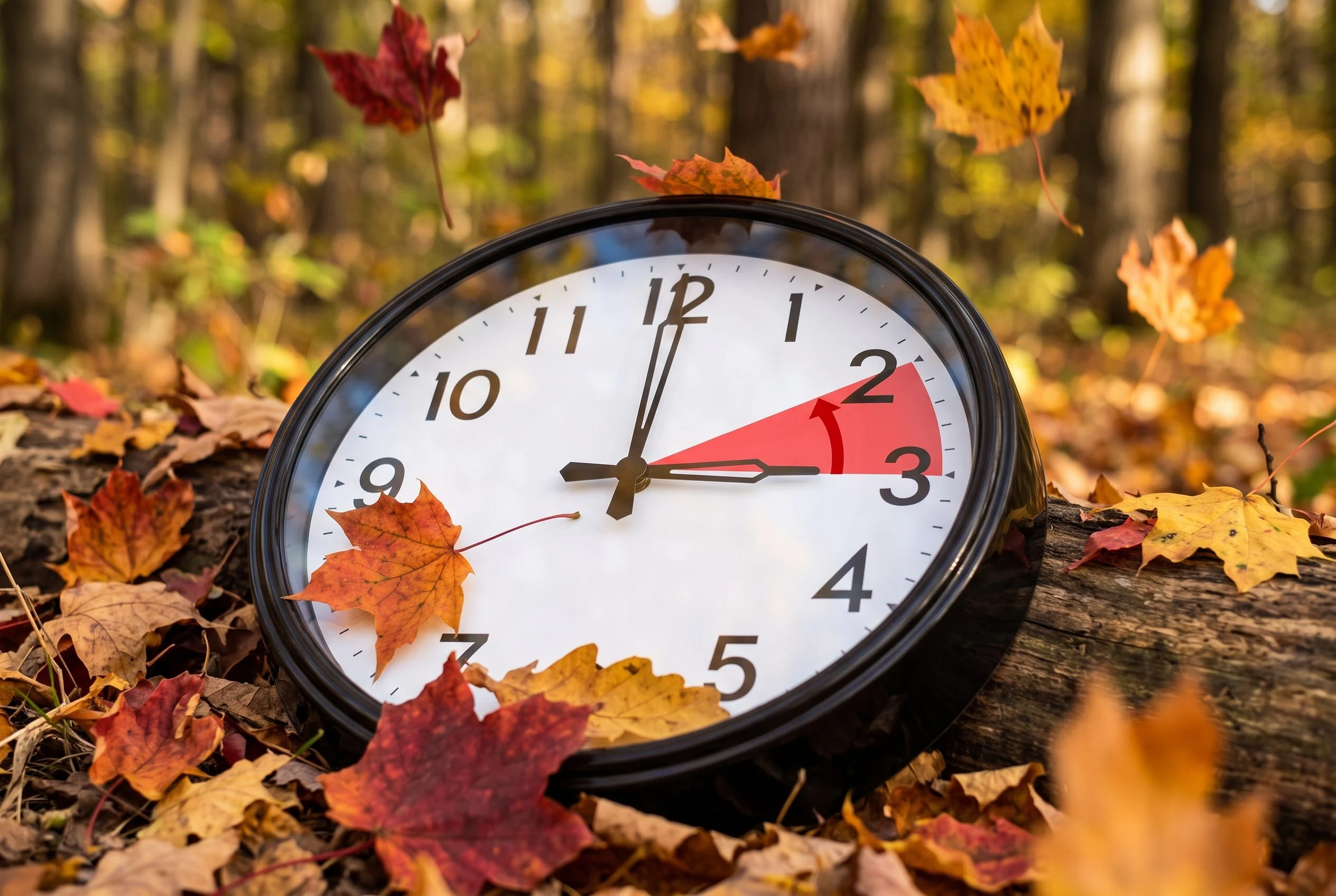
On the night between Saturday 24th and Sunday 25th October 2026, solar time officially comes into force in Italy and throughout the European Union: at 03:00 in the morning the hands will move back an hour (becoming 02:00), giving us an extra hour of sleep for the first night. The time change will bring both sunrise and sunset forward by 60 minutes, thus leading us to have more sunlight in the early morning but “shortening” the days in the late afternoon.
Barring any changes, solar time should remain in force until the last Sunday of March, which next year corresponds to 28 March 2027. In reality, the twice-a-year time change was rejected by the fact-finding investigation conducted by the tenth Commission of the Chamber of Deputies: the alternation between summer time and solar time was in fact considered surmountable “due to the critical issues, of a health and organizational nature, that the transition phase determines in the days immediately following the change”.
The Commission, however, has not expressed its opinion on the possibility of making summer time permanent or, on the contrary, solar time permanent. The choice, therefore, remains open: among the final recommendations there is also the start of an experimental phase, as well as the opening of new discussions at European level. Some countries close to us, among other things, have already abolished this alternation, such as Russia (which has adopted solar time all year round since 2014) or Turkey (solar time abolished in 2016).
What time does Standard Time return on October 25, 2026
Between Saturday 24 and Sunday 25 October 2026, solar time will officially start: the hands will be moved back by one hour, with 03:00 in the morning becoming 02:00. The change will take place simultaneously throughout the European Union: more specifically, solar time is expected to come into force in all EU countries at 1:00 UTC (coordinated universal time, i.e. the Greenwich Mean Time zone), which in Italy corresponds to 3:00 in the morning.
As always, only analogue clocks will need to be moved manually to align with the new time: all digital clocks, such as those on smartphones, will update automatically, without the need for any intervention.
What changes by moving the hands back 60 minutes
Solar time is so defined because it follows the apparent motion of the Sun, placing noon (i.e. 12) around the moment the Sun reaches its highest point in the sky. This is in fact the “natural” time, which allows you to take advantage of natural lighting in the early hours of the morning. Moving the hands back 60 minutes, therefore, brings forward both the sunrise and sunset times by an hour: consequently, we will find ourselves with an extra hour of light in the early morning, losing an hour of light in the evening.
In Italy, alternation with summer time (“summer” time) was experimented for the first time in 1916, but has been officially in force since 1966. This change of time twice a year, however, affects our rhythms, electricity consumption and also the organization of our societies.
This is why in recent years discussions have intensified for a possible elimination of the alternation between summer time and standard time: already in 2019 the European Parliament had expressed its desire to abolish the seasonal transition, but the procedure has stalled over the years due to the COVID-19 pandemic and, above all, the difficulties in defining a common calendar at European level.
In March 2026, the Italian Parliament launched a fact-finding investigation precisely to investigate the possible impact of permanent summer time on the national territory, with a focus on the possible effects and repercussions on the production sectors: on the energy consumption front, Terna data indicate that the current regime (with seven months of summer time) produces savings of approximately 302 GWh per year. The extension of summer time to the winter months would add another 160 GWh, for a total of approximately 462 GWh, equal to approximately 0.15% of the national electricity requirement.
In economic terms, we are talking about approximately 120 million euros for 2026, of which 80 million refer to the April-October period already in force. However, the document highlights that this benefit has progressively reduced over the last twenty years, especially due to the spread of LED bulbs and low-energy lighting systems.
The conclusions of the