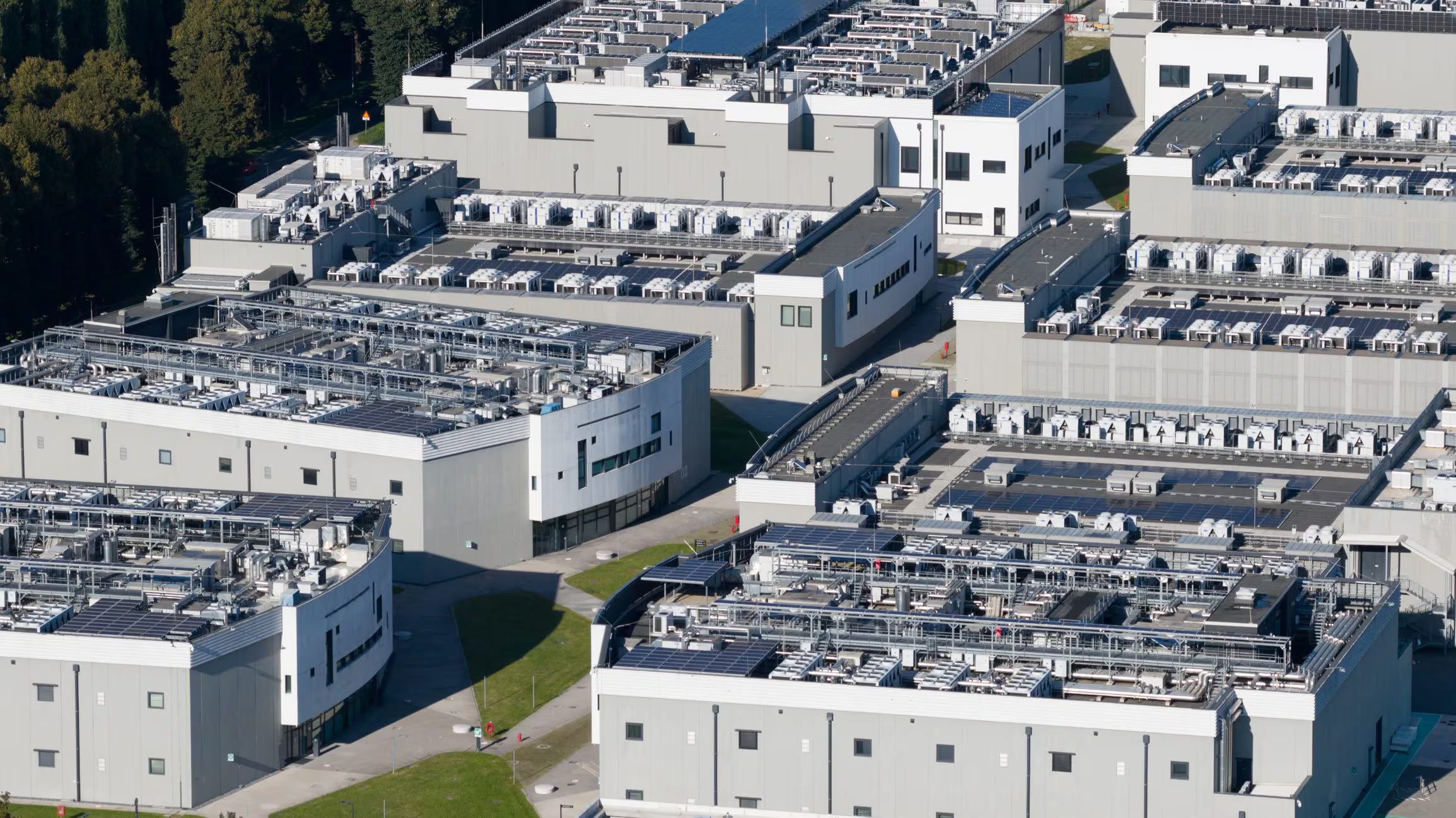
60 large data centers planned or under construction in the United States by tech giants such as Amazon, Microsoft, Google and Meta could produce, once fully operational, something like 101.5 million tons of carbon dioxide every year. To give you an order of magnitude, this is the amount comparable to the annual emissions of 27 coal-fired power plants or approximately 24 million gasoline-powered cars. The estimate on the impact of Big Tech comes from an analysis of Financial Timeswhich considered the expected electricity consumption of the 60 plants and related them to the current composition of US energy production. The result would correspond to about 7% of the emissions generated by the US energy sector in 2025.
Why Co2 emissions are growing: a demand problem
According to Jonathan Koomey, a researcher specializing in energy efficiency and climate solutions, this is an absolutely plausible estimate. Although the figure represents a relatively small share of overall US emissions, it highlights a significant increase compared to the prospects that the technology companies themselves outlined until a few years ago, when they announced programs to reduce their climate footprint. The central point of the whole matter is the amount of electricity needed to run these infrastructures.
With the spread of artificial intelligence, the demand for data centers and, consequently, the energy with which to run them has grown rapidly, because training and using AI models requires significant resources and computing power. To meet this demand, U.S. power companies are increasing both renewable and fossil fuel generation. According to the analysis, three-quarters of electricity generation and distribution companies serving the 60 data centers are planning or building new natural gas-fired capacity. And about a third of coal-fired power plant operators are postponing their retirement.
All this happens because, when demand on the electricity grid increases rapidly, adding new gas-fired generation can be simpler and faster than building new renewable capacity. Aaron Bergman, researcher of Resources for the Futureexplained that «whenever you increase demand on the grid, you are very likely to see more emissions».
As a result, gas power plants could increase by 50%
The numbers show how strong this trend is. In 2025, according to the Global Energy Monitorthe United States has nearly tripled the gas-fired generation capacity under development. If all these plants were built, the national fleet of gas-fired power plants could increase by almost 50%. More than a third of the new capacity would go directly to data centers. Some companies have also explicitly linked new gas plants to the growth of computer centers. Seventeen percent of utilities serving the 60 projects told regulators they are building new gas-fired power plants to meet demand for at least one specific large data center.
A concrete example
One example is Georgia Power, which supplies power to Amazon and Microsoft data centers. The company has applied for permission to develop 9,885 MW of new capacity, much of it for large new customers. At the same time, 5,234 MW of new gas-fired capacity is planned or already under construction in the state. The company also postponed the retirement of some coal plants, which could remain operational until 2035 or beyond. All these numbers do nothing but fuel the great debates that will accompany us in the coming years regarding the sustainability of artificial intelligence.