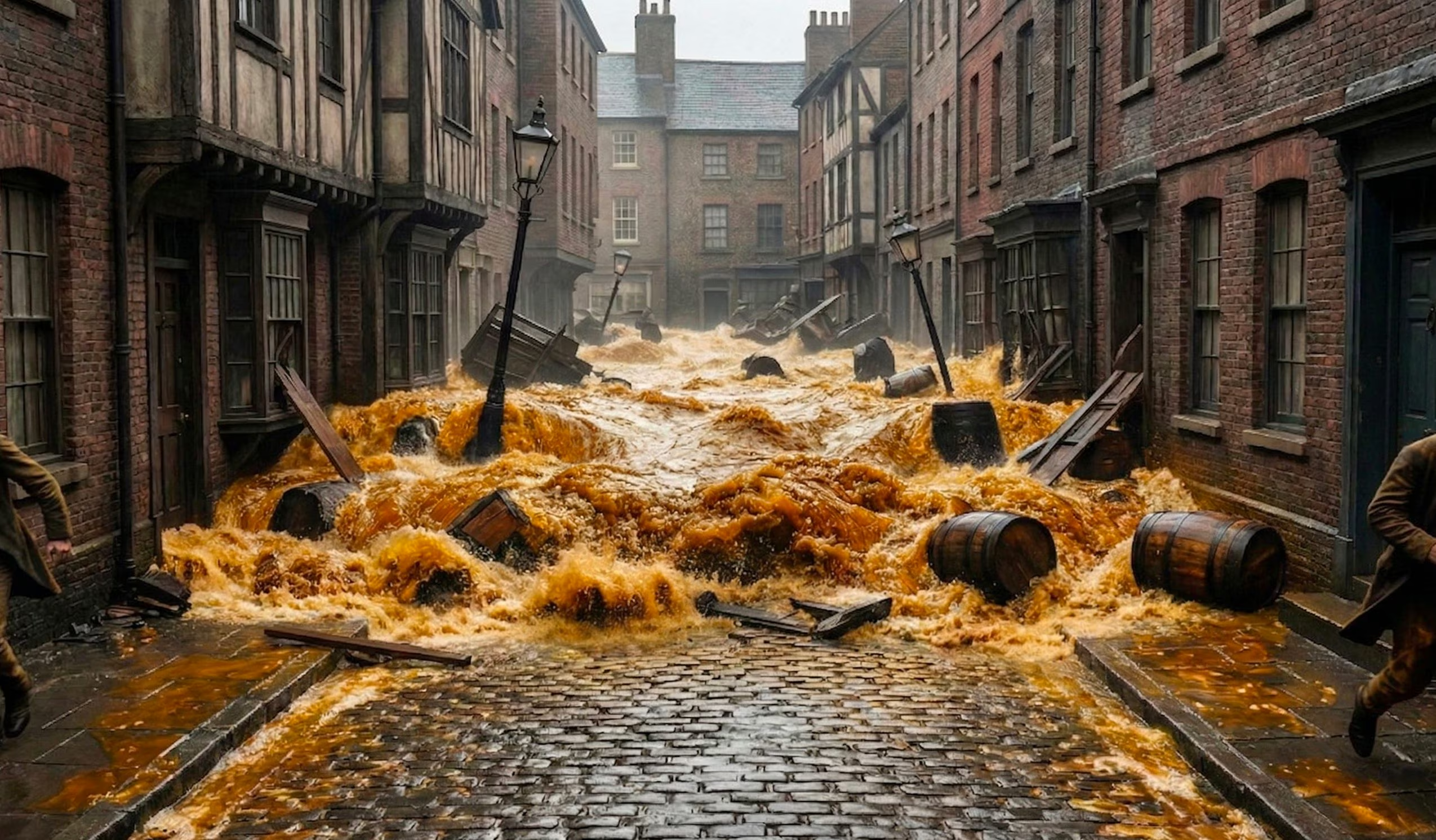
Getting caught in a flood of beer might seem so rare as to be impossible. As unlikely as it may be, however, we have evidence that an accident of this kind occurred at least once: on 17 October 1814 the London Beer Flood occurred when over a million liters of beer poured into the streets of London from the Horse Shoe brewery, forming a wave approximately four and a half meters high and capable of causing as many as 8 victims. But how was it possible?
London Beer Flood, the brewery accident
Our story begins at the Horse Shoe Brewery on Tottenham Court Road, London. As reported by Historic UKin 1810 the Meux and Company company had a 6.7 meter high wooden fermentation tank installed on the premises. Held together by massive iron rings, this enormous vat contained the equivalent of more than 3,500 barrels of brown porter ale, a beer similar to stout.
On October 17, 1814, however, disaster struck. Starting from mid-afternoon – as later confirmed by the investigations – the tub began to show signs of instability and one of the iron rings that kept it standing broke. In less than an hour the tank broke, also damaging other smaller tanks and causing over 1.2 million liters to spill onto the streets of the city, with waves up to 4.6 meters high.
This is the statement to the local press by George Crick, the employee on duty on the day of the disaster:
I was on a platform about 30 feet from the tank when it exploded. I heard the bang when it exploded and I immediately ran to the warehouse, where the tank was. It caused terrible devastation in the premises: it knocked over four barrels and broke several, as the pressure was really too much. Between 8,000 and 9,000 barrels of porter were lost
The aftermath of the London beer flood
The “beer tsunami” – as ridiculous as it may seem to us, from a certain point of view – soon proved lethal. Alcohol began to flow through the streets of the city and some houses even collapsed. Many buildings were flooded, including the Tavistock Arms pub where a barmaid lost her life. Furthermore, it must be kept in mind that many families, the poorest, in that area lived in the basements: even the “luckiest” ones who managed to save themselves still saw all their possessions taken away.
However, unlike what some sources have reported over time, to date there is no concrete evidence that people have started drinking beer directly from the street, getting drunk. This appears to be a post-disaster version and based more on imagination than on concrete and established facts. Also because that liquid was now completely clouded by the debris and dirt collected along its destructive path.
But how did the matter end from a legal point of view? The jury acquitted the brewers, attributing the accident to a case of force majeure. Additionally, Henry Meux & Co., the owner of the plant, received a refund for the excise duties paid to produce the lost beer.
Overall the company suffered damages worth today’s equivalent of over £2.7 million.