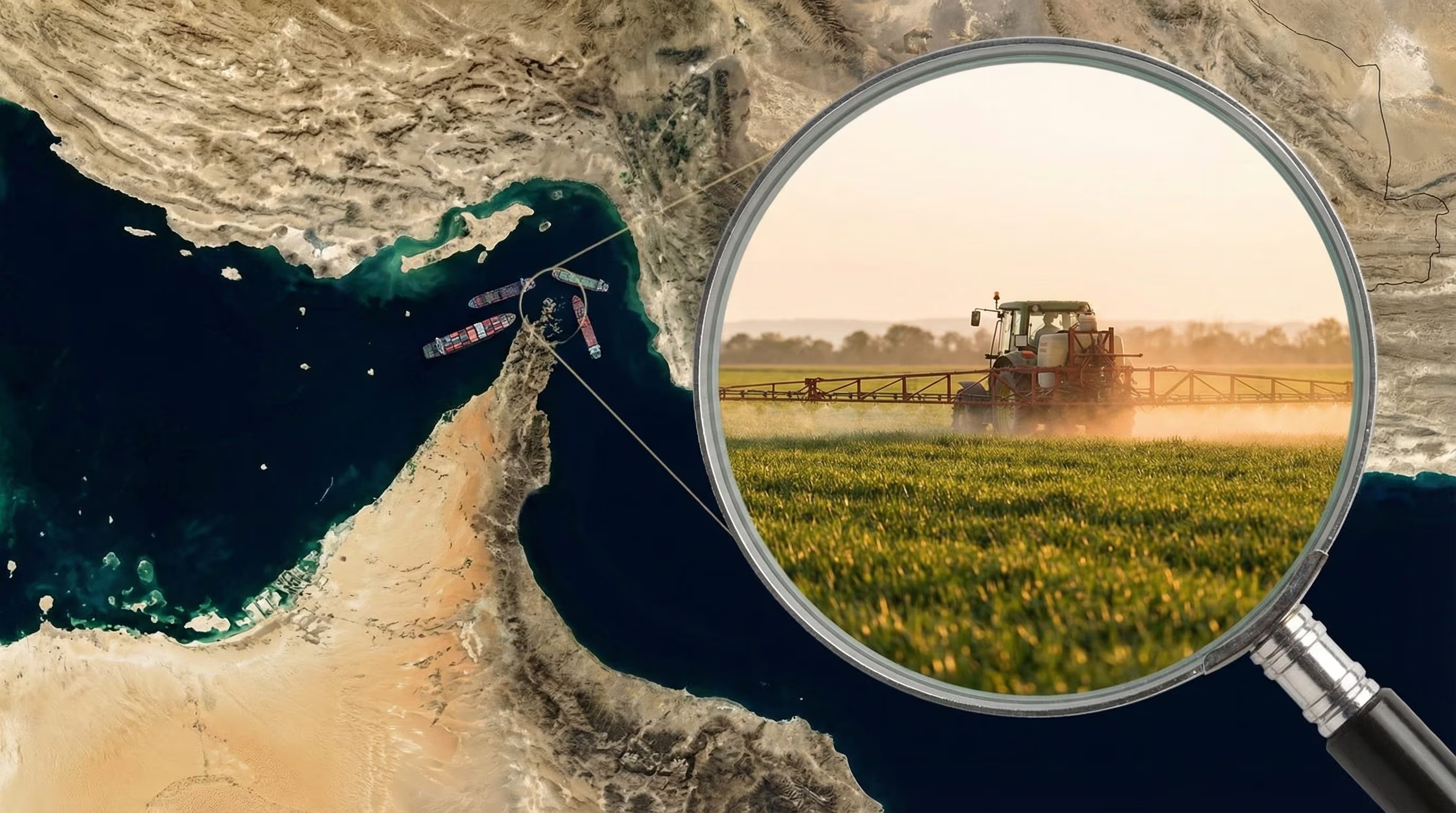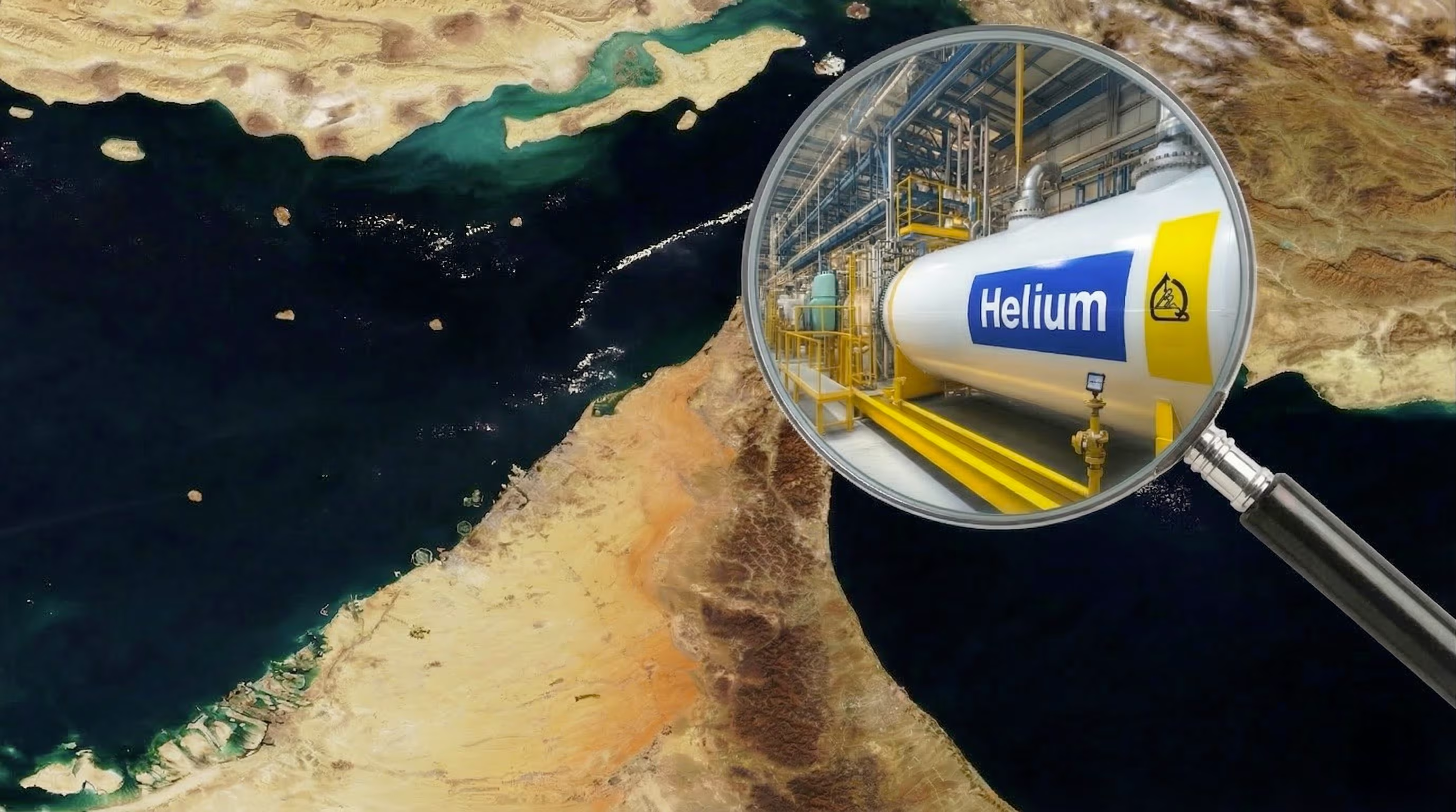
The blockade of the Strait of Hormuz and attacks on energy infrastructure in the Persian Gulf have disrupted 30% of trade in helium, a gas that plays a crucial role in the manufacture of semiconductors. We are talking about a cryogenic gas, that is, used at extremely low temperatures in liquid form to cool the circuit printing systems on the silicon wafers with which the chips are made. The concentration of helium production in a few countries – in particular the United States and Qatar – makes this raw material vulnerable to geopolitical shocks like the one we have been experiencing for over two weeks now.
Let’s be clear: we are not currently facing an immediate halt in global chip production. In fact, large companies have helium reserves and recycling systems, which allow them to reuse part of the gas used.
Qatar, the Strait of Hormuz and the helium crisis: what’s happening
It all started on March 2, when Iranian drones hit the Ras Laffan plant in Qatar, which led to the suspension of operations. The agency Reutersin referring to this episode, stated:
State-owned energy giant QatarEnergy, the world’s second-largest LNG exporter, announced last week it was halting production at its 77 million tonnes per annum (mtpa) plant and declared a state of force majeure on LNG shipments, due to the conflict.
Among the countries most exposed to this scenario is Taiwan, a global hub for the production of the most advanced semiconductors, which now finds itself on the brink of a potential energy and raw materials crisis. The island imports around 97% of the energy it consumes and is significantly dependent on the Middle East, which provides around 37% of the fuel used in its electricity grid, which is heavily based on LNG. This energy is essential to power very energy-intensive plants like those of TSMC (Taiwan Semiconductor Manufacturing Company), which require continuous and stable supplies to guarantee the precision of production processes. , hit in the context of the conflict, has activated a dynamic that involves the entire supply chain: from the Taiwanese factories of TSMC (Taiwan Semiconductor Manufacturing Company) to AI data centers in the United States.
LNG is the raw material from which helium is produced: it is no coincidence that Qatar alone is responsible for a third of the world’s helium production. Among the countries most exposed due to this scenario is Taiwan, which does not have domestic production and imports this gas mainly from the United States and Qatar for the production of chips. Therefore, the destabilization in the Persian Gulf area, combined with the blockade of the Strait of Hormuz, is not only affecting Taiwanese energy supplies, but is also amplifying the risk of interruptions in the availability of helium, with potential direct repercussions on the global production of semiconductors.
In this sense Aleksandr Romanenko, CEO of the market research company IndexBoxstated:
If these conditions (supply disruptions) persist, the market will effectively be short of around 5.2 million cubic meters of helium per month.
The consequences for the tech industry
The problem is that even a brief interruption in helium supply has cascading effects throughout the semiconductor supply chain. In fact, helium is not easily replaceable in industrial semiconductor processes, where it serves to maintain extremely stable conditions during lithography, i.e. the phase in which circuits are printed on chips. According to Phil Kornbluth, by Helium Consultingif the Hormuz blockade persists for another week it will take months for helium production, logistics and supplies to return to normal.
In a context of this type, the invocation of a state of force majeure by the Ras Laffan plant generates strong uncertainties as it avoids companies from paying penalties in the event of failure to comply with contractual obligations. This generates instability which inevitably translates into cost pressure. According to analysts of the caliber of Anish Kapadia of Akap Energyif the crisis continues the price of helium could go from 450-600 dollars per thousand cubic feet to thousands of dollars per unit of volume. This would alter the economic balance of a sector, that of semiconductors, which is worth around one trillion dollars and which supports fundamental infrastructures such as the cloud and artificial intelligence.
At the same time, we observe a second level of criticality linked to other raw materials such as bromine, used precisely in the circuit engraving processes. Bromine production is concentrated in geopolitically sensitive areas such as Israel and Jordan, amplifying systemic risk. In any case, among the critical materials, helium remains the most monitored, because its availability directly affects the operational continuity of factories.