For several days, hauliers have been protesting in various regions in Southern Italy, mainly against expensive diesel, with vehicle stops, protests and blockades which are causing increasing disruption to the circulation and distribution of goods. The protests, which started at the beginning of October in Calabria and then also Puglia, spread to Campania, Sicily, Basilicata, Molise, passing from the motorways to the ports and also arriving in Lazio.
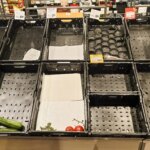
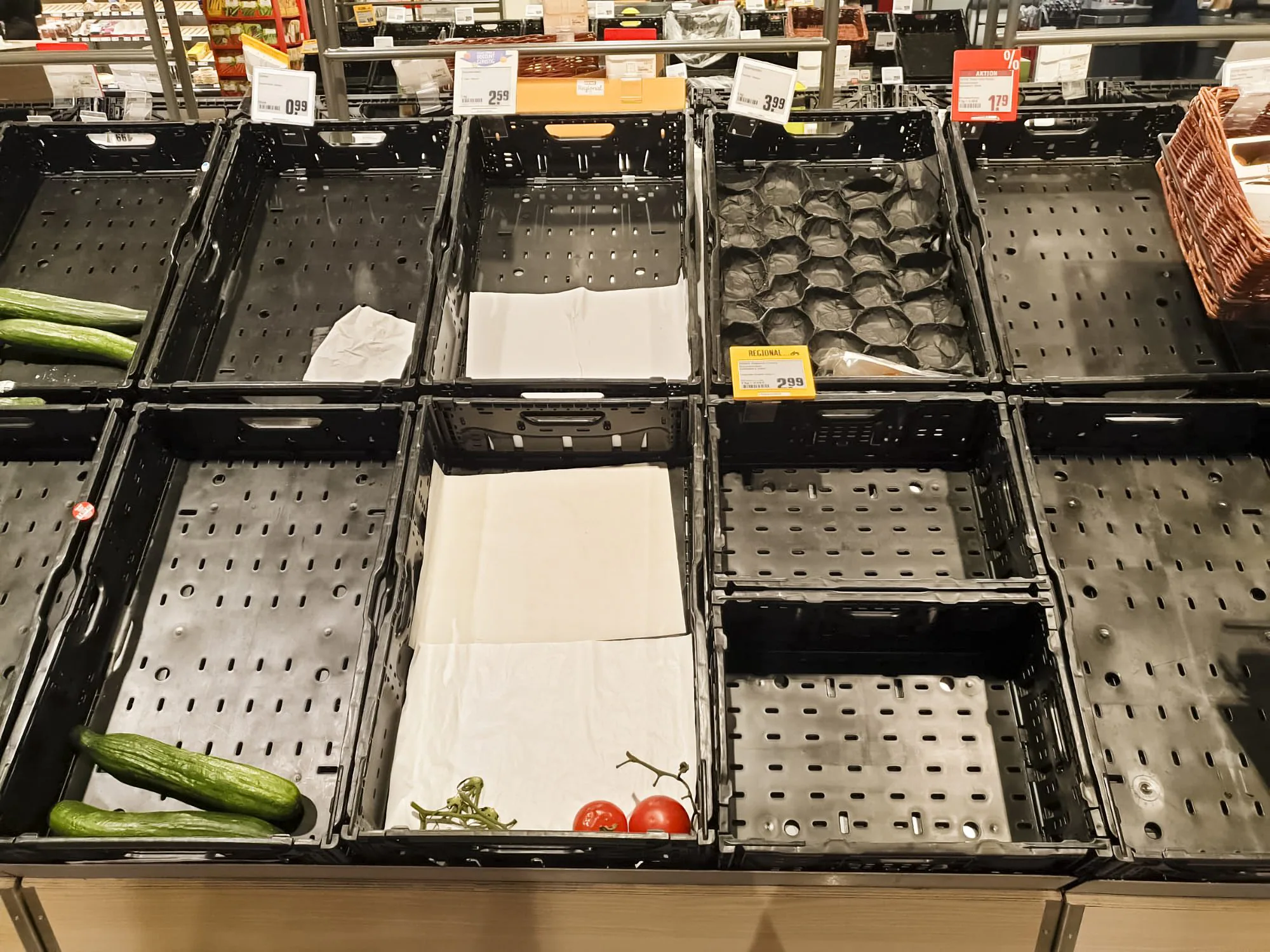
The slowdown in the distribution of goods in supermarkets is having repercussions on various supply chains and sectors, in particular that of food distribution: in some areas of Campania, Calabria and Sicily, progressively empty supermarket shelves are reported, while farmers report the risk of losing crops and fresh products that cannot reach the markets. According to Confcommercio Sicilia, the economic impact of the detention of goods on the island alone is estimated at between 40 and 50 million euros in just five days.
Today, Tuesday 20 October, a meeting is scheduled at the Prefecture of Milan between the Minister of Infrastructure and Transport, Matteo Salvini, and the national trade associations and with representatives of spontaneous mobilizations, to discuss possible measures to support the sector and find an agreement. A confrontation that could prove decisive for the continuation or resolution of the mobilizations.
Why hauliers are protesting: the price of fuel
Among the causes triggering the protest, there is first and foremost the price of fuel, with diesel having reached almost 2.30 euros per litre. According to the latest available data from Mimit, updated to date, diesel stands at 2.257 euros per liter on the national road network and 2.297 euros per liter on the motorway network. Costs rose again starting from the first week of October: the legislative decree of 17 September 2026, n. 162, provided for a temporary reduction in the excise duty on diesel until 5 October 2026, which was then not extended. This contributed to the price increases.
What does this mean for a truck that has to travel 100 thousand kilometres, assuming that it consumes around 30 liters per 100? The theoretical cost of diesel, given the current price per liter, would be approximately 677 euros per 1,000 kilometers and therefore almost 68 thousand euros per 100 thousand km. In June, the same quantity of fuel would have cost around 59 thousand euros, with a difference of 10 thousand euros. This is a theoretical example, but it can give an idea of the price increases. According to what was declared by Confartigianato Trasporti Abruzzo, diesel costs compromise the survival of smaller companies, which already have very low profit margins, between 3 and 6%. According to Assotir, before the crisis fuel accounted for 27% of business costs, today the incidence has risen to 35-40%.
In addition to reducing fuel costs, trucking companies are also asking for economic support. The government announced in September a tax credit to offset part of the expenditure (up to 70% of the increased eligible expenditure) incurred on fuel purchased between March and August 2026 (calculated against the reference price of February 2026, prior to the Hormuz crisis). He later announced that the parameters would be revised to stay within the available funds, corresponding to 386.2 million euros. Unatras, coordination of the main national road transport associations, had complained on 16 October that the companies had not yet received the compensation.
The Minister of Infrastructure and Transport Matteo Salvini convened the associations for Tuesday 27 October, then bringing the meeting forward to today, 20 October, given the intensification of the protests, and announced the desire to unblock approximately 430 million of tax credits to alleviate the burden of high fuel costs, in addition to the 590 million euros already announced in January for the renewal of companies’ vehicle fleets, while the strengthening of the Road Transport Fund and the Marebonus 2026 (a measure aimed at promoting intermodal transport through maritime services) is under discussion.
In Calabria the first spontaneous protests had already begun at the beginning of October. The mobilization also extended to farmers, with various initiatives to block truck drivers organized by the Regional Logistics Federation of the region, which also involved the port of Gioia Tauro and the Lamezia Terme airport area. In recent days we have witnessed blockages on the A1 Milan-Naples, the A2 Salerno-Reggio Calabria, the A14 Bologna-Taranto, the A18 Messina-Catania and the A30 Caserta-Salerno; the mobilizations reached the port of Naples, Abruzzo and Molise, and have now also extended to Lazio, with blockades in the direction of the Frosinone and Ferentino motorway toll booths.
The consequences: roadblocks in Southern Italy, empty shelves and tons of perishable food at risk
The impact of the protests, apart from the blocked roads, was not immediately obvious to everyone, but reports of missing goods on the shelves of several supermarkets in Abruzzo, Molise, Puglia, Campania and Calabria shifted attention. According to Istat, 92.1% of goods in Italy (1,110.5 million tonnes per year, data updated to 2024) travel by road and this broadens the supply chains involved. The consequences are also becoming more evident for consumers, who report increasingly empty shelves in supermarkets and some petrol pumps without fuel due to the failure to deliver supplies, but they also concern farms and producers, who risk throwing away crops and fresh perishable goods.
Farmers and ranchers initially showed solidarity. Now, however, farmers risk having to throw away tons of products: the Consortium for the Protection of the PGI Pomodoro di Pachino reports tons of unharvested tomatoes, given the impossibility of delivering them, while in Gioia Tauro the kiwi producers, “After days of solidarity and understanding towards the transporters on strike”, today complain about all the losses that the failure to harvest the fruit will bring. In the South, several pasta factories, especially in Campania and Puglia, have declared that they have reduced or even blocked production and the failure to transport feed could also create problems for farms in Molise and Abruzzo. Yesterday, in Florence, in Piazza Duomo, farmers, breeders, flower growers and fishermen from Coldiretti demonstrated in front of the headquarters of the presidency of the Tuscany Region, to ask for extraordinary resources against the surge in prices, which also affects fertilizers.
Confcommercio Sicilia has estimated overall economic damage in five days for the island alone of between 40 and 50 million euros, for large-scale organized distribution (i.e. supermarkets) and for the entire trade chain. The greatest critical issues are estimated in the fresh produce sector, with losses of between 20 and 25 million euros due to lost sales in the fruit and vegetable, butchery, dairy and refrigerated product departments, to which are added the costs of logistics platforms and distribution centers (12-15 million), consequent blocking of operational activities, delays in deliveries and the accumulation of semi-trailers and goods in port areas.
«If the situation were to continue», declared the vice president of Confcommercio and president of Conftrasporto, Pasquale Russo, «it would risk compromising the regular availability of products, causing economic damage to businesses and further inconvenience to consumers». Then there are 8-10 million products at risk of deterioration.
Looking ahead, Russo predicts that if an agreement is not reached to continue supplies continuously, the lack of availability of products could worsen and impact on businesses and families, also extending to household appliances and consumer electronics: in fact, the alarm also came from Aires, the Italian association of specialized household appliance retailers adhering to Confcommercio, which underlined the possible repercussions of the blockades also for the sectors that market non-perishable goods, with delays and sales difficulties. For the moment, an actual blockade relating to the pharmaceutical sector has not been reported.
The costs will be reflected, in cascade, on consumers: as reported The Press, the surge in prices from the South would have already reached Lazio. According to the Rome Agri-Food Center (third largest fruit and vegetable wholesale market in Europe), the vegetable prices have doubled and tripled, with e.g. Sicilian tomatoes and red datterini tomatoes which cost 300% compared to a year ago and products such as peppers, aubergines and table grapes which are starting to run out. To respond to the shortage of products, imports from abroad have been increased, but it is estimated that it may not be able to cover demand.
A meeting is scheduled for today at the prefecture of Milan between representatives of the road transport sector and the Minister of Infrastructure and Transport, Matteo Salvini. «I am sure», declared Salvini, «that we will be able to release funds that have been blocked for too long and start a positive dialogue». If this were not to be the case, it is feared that the consequences could extend to other regions, reaching ever further north.