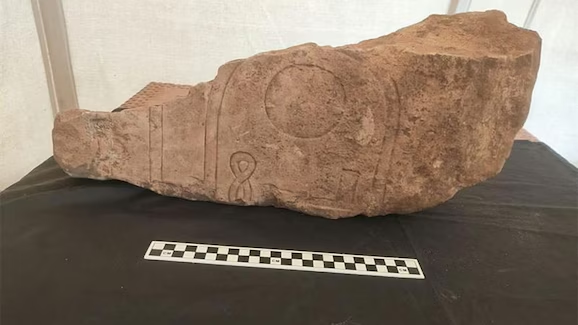
At the site of al-Qalaya, in the governorate of Beheira (in the Nile Delta area), an Egyptian archaeological mission of the Supreme Council of Antiquities has brought to light new structures attributable to a vast Christian monastic complex from the late ancient period. The discovery was announced by the Ministry of Tourism and Antiquities, which coordinates research in the area.
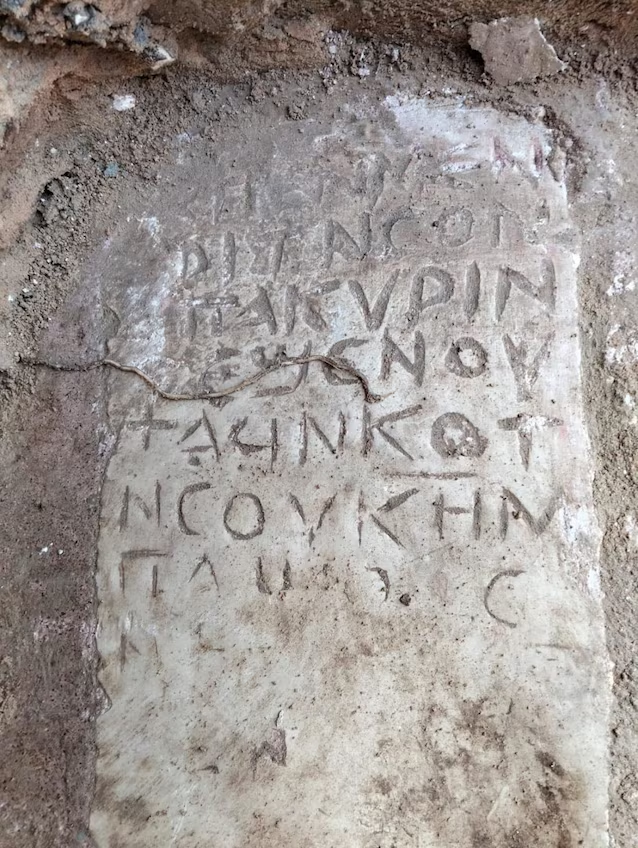
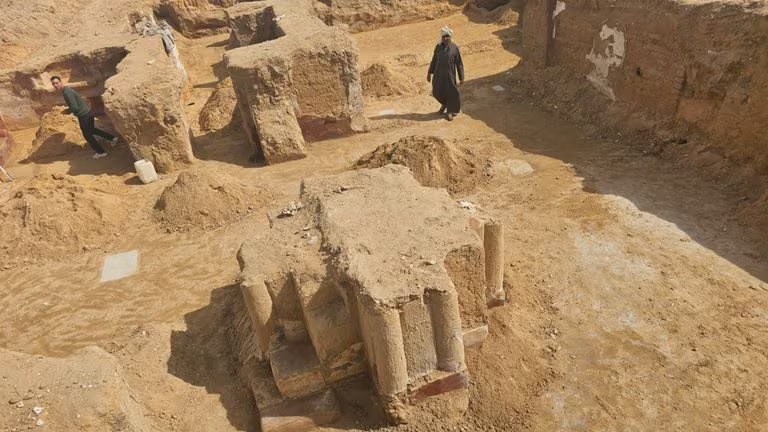
The excavations have brought to light a building dating back to the 5th century AD, which can be interpreted as a monastic guesthouse intended to welcome visitors or pilgrims. The structure is divided into approximately thirteen rooms, including cells, common spaces and functional areas. Among the elements found are architectural decorations, a room with an engraved cross, traces of pictorial decorations, ceramics and ostraka (ceramic fragments with engraved writings) in the Coptic language.
The site of al-Qalaya was already known for the presence of numerous religious buildings and is considered one of the main centers of Christian monasticism in Egypt. According to what was communicated by the Egyptian authorities, the area represents one of the largest monastic complexes known. The new data helps to clarify the organization of monastic settlements between the 4th and 5th centuries, a phase in which monasticism moved from hermitic forms to more structured and community models. The presence of a guesthouse also suggests a reception system for external guests, consistent with the growth of religious networks and pilgrimages, in a crucial phase in the history of Christianity.