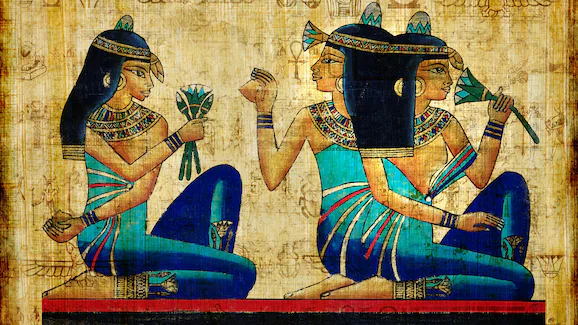
Egyptian society was founded on precise agricultural rhythms and a simple diet. Even if the Egyptians did not know the modern concept of “breakfast”, understood as the first meal of the day, archaeological and textual sources demonstrate that this had a fundamental role, especially for the workers who worked in the fields, quarries and monumental construction sites.
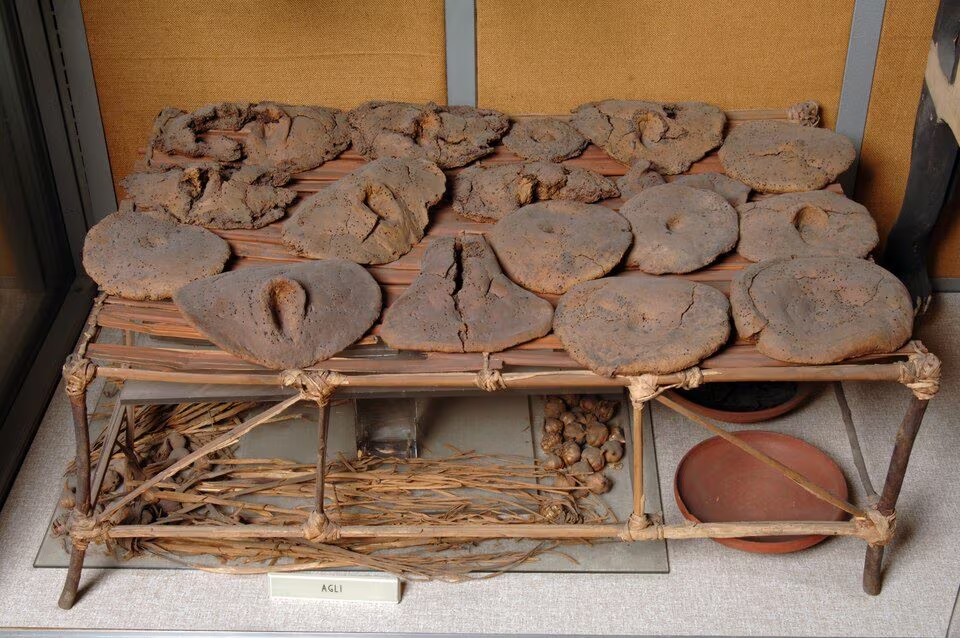
The basis of the Egyptian breakfast was bread, a daily food for all social classes, rich and poor. Produced mainly with spelled flour, it was ground by hand on stone millstones and then cooked in clay ovens. The result was a compact bread, often contaminated with sand and stone residues, so much so as to cause frequent dental problems (this should not surprise us, this was a constant in ancient times, as millstones were made of stone). Despite this, it was a primary source of energy and the most common way to start the day.
Alongside bread we find another unexpected protagonist: beer. This was very different from modern drinks: Egyptian beer was thick, very nutritious and low in alcohol. Produced from fermented barley or spelled, it was more like a soup than a drink. For workers it was an essential part of the daily rations, and was often consumed in the morning to provide immediate calories. Workers on royal construction sites, such as those at the Giza necropolis, received regular rations of beer as payment that could amount to several liters a day.
To complete the breakfast there were green onions and garlic, among the most common and appreciated vegetables. Easy to grow, cheap and with a strong aromatic power, they were considered foods capable of strengthening the body and protecting against diseases. The tombs and medical papyri attest to the symbolic and therapeutic value attributed to these vegetables, which thus rightly entered into daily eating habits.
The sweet flavor was guaranteed by dates and figs, common fruits along the Nile valley. Fresh or dried, they provided quick sugars and were often added to bread or beer to improve flavor. Honey, on the other hand, was a luxury reserved for the wealthier classes: collected from clay hives transported along the river, it represented a valuable sweetener and appeared above all in the meals of aristocrats, remaining not very accessible to the common people.
The Egyptian breakfast, therefore, was not just a normal moment of eating, but a reflection of the entire social organization of the land of the pharaohs. Bread and beer were the real fuel of the workers, while fruit and honey signaled a higher economic availability. Tomb representations, administrative papyri and archaeological traces show how this first meal supported a civilization capable of extraordinary works, from large constructions to complex agricultural systems.