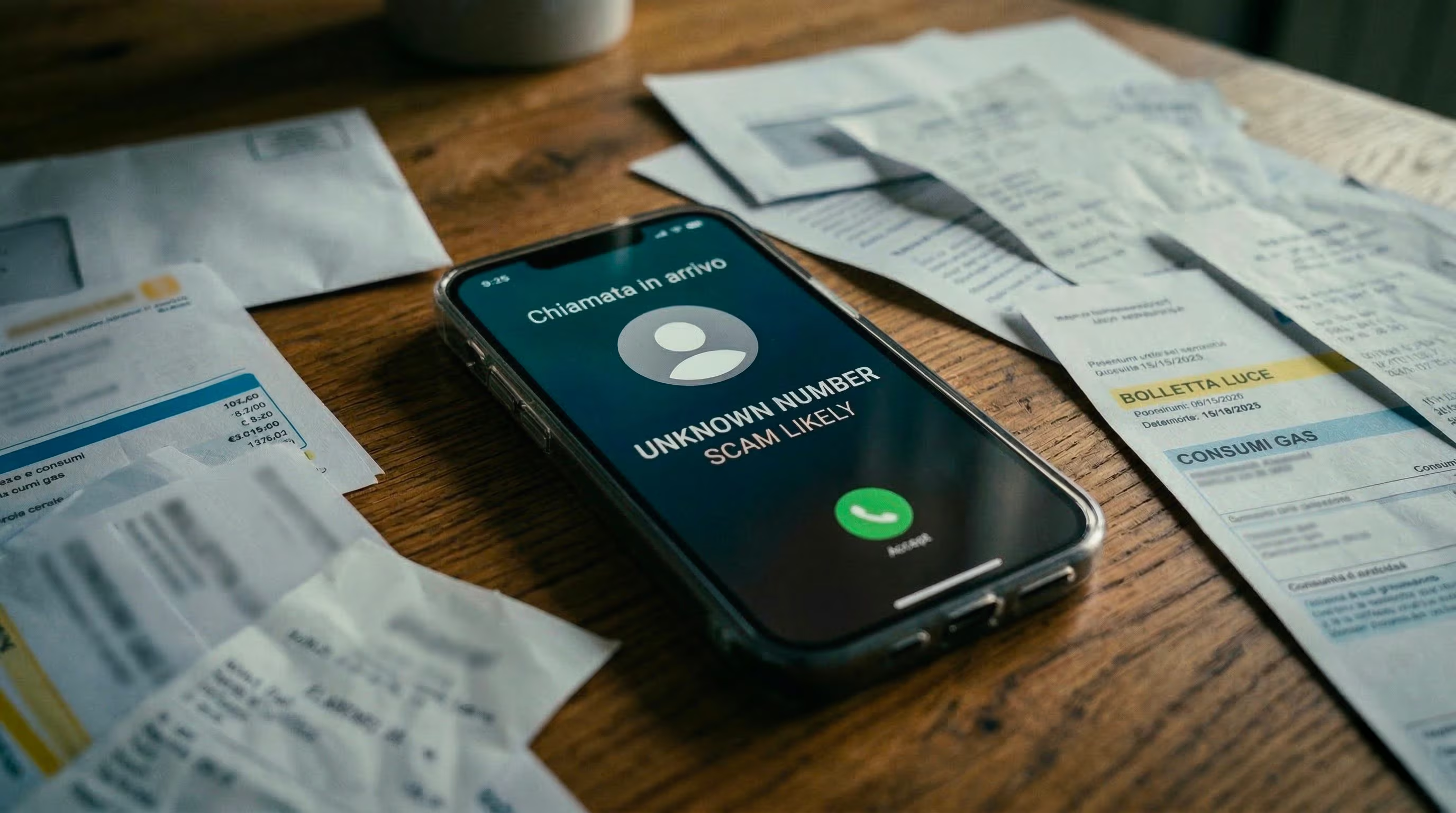
Who hasn’t received phone calls in which someone insistently offers new electricity and gas offers, sometimes with unclear or incomplete information? It’s an experience we’ve all had at one time or another. Before accepting any type of agreement, it would be good to have in mind some advice provided by ARERA (the independent authority that regulates the energy, networks and water markets in Italy), so as to avoid surprises on your electricity and gas supply. Recently, the Regulatory Authority for Energy, Networks and Environments has issued some suggestions to deal with calls from aggressive call centers that insistently propose the change of electricity and gas supply. And they couldn’t have come at a more appropriate time than this given the significant price fluctuations that the market is experiencing following the consequences of the war in Iran.
The Energy Supervision Unit was established on 5 March
The ARERA information project was developed within the Energy Supervision Unit established on 5 March by the Authority. This structure has the task of constantly observing the trend of the energy markets, monitoring wholesale prices and those applied to end customers. To do this, it uses a system that is updated twice a day: a first analysis takes place towards the end of the morning, when the Energy Markets Manager publishes the Single National Price of electricity, i.e. the indicator that summarizes the average cost of energy sold on the Italian electricity market. A second update arrives in the late afternoon, when trading on the gas market closes. These data are then published daily on the Authority’s institutional website and also serve to provide technical analyzes to the Government, Parliament and European institutions to understand the evolution of energy prices.
ARERA’s advice for protecting yourself from aggressive teleselling
Before moving on to ARERA’s advice on protecting yourself from teleselling aggressive, let’s first see what this practice consists of. Aggressive teleselling refers to a commercial practice in which promotional phone calls become insistent and/or not very transparent. The risk is that a seller proposes a contract without clearly explaining all the conditions or even without explicitly stating who he represents. According to ARERA instructions, the person making the call must always identify themselves and explain how they obtained our telephone number. An important point concerns the identity of the authority: ARERA never calls consumers directly and does not instruct sellers to offer discounts on bills or technical checks on domestic systems. If during a phone call someone claims the opposite, it is already a sign that requires caution.
Here are the tips indicated by ARERA organized by points:
- Demand transparency on identity: anyone who calls you must always clearly identify themselves and explain how they came into possession of your telephone number.
- Take your time: you are never forced to make immediate decisions over the phone. You can refuse the proposal or ask that the documentation be sent to you to read it calmly. In fact, a contract is only valid if your consent is recorded in a verifiable way.
- Demand “durable support”: you have the right to receive all complete information (costs, duration, penalties, withdrawal methods) in a written document or digital file that you can keep over time.
- Compare offers before signing: use the ARERA Offers Portal, a public and free platform, to compare the telephone proposal with other tariffs on the market and verify the real estimate of the annual expenditure.
- Remember the right of withdrawal (you can change your mind): if you accept a telephone offer, you have 14 days of time to change your mind and withdraw from the contract without penalties and without having to provide reasons (the days become 30 for door-to-door contracts). Simply send a formal communication via PEC or registered letter with return receipt.
- Dispute unsolicited activations: if you find yourself with a contract activated without your knowledge, contest it immediately in writing and ask for proof of your consent. Without a valid agreement, you are not required to pay the requested amounts.
- Report incorrect practices: in the event of fraudulent activations or aggressive behaviour, you can report the episode to ARERA, to the AGCM (Competition and Market Authority) or file a complaint with the police.