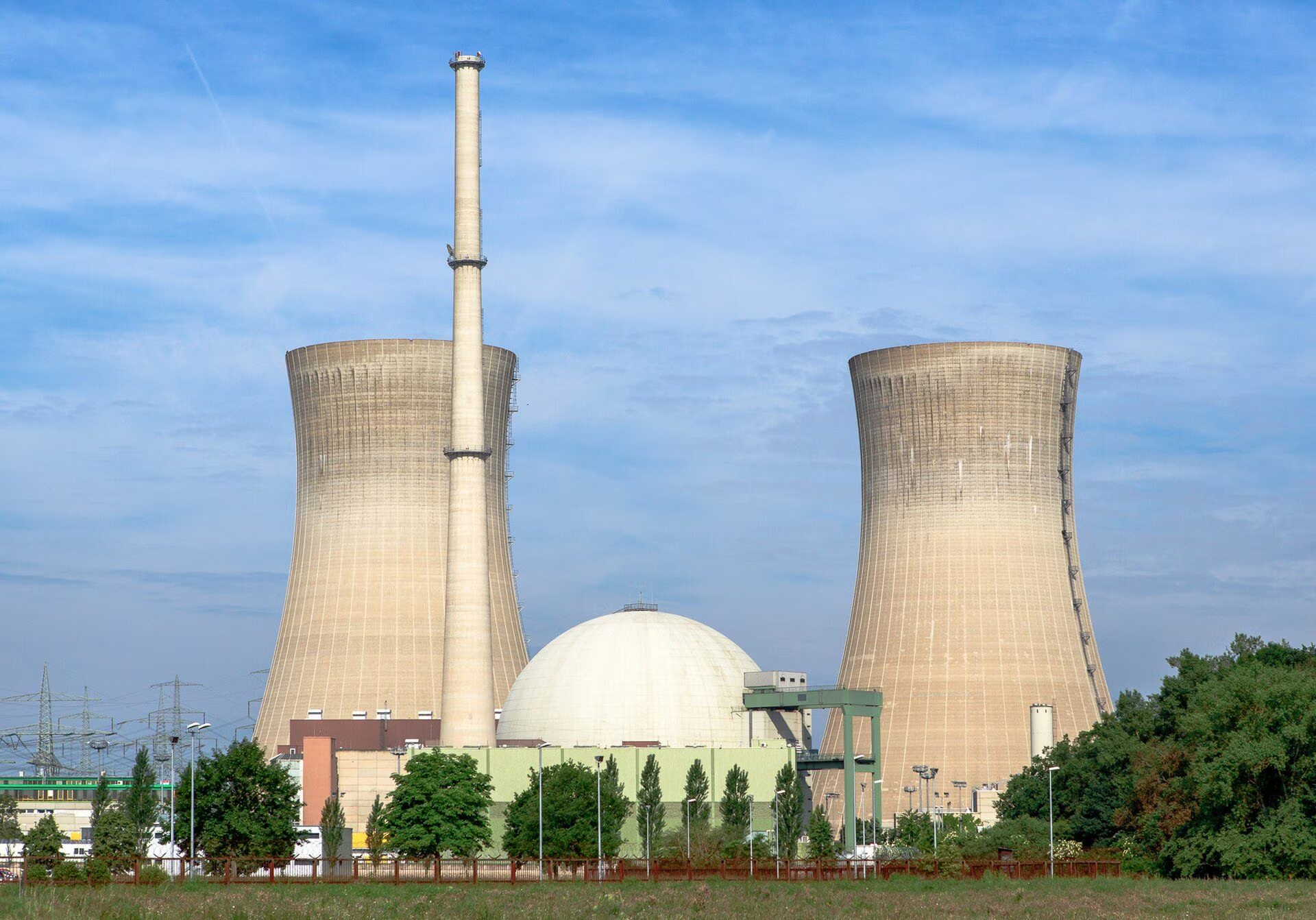
The Italian people expressed their opinion against the production of nuclear energy in two referendums, once in 1987 and once in 2011. In both cases, the vote was influenced by serious nuclear accidents that occurred in the previous months: those of Chernobyl and Fukushima. More specifically, the 2011 referendum was called because the Berlusconi government had enacted some laws to allow the return of nuclear power. Citizens spoke out clearly against this proposal, effectively putting an end to the program.
However, the referendums abolished some specific rules but, from a legal point of view, they did not establish a ban on the production of nuclear energy (nor, under the Constitution, could they do so). For this reason, today the government can decree the construction of new power plants. There will therefore be a new political battle and, perhaps, even new referendums.
The 1987 referendum in the aftermath of Chernobyl
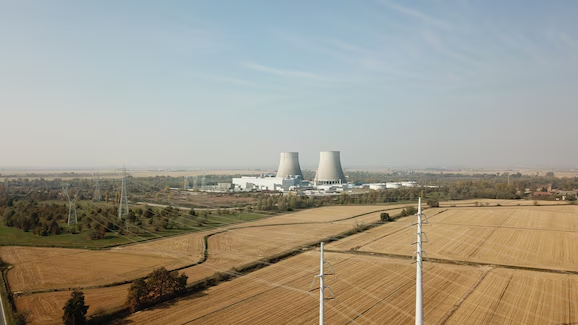
In 1987, in the aftermath of the Chernobyl disaster, Italians were called to express their opinion on three referendum questions regarding nuclear policy. At the time, four power plants were active in the country. The referendum was not a vote on their closure, but concerned some specific rules relating to the location of the plants, Enel’s activities and contributions to local authorities. From a political point of view, however, the vote was perceived as a choice for or against nuclear power.
The questions, which were associated with two other referendums on different subjects, easily reached a quorum (no party supported abstention at the time) and the “yes” won with very clear percentages, between 70 and 80%. The regulations in question were repealed and the outcome of the referendums contributed to putting an end to the Italian nuclear program, leading to the progressive closure of existing plants. The last power plant was shut down in 1990.
At the second referendum in 2011, the Fukushima disaster
Between 2008 and 2010 the Berlusconi government launched a new program for the production of nuclear energy. Opposition movements and parties collected signatures to call a referendum to repeal it. Particularly important was the role of Italia dei Valori, Antonio Di Pietro’s party, which took a decisive stand against the new rules.
In March 2011, after the signatures had been deposited and the Constitutional Court had already approved the referendum, the Fukushima disaster occurred, the most serious nuclear accident after Chernobyl, which strongly influenced public opinion. By virtue of this, the government revised its position and on March 31 decreed a moratorium on the construction of new power plants, trying to buy time and prevent the referendum from being held.
The consultation, however, took place anyway: the Court of Cassation transferred the question to the new provisions, that is, it established that a vote would be taken on some articles of the decree of 31 March, believing that the substantial question remained that of the return to nuclear power. The question, more specifically, asked voters to repeal the provisions that allowed atomic energy to be included in the national energy strategy and to proceed with the construction of new power plants.
So the election campaign began. The consultation, scheduled for 12 and 13 June, also included two referendums on public water and one on legitimate impediment in trials. The “yes” (i.e. the repeal of the regulations issued by the government) was supported by opposition parties and movements, including the Democratic Party, Italia dei Valori and various environmentalist forces, while the forces of the centre-right majority proposed abstention. In essence, those who were against the Berlusconi government were on the “yes” side (both on nuclear power and on other questions), while those who supported it invited voters to abstain in order to make the referendums fail.
In fact, being a repeal referendum, a quorum was required: for the result to be valid it was necessary for at least 50% plus one of those entitled to vote. The game was played on this, because it was obvious that, if the referendum had been valid, the “yes” would have won.
The outcome of the vote was very clear: the quorum was exceeded with a turnout of 54.8%. Among voters, 94% voted in favor. The question was therefore approved, resulting in the repeal of the rules that paved the way for the return of nuclear power and thus putting an end to the program.
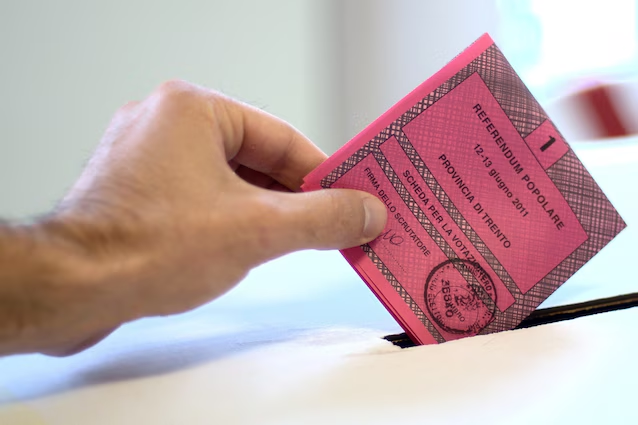
From a political point of view, the outcome of the vote significantly weakened the Berlusconi government, which in November was replaced by another executive.
Why, if the citizens said no, can Parliament propose nuclear power again?
The referendums of 1987 and 2011 did not ban the production of nuclear energy in Italy, but only repealed specific rules. In fact, a repeal referendum, as provided for in Article 75 of the Constitution, can cancel a law, but cannot establish absolute prohibitions.
Obviously, a referendum has significant political weight: if the population has clearly expressed its position on nuclear power, the parties and the ruling class cannot fail to take it into account. This is why 15 years passed after the last referendum before the government proposed a return to nuclear power again. This does not mean that referendums have an “expiry date”, but as time passes, favorable political forces can hypothesize (or at least hope) that the popular will has changed.
Return to nuclear power: can a new referendum be held?
According to the Constitution, every law or legal act can be subjected to a popular referendum, with the sole exceptions of tax and budget regulations, the ratification of international treaties and laws on amnesty and pardon.
Theoretically, the enabling law on nuclear power approved by Parliament could already be the subject of a referendum; more likely, it will be the legislative decrees that the government will issue on the basis of the enabling law. It is therefore possible that Italians will be called upon to decide on the production of nuclear energy for the third time.
It should also be considered that the opening of the first power plants could not take place before 2033-2034 and until then the political balance may change: there will be at least two legislative elections (2027 and 2032) and certainly new governments. Consequently, if political forces opposed to nuclear power came to power (as almost all those in the “broad field” are at the moment), they could prevent the construction of the power plants.
In short, at the moment the return of nuclear energy to Italy is far from certain.