On the occasion of World Cancer Day, the first signs of a trend reversal in the trend of cancer in Europe and Italy emerge, in a context still marked by significant inequalities. This was reported by the experts of the Alliance Against Cancer, the National Oncology Network of the Ministry of Health.
According to the most recent European data, 2026 opens with a decrease in the overall incidence of tumors equal to 1.7% in Europe and 2.6% in Italy compared to 2022; a result largely attributable to what was observed in the male population, where there was a reduction of approximately 1% per year, driven by the decline in smoking-related cancers, particularly lung cancer. But obviously it’s not enough. And there is still much to do.
Fight against inequalities
Diego Serraino, epidemiologist and consultant for the Alliance Against Cancer, the National Oncology Network of the Ministry of Health, outlines the situation.
“We are finally at the beginning of a quantitative decline in tumors in Europe and in Italy, a result that confirms the effectiveness of the policies adopted”
underlines the expert.
Be careful though. There are clear gender differences. In the female population in several European countries, especially in the North and East of the continent, the incidence remains high, reflecting the later wave of cigarette consumption among women.
“Denmark today represents the country with the highest oncological incidence in Europe, in particular for lung and colorectal cancer in women, in the face of evident deficiencies in primary and secondary prevention policies”
continues Serraino.
Furthermore, according to the epidemiologist, the reduction in cancer mortality is now a consolidated fact; however, as the European institutions remind us, cancer is a disease of inequalities and it does not depend only on the level of health spending, but on a set of investments and planning choices. In fact, strong differences remain between countries and geographical areas, particularly in Eastern Europe, even if with non-homogeneous internal frameworks. To address these inequalities, Europe has strengthened monitoring tools throughEuropean Cancer Inequalities Registry and the European Cancer Information System, on whose data ACC is engaged on the front line to document the impact of health policies and identify margins for intervention. Furthermore, territorial differences are confirmed in Italy too, in particular between North and South, but the gap has significantly reduced compared to a decade ago; an evolution that confirms the value of prevention, planning and the systematic use of data as central levers for fighting cancer.
Prevention of risk factors
In recent days it has clearly emerged that tumors appearing in young people under 50 are becoming more and more frequent. This was pointed out by specialists from the Fondazione Policlinico Gemelli Irccs in Rome, who are part of the international research teams on so-called “early onset” tumors, particularly of the colon and pancreas. For this reason it is necessary to focus attention on risk factors, with an eye on nutrition from an early age, also with the aim of developing a healthy microbiota and combating overweight and diabetes which, by promoting inflammation, can alter the balance of the body.
In any case, experts also point out that in Italy every year around 105 thousand cases of cancer, 27% of the total, are caused by smoking. Massimo Di Maio, AIOM President, reminds us of this by underlining the importance of the ‘5 euros against smoking’ campaign.
“In just a few days since the launch of the initiative, thousands of citizens have signed. Around 30 scientific societies and over 15 patient associations and foundations have joined. We are satisfied, but further effort is needed to reach the 50,000 signatures needed. Tobacco smoking is the main oncological risk factor.”
More generally, it is estimated that more than 40% of cancer deaths are due to modifiable risk factors, such as smoking, alcohol consumption, poor diet, overweight and obesity. Just think: alcohol consumption is related to 7 types of carcinoma and severe excess weight to 12. Despite this evidence, in Italy 24% of adults smoke, 33% are overweight and 10% are obese, 58% consume alcohol and 27% are sedentary.
In 2023, Italy allocated 4.6% of its overall health spending to prevention, a percentage, if we consider European countries, lower than those of the United Kingdom (5.6%), Holland (5.2%) and Germany (4.8%).
How the results of treatment change
According to Di Maio,
“prevention represents the tool to reduce the number of cancer cases and to support the increase in expenditure for innovative treatments”.
The figures confirm it. In 2024, in Italy, public spending on anti-cancer drugs amounted to 5.4 billion euros, an increase of 13.8% compared to 2023, representing almost 20% of total public pharmaceutical spending. Innovation is not just a cost, it translates into lives saved. In our country, in 2026 compared to the period 2020-2021, a decrease in oncological mortality rates of 17.3% in men and 8.2% in women is estimated. These are better figures compared to the European average (-7.8% in men and -5.9% in women in 2026 compared to the period 2020-2022).
“In Italy, 63% of women and 54% of men are alive 5 years after diagnosis and at least one patient in four has returned to having the same life expectancy as the general population and can be considered cured. Anti-cancer therapies are characterized by increasingly specific mechanisms of action. The transition towards highly complex innovative treatments, such as immunotherapy and drug-conjugated antibodies, offers options capable of improving survival and the chances of recovery in a growing number of clinical situations, but poses issues related to the sustainability of the National Health Service. The availability of new strategies also determines the need to define specific guidelines to establish the correct sequence of these drugs.”
underlines Massimo Di Maio.
Beyond drugs, the role of caregivers
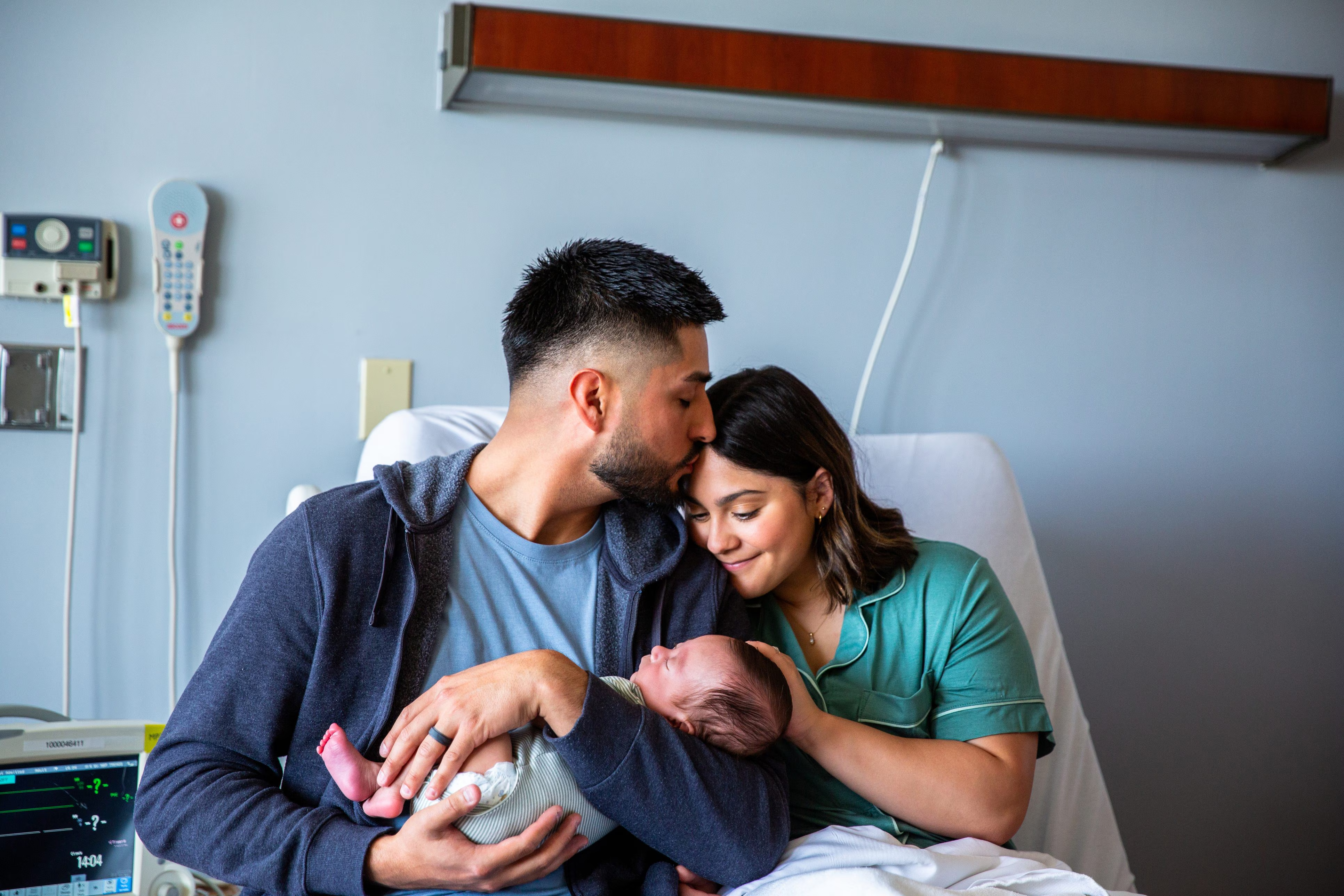
Alongside research progress, new drugs and therapeutic innovation, there is another fundamental pillar of the treatment path: it is the person who takes care. The data confirms this: according to ISTAT, over 7 million Italians regularly assist a family member without any formal remuneration; international scientific literature shows that 61% of cancer caregivers experience a medium-high care burden, that over 70% have been providing care for more than six months and that up to 48% show a significant psychological burden. On a social and economic level, between 25% and 29% of caregivers are forced to change their work activity.
In the oncology context, the family caregiver plays a complex role that goes from managing therapies to monitoring symptoms, from psychological and logistical support for accessing services to managing the patient’s daily life. Scientific evidence shows how this commitment is intense, continuous and long-lasting, especially in the advanced stages of the disease, and how the health of the caregiver and that of the patient are closely interconnected. The framework bill approved by the Council of Ministers on 12 January 2026 fits into this scenario, which aims to officially recognize the figure of the family caregiver and to define a system of rights and protections for those who assist a loved one who is not self-sufficient or has a disability.
According to Paolo Tralongo, president of CIPOMO,
“the daily reality of care is also made up of people who accompany patients every day, often for months or years, supporting them not only from a practical point of view but also from a human and emotional point of view. Without the work of caregivers, an important part of care would simply not be possible. Recognizing and protecting the caregiver does not only mean doing an act of social justice but also improving the quality of cancer care. A supported, informed and protected caregiver is able to better support the patient, encourage adherence to treatment and reduce the risk of isolation and fragility. For this reason the Caregiver Bill represents an important step, which must be strengthened and made increasingly in line with the reality of families and oncology pathways”.