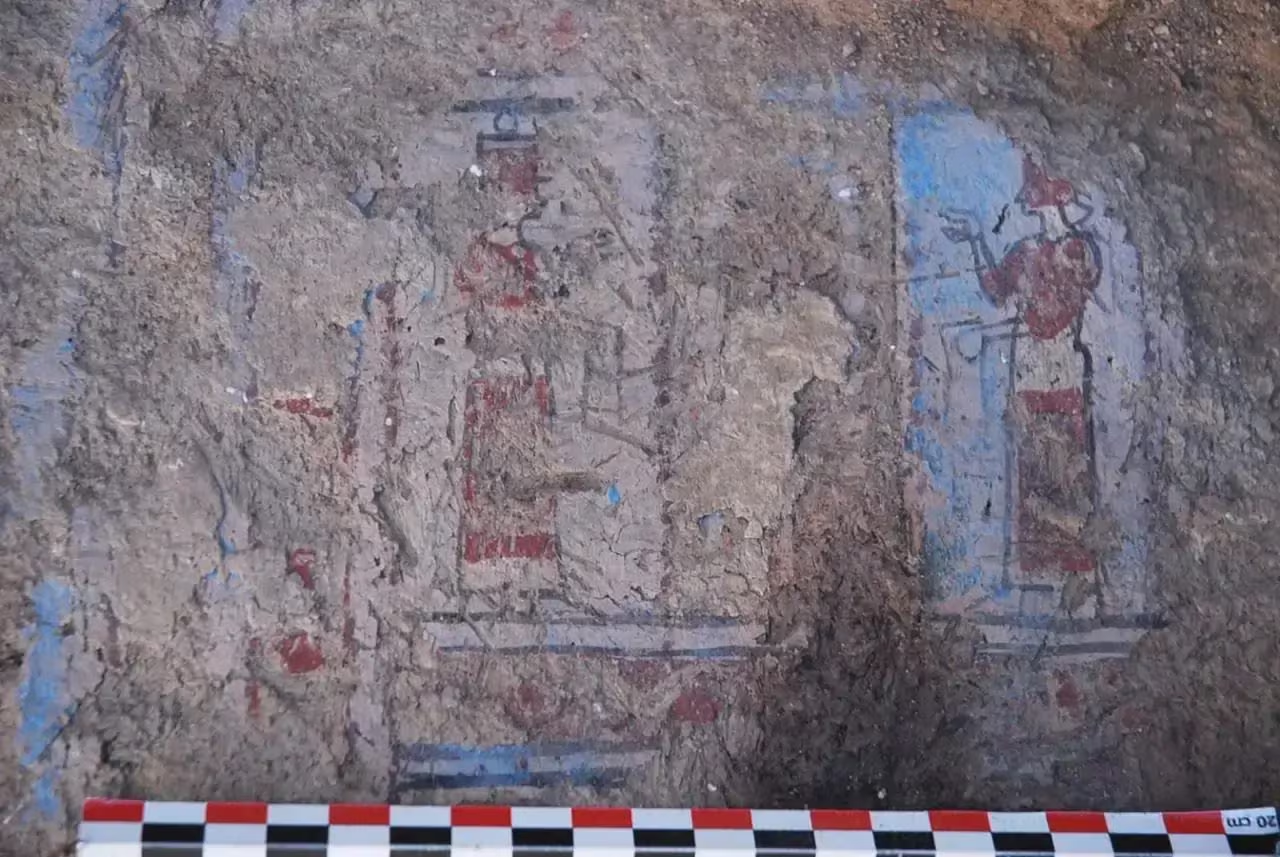
A fresco fragment dating back around 2,600 years ago has been discovered at the archaeological site of Erebuni, the ancient fortress that dominates modern-day Yerevan, Armenia. The discovery was carried out by the joint Franco-Armenian archaeological mission and represents one of the most significant results of the recent excavation campaigns. The news was made public by the French embassy in Armenia.
According to an initial assessment by archaeologists, the wall painting dates back to the second half of the 7th century BC or the beginning of the 6th century BC, a crucial phase in the history of the kingdom of Urartu, shortly before its disappearance from the political scene of the Near East. The Urartian kingdom developed in what is now eastern Türkiye and Armenia between the 9th and 6th centuries BC. C., before succumbing to the advance of the Medes, a population of present-day Iran, and before the settlement of the ancestors of the present-day Armenians.
What makes the find particularly interesting is its state of conservation. In fact, the fragment retains large portions of the original polychromy, allowing scholars to closely observe the pictorial techniques and materials used by the Urartian artists. Although further studies are needed to understand the subject depicted and the architectural context of the fresco, the discovery offers rare evidence of the decoration of the fortress’ monumental buildings. Founded in 782 BC by King Argishti I, Erebuni was one of the main centers of the kingdom of Urartu and included administrative buildings, worship areas, warehouses and residences. Previous discoveries had already shown that the walls of his buildings were decorated with paintings, but the new discovery adds an important piece to the knowledge of Urartian monumental art.
The French Embassy in Armenia defined the discovery as an important result of scientific cooperation between the two countries, underlining how excavations continue to provide new information on one of the most important archaeological sites in the Caucasus. In the coming months the fragment will be subjected to analysis and conservation interventions. The studies will be able to clarify the composition of the pigments, the execution techniques and the role of the fresco within the monumental complex, helping to reconstruct the original appearance of the Erebuni fortress with greater precision.