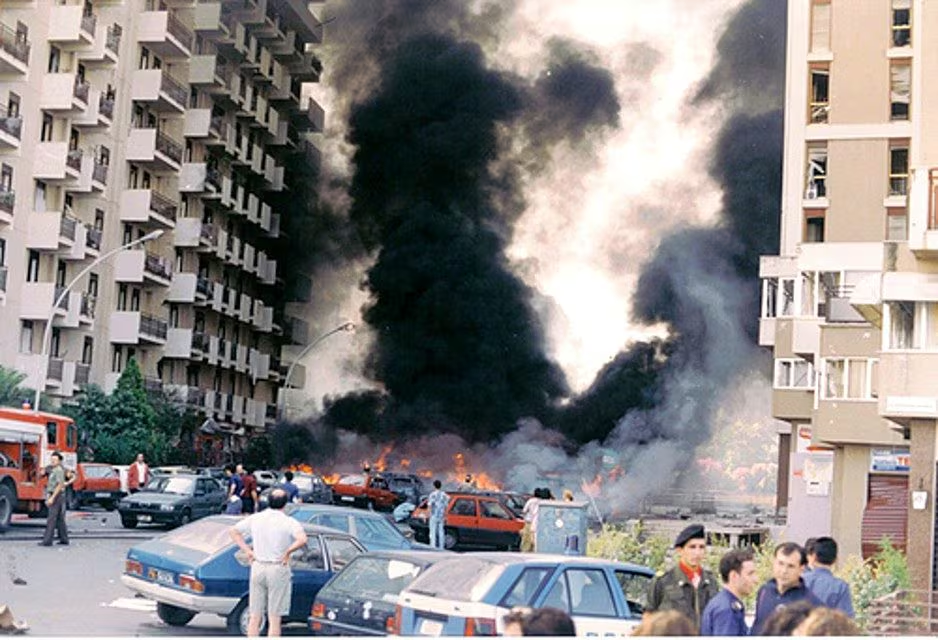
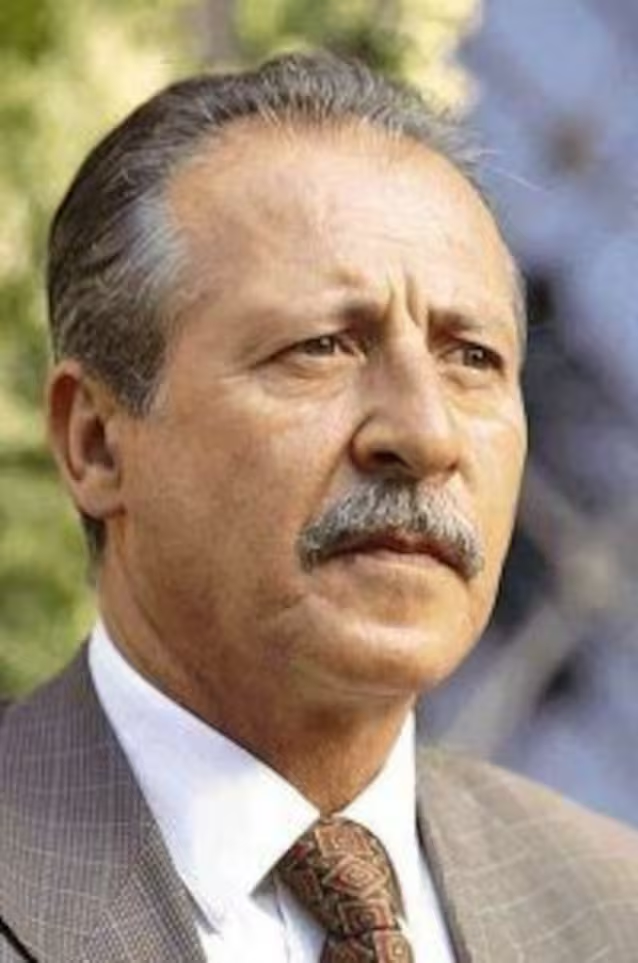
On 19 July 1992 – less than two months after the Capaci massacre in which Giovanni Falcone was killed – a car bomb placed in via d’Amelio, in Palermo, killed judge Paolo Borsellino, one of the magistrates most involved in the fight against the mafia, and the agents of his escort.
After the attack, the suspicion emerged that the massacre, although carried out by the mafia, had had “hidden instigators”, that is, it had been desired by elements external to the mafia circles, perhaps belonging to the economic or political-institutional world, who feared being involved in Borsellino’s investigations. The truth has not been fully ascertained, but after the massacre the red diary that the judge used to take notes disappeared, and misdirections and false testimonies were organised, coordinated in particular by the police officer Arnaldo La Barbera, then head of the investigative pool on the matter.
The affair has returned to the center of attention in recent days (November 2026), when the former police chief Gianni De Gennaro was formally investigated by the Caltanissetta prosecutor’s office for misleading the investigation into the massacre and the disappearance of the diary. Two days later De Gennaro took his own life.
What was the Via d’Amelio massacre
The Via D’Amelio massacre took place on 19 July 1992 in Palermo: a bomb placed in a Fiat 126 car exploded upon the arrival of judge Paolo Borsellino, who had gone to visit his mother. The explosion killed the magistrate and five agents of his escort: Agostino Catalano, Emanuela Loi, Vincenzo Li Muli, Walter Eddie Cosina and Claudio Traina.
The attack occurred just 57 days after the Capaci massacre, in which Giovanni Falcone, Borsellino’s colleague and friend, was killed.
The massacre in Via D’Amelio was one of the most dramatic moments in recent Italian history.
Borsellino’s red diary
The massacre immediately appeared suspicious: it was clear that the attack had been carried out by Cosa Nostra, but some circumstances led to the suspicion that, behind the mafia, there were hidden instigators, interested in preventing Borsellino from continuing his investigative work.
The first element that emerged was the disappearance of an important document: a diary with a red cover that Judge Borsellino always carried with him and on which he took notes regarding his investigations.
At the time of the attack the diary was in the magistrate’s bag. After the explosion, the bag was recovered by police officers and returned to the family, but the diary was no longer inside, and has never been found since.
The suspicion is that Borsellino had noted facts involving representatives of the economic or institutional world and that for this very reason it was made to disappear.
The Scarantino misdirection
The disappearance of the diary was not the only anomaly. The investigations into the massacre were in fact affected by red herrings and false leads, put in place by the police, with the aim of preventing the truth from being discovered about who had wanted Borsellino’s death.
The misdirection of the investigations is linked above all to the figure of Vincenzo Scarantino, a small-time criminal from Palermo, who was arrested in 1992 and two years later began to collaborate with the justice system.
Scarantino declared that he had participated in organizing the attack and provided numerous details, but his depositions contained numerous contradictions and turned out to be largely false.
In 2008, another justice collaborator Gaspare Spatuzza provided a different reconstruction, admitting that he had personally stolen the Fiat 126 and denying numerous elements of Scarantino’s story. His statements proved to be reliable, and were decisive for the review of the trials and the recognition of the innocence of some condemned men.
After Spatuzza’s statements, it emerged that Scarantino had been subjected to strong psychological pressure and induced to make false statements by the police. A central role in the affair was attributed to some police investigators, in particular to the official Arnaldo La Barbera, who passed away in 2002, who had directed the initial investigations into the massacre.
Scarantino’s false repentance contributed to directing the investigations into Via d’Amelio onto the wrong tracks and to protecting any “hidden instigators”.
Other red herrings and the opening of investigations into De Gennaro
After Scarantino’s depositions, the misdirections continued and other repentants also released false statements, and some were convicted of slander.
Furthermore, the fact that, before his death, Borsellino had never been heard by the Caltanissetta magistrates who were investigating the Capaci massacre appears suspicious.
Also to be ascertained is the role of Sisde, the Italian civil secret service of the time, which contributed to guaranteeing Scarantino’s reliability. For months, there has been suspicion of involvement of Bruno Contrada, a Sisde manager who served a long prison term for external complicity in a mafia association, whose sentence was subsequently revoked by the Supreme Court because, according to the European Court of Human Rights, at the time of the events the crime was not sufficiently defined by Italian law.
Recently, some magistrates have raised suspicions about the possible responsibility of Gianni De Gennaro, deputy director of the Anti-Mafia Investigation Directorate at the time of the events and head of police from 2000 to 2007. In November 2026, the Caltanissetta prosecutor’s office entered De Gennaro in the register of suspects for misdirection. According to the accusatory hypothesis, De Gennaro would have put pressure on a turncoat, Salvatore Contorno, to prevent him from giving some testimonies, and would have contributed to the destruction of documents relating to the investigations.
The prosecutor’s office had requested house arrest, but the GIP rejected the request, not believing that elements had emerged that would justify the measure. At the moment, therefore, involvement in the misdirection remains an unproven suspicion. The former police chief committed suicide a few days after being registered as a suspect.
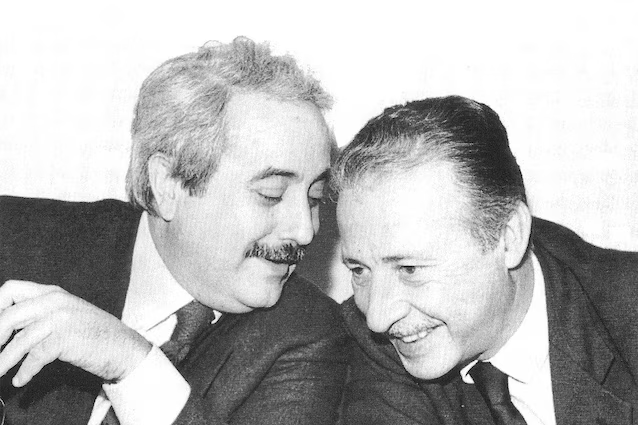
Why the red herrings? Possible hidden instigators and the State-mafia negotiation
An important question remains: why were the screenings organised? Why did they want to prevent us from finding out who organized the killing of Paolo Borsellino?
The most realistic hypothesis is that the misdirections were determined by the desire to protect interests external to Cosa Nostra. The suspicion, as we have said, that the massacre in Via D’Amelio, although carried out by the mafia, had “hidden instigators”.
One of the hypotheses is that the massacre was carried out to prevent the judge from deepening his investigations into the relationships between organized crime and political and economic circles, in particular regarding an investigation into the mafia and procurement that he was carrying out. The massacre could therefore have been ordered by entrepreneurs or politicians who risked being investigated by Borsellino.
It was also hypothesized that the magistrate had become aware of sensitive information on the relationships between the mafia and institutions, in relation to the negotiations between the State and Cosa Nostra initiated after the Capaci massacre.
As is known, after the killing of Falcone some representatives of the institutions sought an interlocution with the mafia bosses to find an agreement and prevent further massacres (but the negotiation was not completed). It is possible that they wanted to prevent Borsellino from investigating the matter, but the suspicion is not proven, also because it is not certain that the judge was aware of the negotiation (although the probability was high).

Parliamentary commission of inquiry. Final report, 19 December 2018 Ansa Rainews