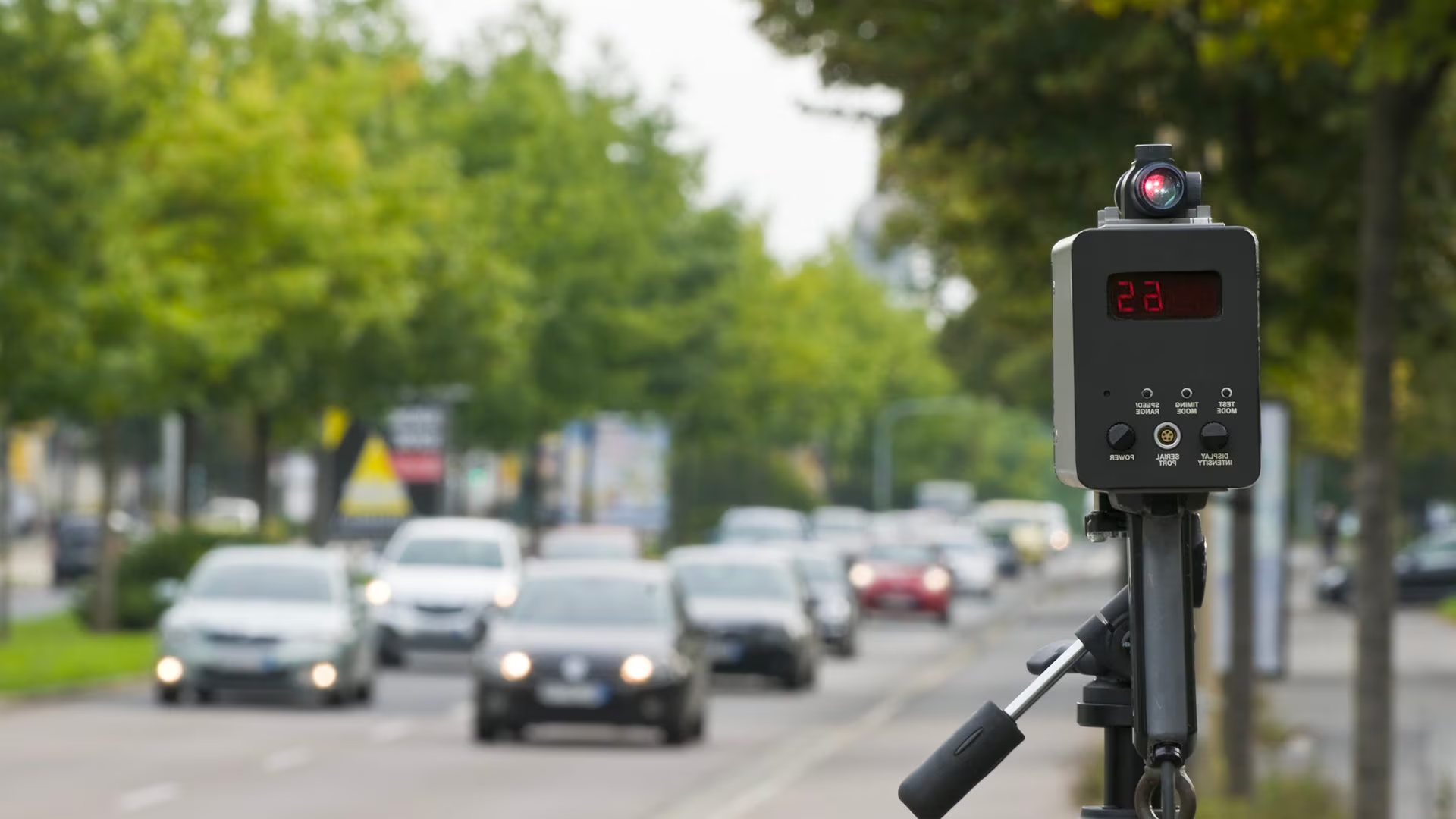
The Speed Camera is one of the most recognizable symbols of safety on our roads and highways. Yet its story begins many decades before it became such a “familiar” presence. Perhaps you don’t know that “Autovelox”, after the invention of Telefunken in Germany in 1957, was born as a registered trademark by the Florentine company Sodi Scientifica in the 1960s: invented by Fiorello Sodi, founder of the company in 1964, with a patent two years later, only over time did it transform into a term in everyday use to indicate any speed detection device. Yes, even the word “Autovelox” has undergone the phenomenon of lexicalization: a commercial name which, as it spreads, comes to designate an entire category of products, even those made by competing companies. But with this parenthesis open and closed, let’s get to know the history of the speed camera more closely, which has part of its origins in Germany.
From the origins to today: the main stages from Germany to Italy
The first system for measuring vehicle speed was developed by the German company Telefunken, which designed it, mass-produced it and installed it on the roads of Germany starting in 1957, thus paving the way for the use of technologies dedicated to speed detection. An instrument capable of providing an objective measurement finally made it possible to systematically monitor compliance with the limits.
In Italy the first prototype of the Autovelox dates back to 1959. It was conceived by Fiorello Sodi, struck by the severity of a road accident which he had personally witnessed. The company, which bears the inventor’s surname, was born a few years later, in 1964, and the patent for the device was filed in 1966.
According to the testimony of Paolo Sodi, son of Fiorello Sodi and now at the helm of the family business, at the time road safety was not yet among the governments’ political priorities. For this reason, the first real commercial use of speed cameras in the 1970s had nothing to do with road safety, but arose from a completely different need: the 1973 oil crisis, which pushed the Italian government – in the wake of other European countries, to limit fuel consumption by adopting austerity measures. Among these was the reduction of speed limits (as well as the ban on driving on Sundays).
In a statement released to the newspaper The Nation in March 2025, when his father passed away, Paolo Sodi explained:
The speed camera was used to induce motorists to keep their speed low and reduce fuel consumption. At the time my father had industrialized the instrument and obtained approval from the Ministry. He showed up in Rome explaining the use of the device that was adopted in those circumstances. Then the main use took over, namely to prevent irresponsible speeds on the roads. We were the precursors of this model which is still successful today.
It was only later, therefore, that the speed camera took on the function for which it is known today: to prevent traveling at dangerous speeds on arterial roads.
How the Speed Camera works in brief
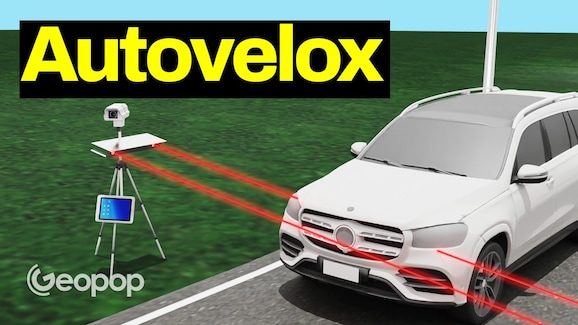
The technology behind these devices has evolved over time. The most traditional system is the laser photocell system: two sensors, positioned at different points on the roadway, control two beams of laser light. When the front of the vehicle interrupts the first beam, the device automatically starts a timer; when the back crosses the second, the counting stops. Knowing the distance between the two photocells and the time taken to travel it, the system calculates the speed of the vehicle. If the value exceeds the set limit, the license plate is automatically photographed and the detection transmitted to the authorities.
Alongside this system, other detection methods have been added: color or infrared cameras, capable of working even in low light, and radar systems, which exploit electromagnetic waves to determine the speed of a moving object. There is also a “pursuit” system, installed on traffic police vehicles, which compares the speed of the controlled vehicle with that indicated by the speedometer of the service vehicle.
If, after having discovered the story of its birth, you want to delve a little deeper into the technical functioning of the speed camera, we refer you to the following in-depth analysis that we have dedicated to this topic.
You can also find this and other curiosities in Stefano Gandelli’s book Cool! I didn’t know: Everyday things you only half know
Sodi Scientifica – Company Wikipedia – Sodi Scientifica Wikipedia – Autovelox La Nazione QN Motori