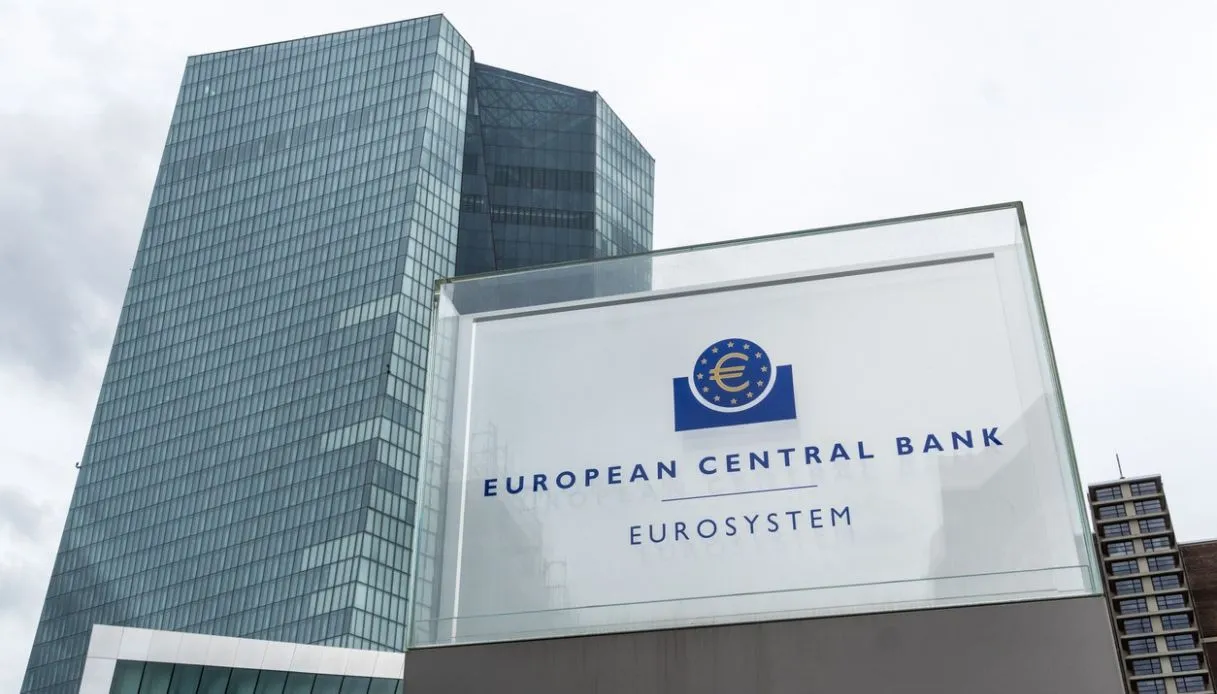
Eurozone banks remain solid, but the European Central Bank (ECB) calls for greater prudence in managing credit and financial risks. This is what emerges from the results of the SREP 2026, the annual examination of European supervision, published on 19 November, in which 108 banks were analysed, confirming essentially stable capital requirements for 2027. The best quality capital required from institutions, called Cet1, goes from 11.2% to 11.3% of risk-weighted assets. However, the ECB draws attention to the consequences of the war in the Middle East, the increase in energy prices and the difficulties that could affect families and businesses.
European banks, capital solidity according to the ECB
Cet1 is one of the indicators used to measure the capital strength of a bank. Indicates the highest quality capital an institution has relative to its assets, considering the risk associated with loans and investments. For 2027 the ECB has set an overall average requirement of 11.3%, compared to 11.2% in 2026. The figure includes capital requirements and reserves, as well as supervisory guidelines. The overall requirement in terms of total capital instead rises from 15.6% to 15.7%. The results show that banks have resources above the required thresholds. In the second quarter of 2026, the total capital ratio reached 20.1%, while the Lcr liquidity indicator stood at 155%.
War in the Middle East and inflation, the risks for banks
The ECB considers geopolitical tensions one of the main risk factors for the financial system. The conflict in the Middle East has caused major disruptions in oil and gas markets, contributing to rising energy prices. According to Frankfurt, inflation could remain above the 2% target in the short term, with consequences for consumption and costs incurred by businesses. The increase in government bond yields and concerns about the sustainability of public debt represent further elements of uncertainty. Supervisors warn that the effects of economic shocks could only manifest themselves on bank balance sheets in the coming months.
Mortgages and loans, because the ECB fears a worsening of credit
General credit conditions remain positive, with non-performing loans, or NPLs, falling to 1.9%. The ECB reports possible difficulties in consumer credit, in financing small and medium-sized businesses and in the commercial real estate sector. Particular attention is also paid to companies most exposed to energy costs, such as manufacturing, chemical and transport companies. Banks will have to prudently evaluate customers’ ability to repay and avoid excessively permissive loan granting criteria. For families and businesses there are no automatic changes to the conditions of mortgages or loans already taken out. Decisions on new loans will continue to depend on the policies of individual institutions and the economic situation of applicants.
Security of bank accounts, the ECB reports IT deficiencies
Among the main critical issues identified by European supervision are IT risks. 92% of banks examined have deficiencies related to digital security, external providers or IT controls, according to ECB assessments. The authority reports that cyber attacks are becoming more frequent and sophisticated, also due to the use of artificial intelligence. A further risk concerns the dependence on a few large technology suppliers, especially for cloud services. In the period 2027-2029, checks on digital security and the ability of banks to guarantee operational continuity will be strengthened.