Istat has published data on the absolute poverty of Italian families for 2024, the most updated available. The number of poor families in our country has remained essentially stable. There are 5.7 million people, 9.8% of residents, for a total of 2.2 million families, 8.4% of the total. In 2023 these percentages were essentially identical.
Relative poverty is also approximately unchanged, at 10.9% compared to 10.6% in 2023. The territorial trends are also confirmed, with the South and the Islands among the territories most at risk, and the demographic ones, with children and foreigners confirming themselves as the population groups most affected by poverty.
Absolute poverty in Italy in 2024
A family is considered to be in absolute poverty if it has a monthly expenditure equal to or lower than the value of the minimum expenditure necessary to purchase basic necessities in its territory. There is therefore no national absolute poverty threshold. Each category of municipality, based on the Istat classification which is based on the cost of living, has its own.
A family living in absolute poverty in a large city can earn even more than a family not in absolute poverty in the province. Although this therefore takes into account the different costs of living in Italy, there are significant differences between the various areas of the country:
- families in absolute poverty in the North-East, 7.6%;
- families in absolute poverty in the North-West, 8.1%;
- families in absolute poverty in the Centre, 6.5%;
- families in absolute poverty in the South, 10.5%.
The intensity of absolute poverty, a parameter that calculates how much poor families live below the poverty threshold, is rather homogeneous throughout the national territory, between 17.6% and 19%.
Children and foreigners are the most affected
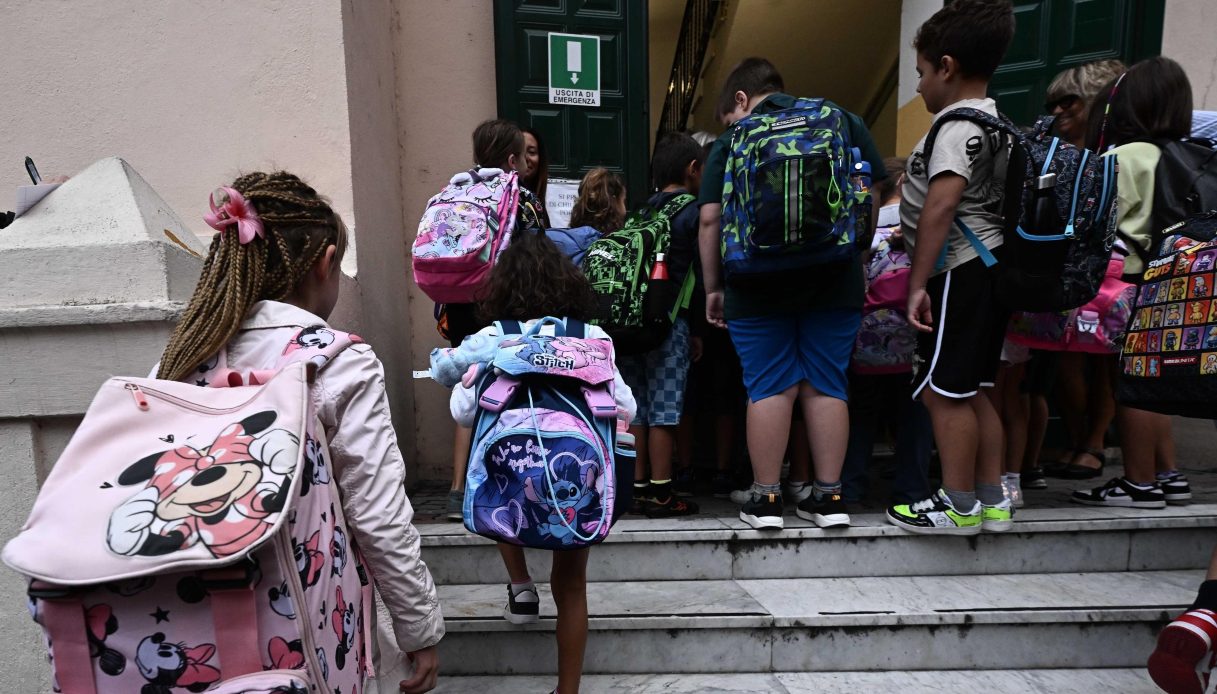
Almost all data are stable compared to 2023, including those concerning the most vulnerable segments of the population. Absolute poverty especially affects families with children, especially large ones. The result is that if on average 8.4% of residents in Italy are in absolute poverty, 13.8% of minors are in this condition. There are 1.3 million children and young people, the highest absolute figure since these surveys began in 2014. The older they get, the less absolute poverty affects them:
- 0-18 years, absolute poverty at 13.8%;
- 18-34 years old, absolute poverty at 11.7%;
- 35-64 years, absolute poverty at 9.5%;
- over 64 years old, absolute poverty at 6.4%.
In addition to minors, the segment of the population most affected by absolute poverty are foreigners. 30.4% of families with at least one foreigner and 35.2% of families made up of only foreigners, a rate four times higher than the national average and six times that of families made up of only Italians, which is 6.2%.
What saves from poverty
Istat also analyzed the factors that characterize non-poor families. The institute found two elements in particular, which explain why the poverty rate is so high among foreign families. They save from poverty:
- an education above middle school;
- own the house you live in.
32.3% of renting families are below the absolute poverty threshold, compared to 6.1% of those who own their home. As regards education, 14.4% of residents with only a primary school diploma and 12.8% of those with only a middle school diploma are poor, while once they have obtained a diploma, the absolute poverty rate drops to 4.2%.
According to CNEL data, only 23% of foreigners in Italy live in a home they own, compared to 70.8% of the national average. People with non-Italian citizenship are also less educated on average. 48.9% of them do not have a diploma, compared to 35.5% of the national average.