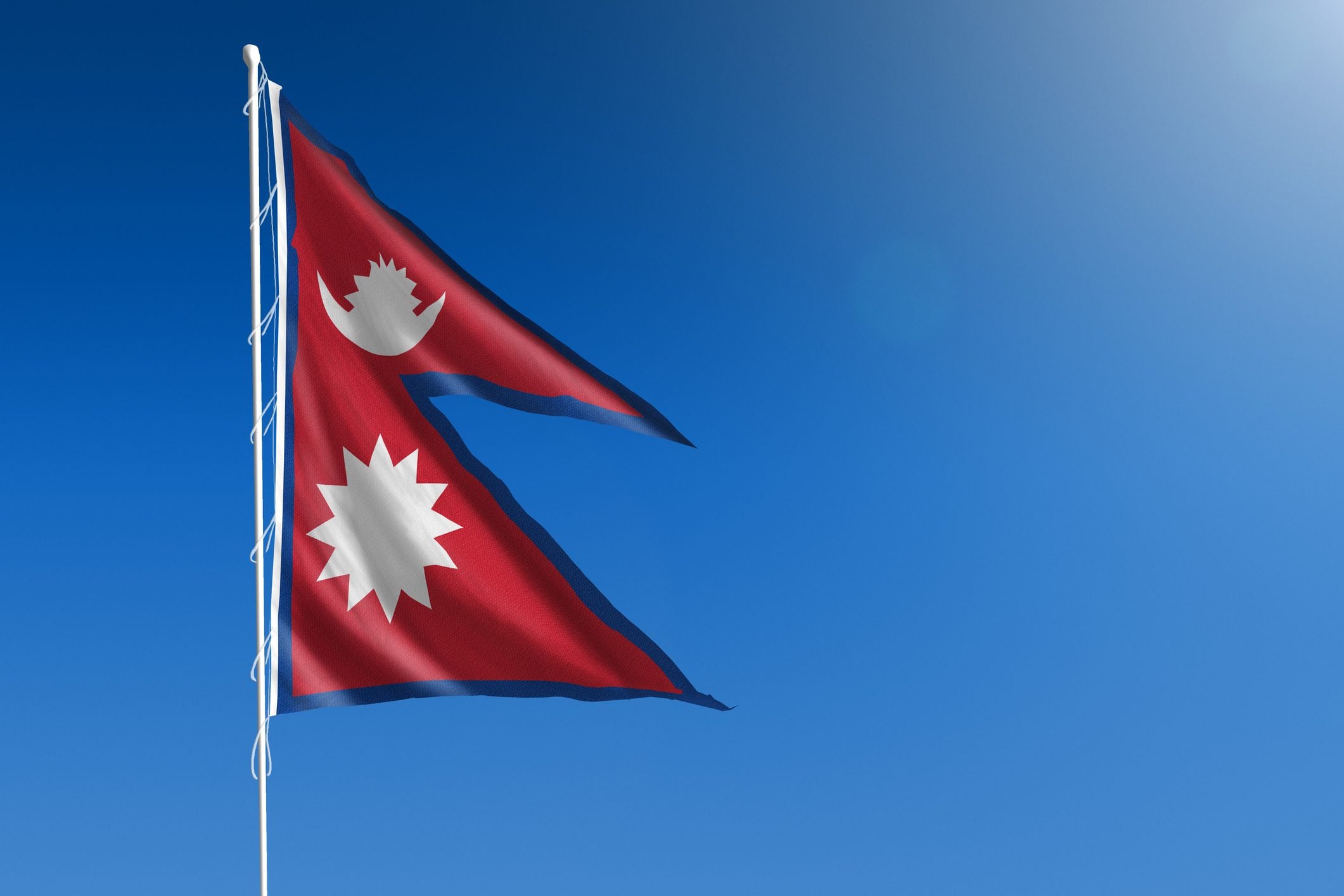
In these days the Nepal is in the spotlight of the international media due to the massive disorders brought by the “revolt of the Z generation”, during which thousands of young people took to the streets to oppose the complaints and corruption of the Nepalese government. In the many services that flooded web and social networks you will certainly have happened to see a national flag with a truly singular shape, not to say unique, since, in fact, it is the only flag of the planet to not have a rectangular or square shape.
The peculiarity of the Nepal flag lies, in fact, in its composite structure: made up of two triangles arranged above each other. The reason for this unusual form? This flag is the union of two triangular flags relating to as many homes of the frog dynasty that ruled the Nepal between the mid -1800s and the mid -1900s. The particular composition is designed to recall the roof of a pagoda (i.e. the tower with a pouring roof typical of Eastern Asia) or the high peaks of the Himalaya, the famous mountain system that includes the highest reliefs of the planet and which occupies the central and northern sections of the country.
The background color is the Creamis, the national color of the Nepal, while the edging is dark blue color, color associated with peace. The two segments of the flag, however, report different symbols: in the upper section a half white moon is represented that ends eight rays; In the lower one, larger in size, a sun with twelve tips is represented.
Both symbols are linked to the families of the Rana dynasty, which ruled the country between the 19th and twentieth centuries, and refer to ancient religious representations that recall the concepts of stability and continuity, in the designer that the Nepal can be solid and lasting as the sun and the moon are.
The modern Nepalese flag, which in its previous version brought over the two symbols of the faces overlap, was officially adopted with the Constitution of 1962, when the frog dynasty was overturned and an absolute monarchy lasting until the nineties of the twentieth century was established.