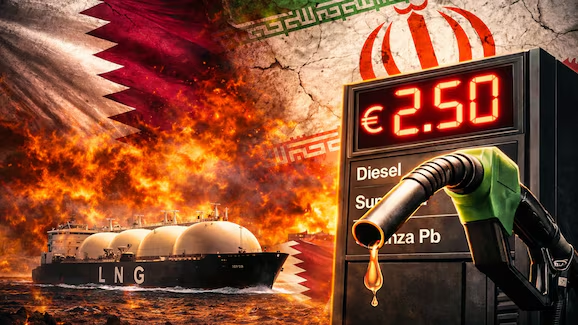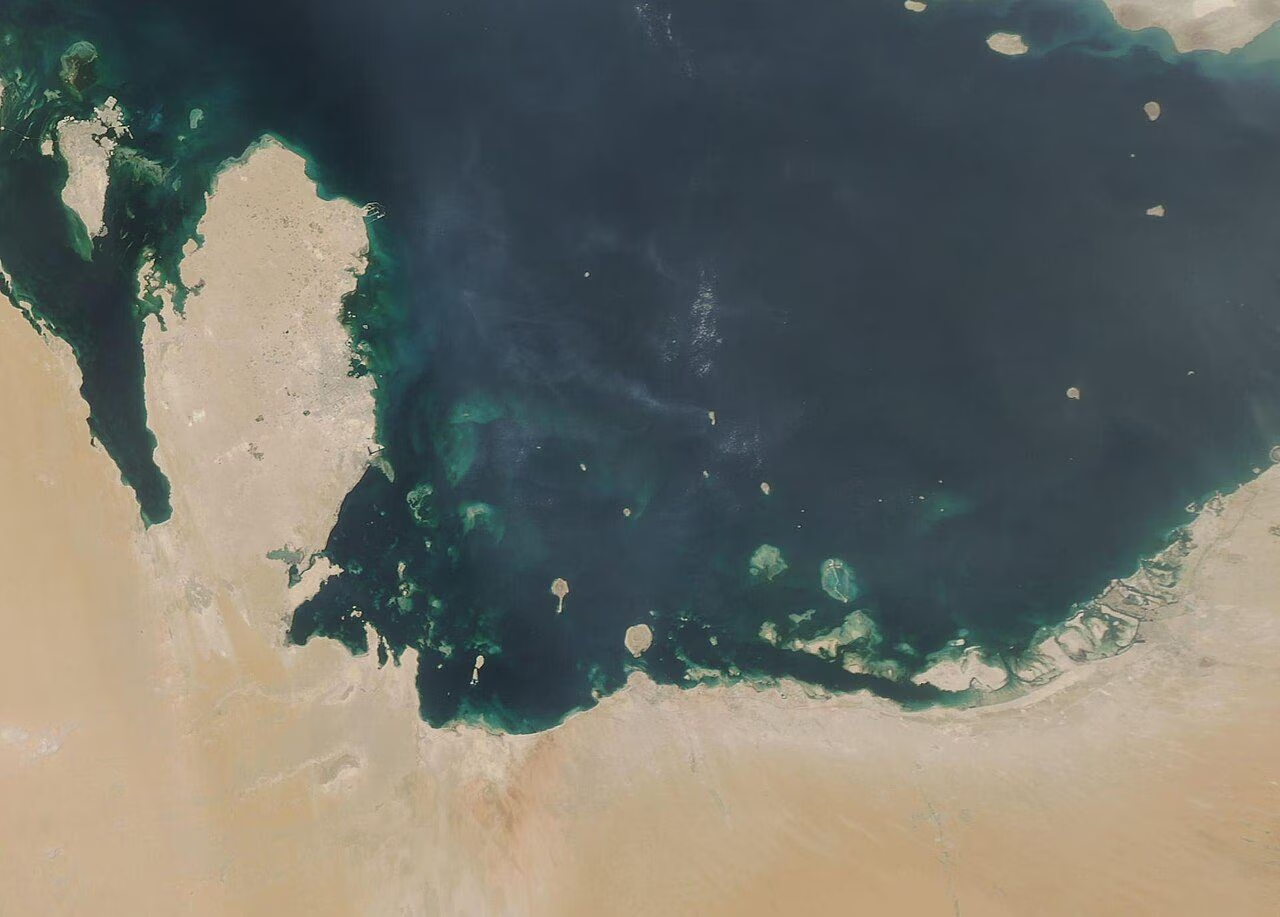
In the context of a possible escalation in the Middle East, particularly in the Persian Gulf, international attention is turned to oil, gas and energy supplies. However, in one of the driest regions on the planet, another vital resource is drinking water, produced largely thanks to desalination plants. Iran accuses the United States of damaging the Qeshm desalination plant in the Strait of Hormuz, reducing the water supply of 30 villages, while last Sunday Iran was also accused of damaging a desalination plant in Bahrain. These infrastructures, which allow the transformation of sea water into drinking water, represent a strategic element both for the internal stability of the Gulf States and for regional geopolitical balances. For many countries on the Arabian Peninsula, in fact, these plants are vital infrastructures: in the event that the conflict spreads further and these plants were partially or totally destroyed, this could cause not only a geopolitical but also a large-scale humanitarian crisis.
Why desalination plants are vital
The Middle East is one of the most water vulnerable areas. According to the World Bank, the Middle East and North Africa region has less than 2% of the world’s renewable water resources despite being home to around 6% of the world’s population. For this reason, since the 1970s, the Gulf countries have invested in infrastructure for the desalination of sea water. Today the Middle East produces most of the planet’s desalinated water: according to the World Bank, the region concentrates over 75% of global desalination capacity. According to analyzes reported by Al Jazeera, over 400 plants are concentrated in this area, making these infrastructures essential for the survival of the region’s major cities.
Where the main facilities are located
Most desalination plants are located along the coasts of the Persian Gulf and the Red Sea, due to the need for the plants to draw from sea water and therefore to be located logistically along the coast. This element, however, increases the vulnerability of these infrastructures in the event of conflict. Among the largest and most important complexes from a strategic point of view are several plants in Saudi Arabia, such as the Jubail plant, on the east coast. This is one of the largest desalination plants in the world and produces around 1.6 million cubic meters of water per day, which is transported via a dense network of pipelines to the capital Riyadh. Another large Saudi plant is Ras Al-Khair, with a capacity of around one million cubic meters per day. In the United Arab Emirates, however, we encounter the Jebel Ali complex, in Dubai. This also represents one of the largest desalination systems in the world. Often these infrastructures are directly integrated with power plants, giving life to a cogeneration system, which produces energy and drinking water at the same time. As a result, any attacks on these facilities could simultaneously disrupt two essential services.
The countries most dependent on desalination
Dependence on desalination varies between different states in the region, but in many Gulf countries it represents the main source of drinking water. According to Al Jazeera and the Institut français des relations internationales (IFri), some states are almost totally dependent on this technology. Kuwait, for example, gets about 90% of its drinking water from desalination, one of the highest percentages in the world. Oman also depends on this technology for around 86% of its water needs, while in Saudi Arabia the share is around 70%. Dependence is also significant in the United Arab Emirates, where around 40-45% of drinking water comes from desalination plants, with much higher percentages in coastal cities such as Dubai and Abu Dhabi. Smaller countries such as Qatar and Bahrain are almost completely dependent on this technology for their water supply. This dependence is also the result of the rapid urban and economic development of the region: metropolises such as Dubai, Doha and Riyadh have recorded extraordinary demographic and infrastructural growth in recent years, with very high water consumption in extremely arid natural contexts.
Water as a new geopolitical resource
Given their vital importance, desalination plants also represent one of the most vulnerable points of the region’s strategic infrastructure, quickly causing a serious water crisis. In fact, unlike other infrastructures, desalination plants require complex technologies and very long times to be repaired or replaced. For this reason, in the context of a possible military escalation between Iran and the Gulf monarchies, these structures are considered strategic assets as much as oil ports, refineries or pipelines. In this context, environmental and water safety become closely connected. A further risk concerns possible attacks on nuclear infrastructures, such as the Bushehr reactor, in Iran. The possible leakage of radioactive material, in addition to contaminating the area, would also have a devastating impact on water, used both in the domestic, agricultural and industrial sectors, thanks to the desalination plants, also generating serious consequences on the fishing sector. If oil has defined the geopolitics of the Gulf throughout the last century, now it is water that could become an equally crucial resource. Increasing water scarcity, exacerbated by climate change and population growth, makes desalination an indispensable technology for the economic and urban survival of the region. In this context, desalination plants are real strategic nodes and their vulnerability represents one of the most important factors influencing the evolution of a possible regional or global conflict. Maritime, air and digital transport in the Gulf could suffer serious disruptions, as could economic and humanitarian security in countries such as Saudi Arabia, the United Arab Emirates, Qatar, Bahrain, Kuwait, Oman.