The paleontological area of Mèze, in Hérault, in the south of France, represents one of the most important European fossil sites dedicated to dinosaurs.
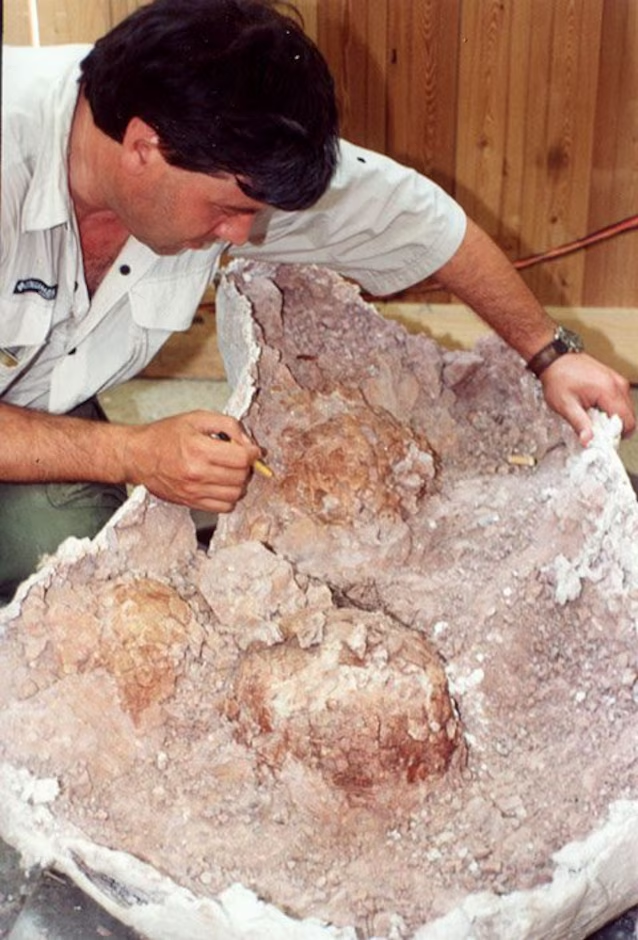
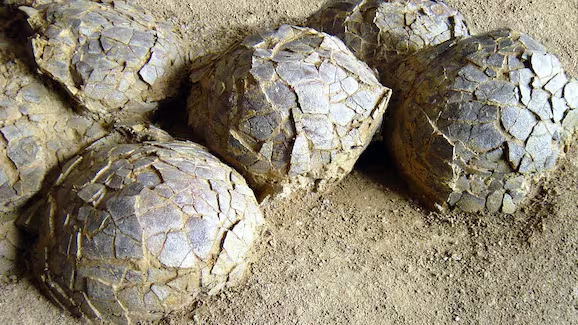
Located in the heart of an ancient deposit dating back to the Upper Cretaceous, the Musée-Parc des Dinosaures et de la Préhistoire was born to protect and enhance an exceptional discovery which occurred in 1996: hundreds of fossil eggs and numerous bone remains belonging to different species of dinosaurs.
The site, covering approximately 50 km², is today considered the largest dinosaur egg deposit in the world, after that of the Gobi Desert in China and that of Montana in the United States, and was recently home to an extraordinary new find that represents a sort of “time capsule”.
The Mèze area allows us to understand what the European landscape was like about 70 million years ago, when the present-day south of France was characterized by a tropical climate, large alluvial plains and waterways where dinosaurs gathered to nest during the Cretaceous.
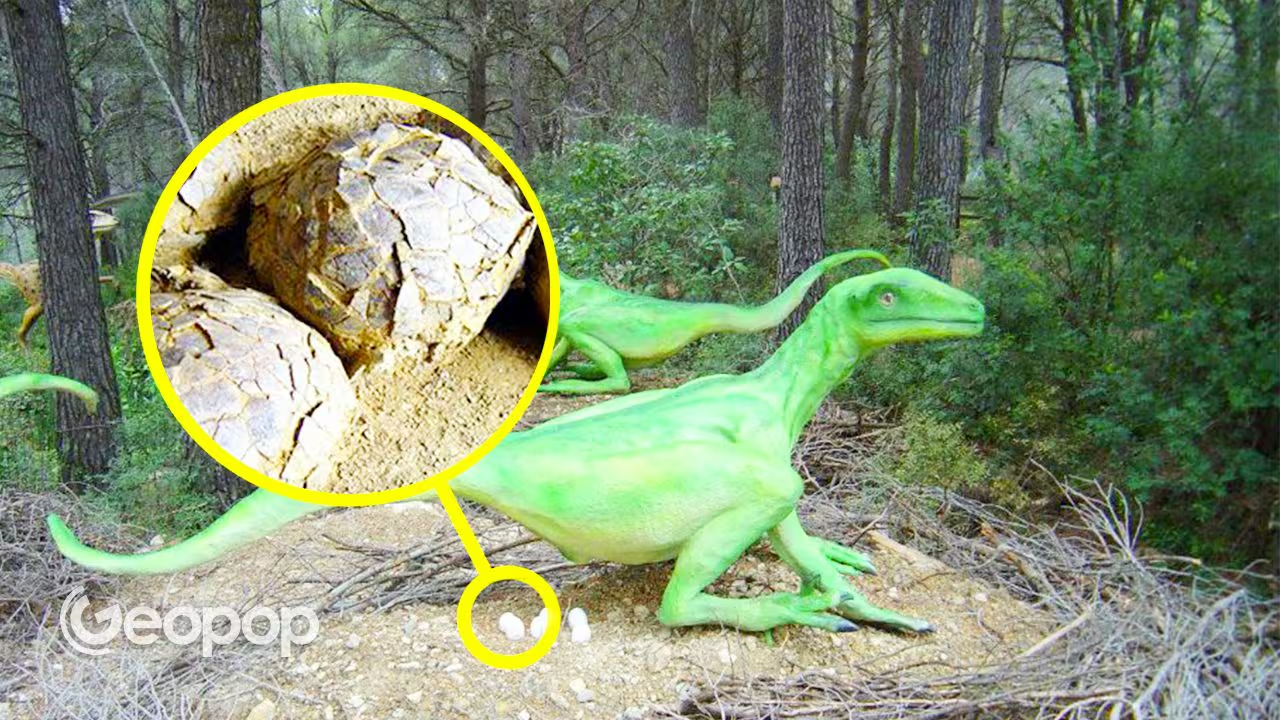
The alluvial plain on which the paleontological area stands today was subject to periodic flooding. The dinosaurs, probably herbivorous titanosaurs, laid their eggs in soft soil near streams and wetlands. When flash floods or sediment flows arrived, the nests were quickly covered by layers of very fine mud. Over the course of millions of years, the clayey and silty sediment then progressively mineralized. Over time the organic materials have thus disappeared, but the structures of the shells and sometimes even the original arrangements of the nests have remained imprinted in the rock.
Paleontological research has led to the discovery of numerous species, including herbivorous titanosaurs, small carnivorous dinosaurs and the rare Struthiosaurus languedocensis, an armored dinosaur identified thanks to excavations conducted in collaboration with the University of Montpellier.
The Mèze museum-park stands out for its informative and immersive approach: the route develops within a Mediterranean pine forest and is enriched by life-size reconstructions, skeletons, explanatory panels and display cases containing original fossils. Approximately 80% of the exhibits on display come directly from the site.
The visit allows you to observe not only the fossil remains, but also the still active excavation areas, offering the public direct contact with the work of paleontologists. In addition to its scientific value, the Mèze site performs an important educational function: through installations also designed for children and families, the museum tells the story of the evolution of dinosaurs, their ways of life, reproduction and hypotheses about their extinction.