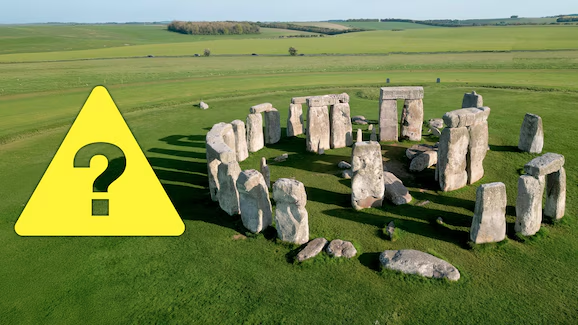
Stonehenge is one of the most famous archaeological sites in the world and, certainly, the most famous example of what were once defined cromlech: imposing monolithic blocks arranged to form a “structure” whose use was probably connected to the cults and funerary rites of the Neolithic period.
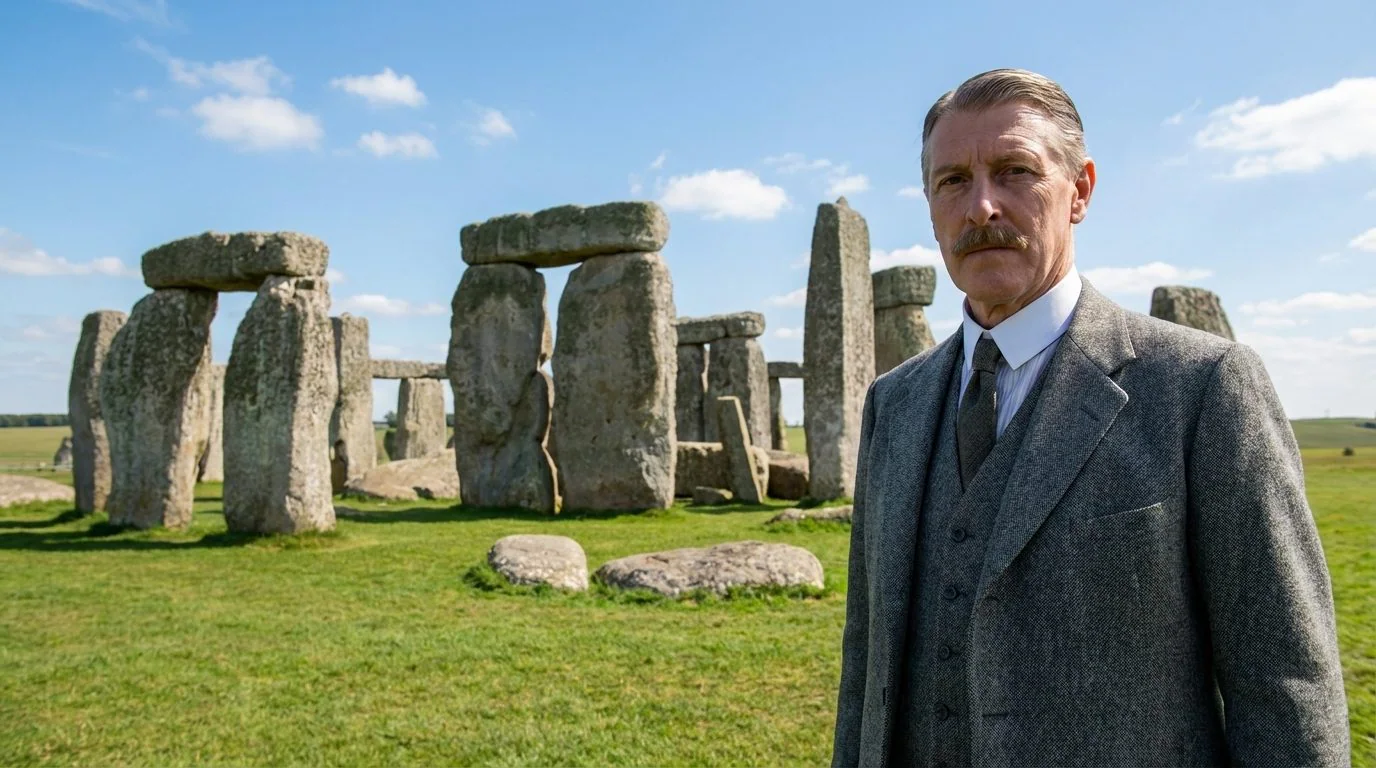
We all know that Stonehenge is located near Amesbury in Wiltshire, UK, about 13 kilometers north-west of Salisbury, but not everyone knows that the site was purchased at auction on 21 September 1915 for £6,600 (equivalent to around £560,000-600,000 today) by Cecil Chubb, a local solicitor. This fact actually constitutes an important turning point for the management and conservation of the famous monument.
Buying at auction
For centuries Stonehenge passed from hand to hand among various members of the English aristocracy. At the time of the First World War, the estate whose territory also included the archaeological site was divided into smaller plots and put up for sale at auction at the Palace Theater in Salisbury.
According to tradition, the lawyer Cecil Chubb, intending that day to purchase some household items to donate to his wife, instead found himself raising his hand for the definitive raise which led him to win lot number 15: 12 hectares of land including, among other things, the megalithic site.
The amount Chubb spent was £6,600. The price, which today may seem negligible, was not at the time, however, and, making a very rough comparison, it could roughly correspond to almost a million modern euros. It must be said that his wife Mary was not at all enthusiastic about her husband’s purchase. In fact, it seems that he had no intention of owning a pile of thousand-year-old stones, and that he would have much preferred a set of curtains or new furniture.
But Chubb was truly resolute: according to some sources, he got involved in the middle of the auction to hinder a possible foreign buyer, thus preventing the territory and the history it contained from leaving the orbit of a local administration. But the real reason that pushed the English lawyer to spend such a sum on a plot of land matters little, because this fact represented a decisive turning point for the fate of Stonehenge.
The conservation of the Neolithic site
Before Cecil Chubb’s purchase, Stonehenge was in fact in disastrous conditions. In addition to the neglect and prolonged damage from visitors, the large monoliths began to be seriously dangerous due to the possibility of collapses and overturning.
But when Chubb donated the site to the British government and the local community in 1918, the situation changed. Having become public heritage, Stonehenge was recovered by the institution Office of Works who restored the structures and started a vast project of archaeological studies and conservation of the territory, to restore the entire area and bring it back to its original conditions. For this, in 1919 Cecil Chubb was awarded a peerage by George V and became Sir Cecil Chubb, First Baronet of Stonehenge (baronet).
The site, now owned by the British Crown and managed by the body English Heritagewas included in the UNESCO World Heritage List in 1986.