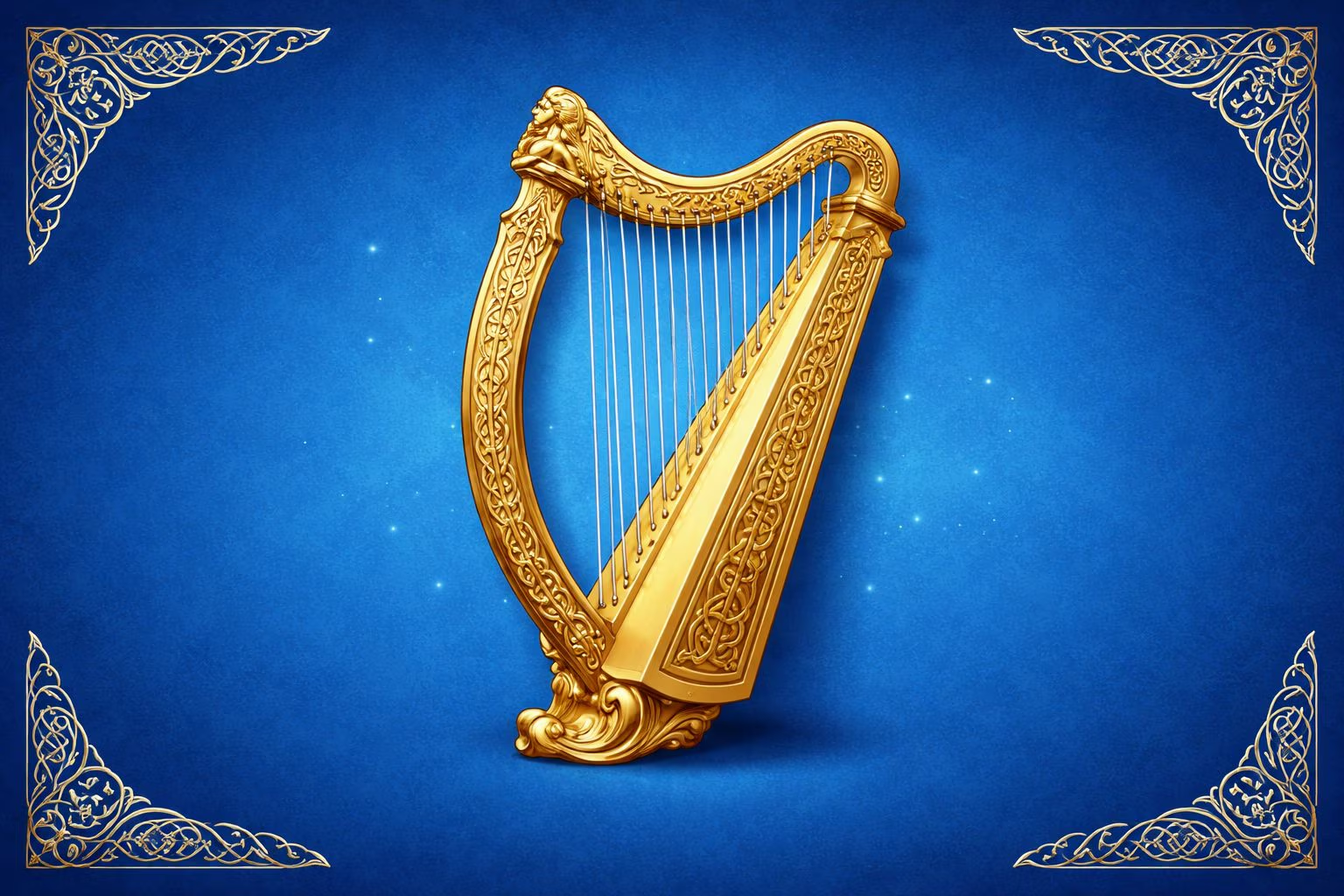
When we think of St. Patrick’s Day (March 17), the image that comes to mind is all green: meadows, four-leaf clovers, dyed rivers and cities illuminated with green light. Yet, for centuries, the color linked to the patron saint of Ireland was not green… but blue, the St Patrick’s Blue, which for many centuries was the true chromatic symbol of the island. In the Middle Ages, in fact, when we talked about the “Kingdom of Ireland”, it was represented with a blue coat of arms on which a golden harp stood out, and the color was not chosen at random: it was chosen because it was considered noble and linked to royalty and prestige.
This shade was then made official in 1783 with the birth of the Order of Saint Patrick, which chose it for cloaks, ribbons and insignia, distinguishing itself from the other orders of the United Kingdom and affirming an entirely Irish identity, despite the political context of the time.
Images of the saint himself confirm this connection: in ancient depictions, St. Patrick does not wear the bright green we are used to at all. His robes often contain blue elements, in continuity with the heraldic blue of the Kingdom of Ireland, making it clear that for centuries blue was the natural color to represent the saint and the nation.
The shift to green as the predominant color came in the late 18th and 19th centuries, when nationalist sentiment in Ireland began to take shape. Movements such as the United Irishmen chose green as a symbol of identity and autonomy, as opposed to the British colours: red and blue remained associated with England and the aristocratic orders respectively. Green recalled the fields and nature of the island and its clovers, and soon became the color of those who claimed Irish identity.
Literature also contributed to this transformation: in the 19th century the doctor and writer William Drennan described Ireland as an “emerald isle”, an image that spread rapidly and consolidated the idea of a magically green Ireland. When millions of Irish emigrated to the United States between the 19th and 20th centuries, they brought with them symbols and celebrations, and green became the perfect color to be immediately recognisable, visible and easy to reproduce, from hats to flags. The March 17 parades grew year after year, turning St. Patrick’s Day into an entirely green popular holiday, and from there “Green St. Patrick” spread around the world.
Well, now you know that Ireland’s history has long been painted blue: from the blue coats of arms and orders of chivalry to the romantic idea of the “Emerald Isle” celebrated throughout the world.