Let’s remember to check our hearing. It doesn’t take much to tackle a problem that weighs heavily on the health of many people. According to the World Health Organization, approximately 1.5 billion individuals worldwide live with hearing loss. That’s a huge number: it means that, on average, almost two in ten people have some form of hearing loss. All of this has repercussions on well-being.
Over the past decade, research has demonstrated more and more clearly how critical hearing is to overall health. According to data from the Lancet Commission on Dementia, hearing loss is probably the largest modifiable risk factor for brain decay because of the way it affects the brain. Furthermore, hearing is essential for maintaining balance: people with hearing loss have a higher risk of falls. So let’s study it as best we can. With a simple and tailor-made screening, which can also be carried out with smartphone headphones.
What is audiometry and how is it done?
To study hearing, a simple test, audiometry, can help to begin to understand that something is not working. The test takes a few minutes and is carried out in a special acoustically insulated cabin to avoid the impact of environmental noise. The person who performs it wears a pair and reports to the examiner whether or not he hears the acoustic stimulus sent. The purpose of the exam is to evaluate the value of the minimum perceived intensity, the so-called hearing threshold, a parameter which lowers significantly in older people.
What technology offers
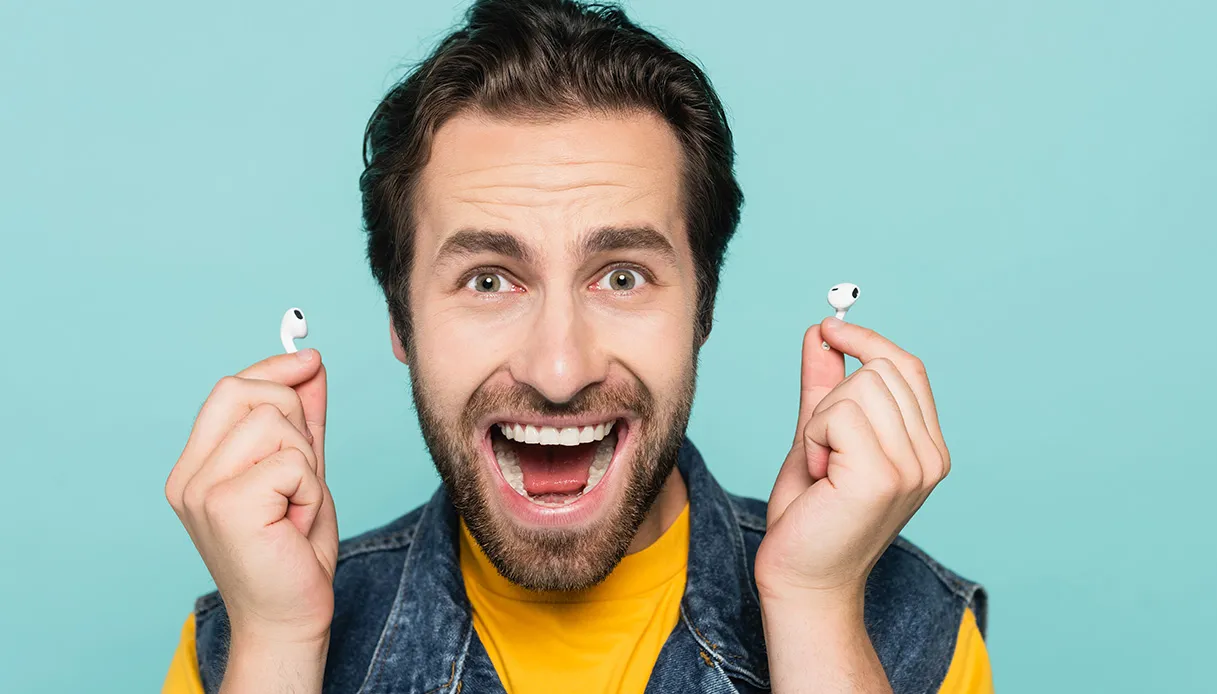
A sort of hearing test, which necessarily requires the opinion of the doctor, can now also be done with smart “headphones”, AirPods Pro 2 or AirPods Pro 3. The test can identify any hearing loss and shows the ability to hear sounds at different frequencies measured in decibels. At the end of the hearing test, the results appear and you can study what to do.
As Frank Lin, from Apple’s Clinical Team, recently explained, there are three possible functions with AirPods Pro, starting from the activation of hearing protection when not yet worn. If you are in a noisy environment – for example on a busy street or in the subway – the system automatically reduces the level of external sounds to keep them within a safe threshold for hearing. The second is precisely the possibility of carrying out a hearing test.
“By using AirPods Pro together with an iPhone or iPad, you can perform a clinical-grade audiogram, similar to what you would do in an office setting”
comments Lin. This is important because many people only take a hearing test at a young age, for example at school, and then do not take it again for many years, often too late. Making this type of information accessible helps identify any problems early. Finally, the use of AirPods Pro is proposed as an acoustic aid in the presence of hearing loss.
“Both the hearing test and assistive features fall into the category of Class IIa medical devices. Hearing protection and testing are already available in Italy; features such as hearing aid are not yet, but we are working with health authorities to make them available as soon as possible. This is a good example of how our work is guided by science: first we identify an area with a real need, then we develop not just one feature, but a set of complementary tools – protect hearing, test it and, when necessary, to support it. This is precisely the approach we try to follow: using scientific evidence to guide choices and develop technologies that can really help people in their daily lives”
recalls Lin.