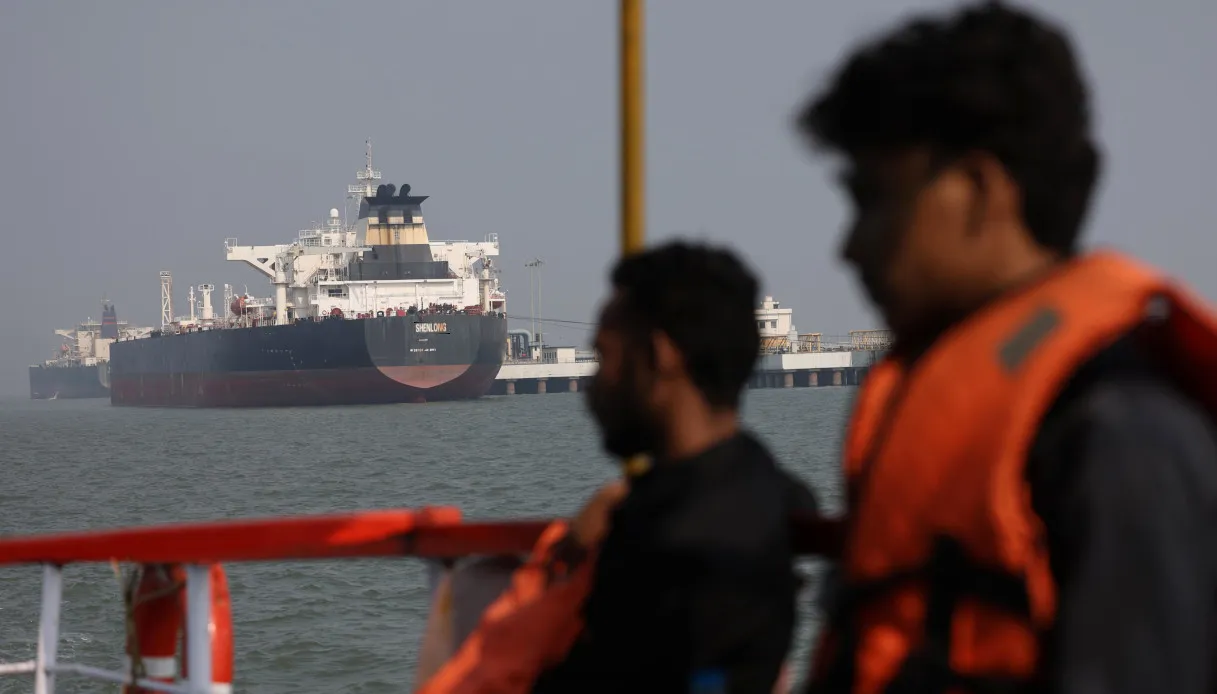
The Strait of Hormuz is one of the most strategic points in the global energy system and its partial closure has caused oil and gas prices to soar.
This maritime passage just a few tens of kilometers wide connects the Persian Gulf to the Indian Ocean and has for decades been the main artery through which fuels from large Middle Eastern producers transit.
Iranian oil continues to flow
Before the crisis that exploded in 2026, around a fifth of the world’s oil passed through Hormuz, as well as a significant share of liquefied natural gas, fertilizers and strategic raw materials such as aluminum and helium. This is why any tension in the region has immediate effects on world markets.
According to analysis by oil tanker tracking companies, oil from Iran has resumed transit through Hormuz in recent days.
Iranian crude oil exports have returned to around 2.1 million barrels per day, levels similar to those before the start of hostilities. However, traffic has changed profoundly. In particular, much of the crude oil exported from Iran today has only one major final buyer: China.
Oil routes after Hormuz
Once past the strait, tankers enter the Gulf of Oman and then the Indian Ocean, from where several global routes branch off. The main destinations of the oil that passes through Hormuz are:
- China – It is the main importer of Iranian oil; an estimated 90% of Iran’s crude oil exports end up in the Chinese market, tankers cross the Indian Ocean and reach the South China Sea;
- India – It is one of the largest energy consumers in the world and is heavily dependent on the Middle East for oil and gas imports with a significant share of crude oil destined for India passing through Hormuz;
- Japan and South Korea – East Asian economies import almost all of their oil from the Middle East, ships cross the Indian Ocean and continue to the Pacific via the Strait of Malacca;
- Europe – Europe also receives oil from the Persian Gulf, but to a lesser extent than Asian countries. Oil tankers circumnavigate Africa passing the Cape of Good Hope before entering the Mediterranean.
Countries that export oil through Hormuz
Several Persian Gulf producers use the strait as their main outlet to global markets. Among the main exporters there are:
- Iran;
- Saudi Arabia;
- Iraq;
- United Arab Emirates;
- Qatar;
- Kuwait.
Because Hormuz is a geopolitical weapon
Controlling traffic in the Strait of Hormuz offers Iran powerful strategic leverage. Blocking or limiting the passage of oil tankers means:
- influence the global price of oil;
- hit the Gulf countries economically;
- put pressure on the United States and its allies;
- strengthen relations with Asian energy partners.
Even if the main energy routes affected by the crisis mainly concern Asia, the consequences have repercussions on the entire global energy system.
For Europe, direct dependence on oil flowing through Hormuz is more limited than in Asian countries, but a prolonged crisis in the strait still causes sharp swings in energy prices.
To try to unblock the strangled bottleneck, the US has launched a campaign to conquer the island of Kharg.