Global markets have also been dominated this week by extreme oil price volatility, driven by fears of a prolonged war in Iran. Brent prices broke through the wall of 100 dollars, reaching overnight peaks of 120 dollars before settling at 107 dollars, with a rally that came close to +38% last week and could reach +10% this week. The critical point remains the Strait of Hormuz: the blockade of exports, reduced to less than 10% of pre-conflict levels, has paralyzed production throughout the Gulf, forcing countries such as Kuwait, Qatar and the Emirates to cut activities. To counter the shock, the IEA approved an unprecedented coordinated release of 400 million barrels from emergency reserves, a move supported by an extraordinary discussion by G7 ministers.
On the diplomatic front, France and Italy are leading an attempt at mediation with Tehran for a “safe passage” of European energy supplies, trying to avoid an escalation. On the other hand, the White House maintains a hard line: President Trump has promised “devastating” military actions for next week, while assuring that transit to Hormuz will resume soon.
Macroeconomic data
Attention is mainly focused on some indicators in the United States in view of next week’s Federal Reserve meeting. The core PCE price index, a measure of inflation, shows a change of 0.4% on the month, in line with analysts’ estimates and the previous month, and 3.1% on the year, as expected by consensus, compared to the previous +3%. However, the estimates for the growth of the US economy in the 4th quarter of 2025 are disappointing. According to what was found by the Bureau of Economic Analysis, which published preliminary data on the quarter for the second time, American GDP rose by 0.7% on a quarterly basis, slowing down compared to growth of 4.4% in the previous quarter and lower than the +1.4% indicated in the first preliminary estimate.
In Europe, instead, attention is paid to the inflation data in February: while awaiting those from the Eurozone, this week confirmed a slowdown in Germany (+1.9% on an annual basis, compared to +2.1% recorded in the previous month), slightly revised downwards in France (+0.6% on a monthly basis, +0.9% on an annual basis) and unchanged at +2.3% in Spain.
The day on the stock exchange
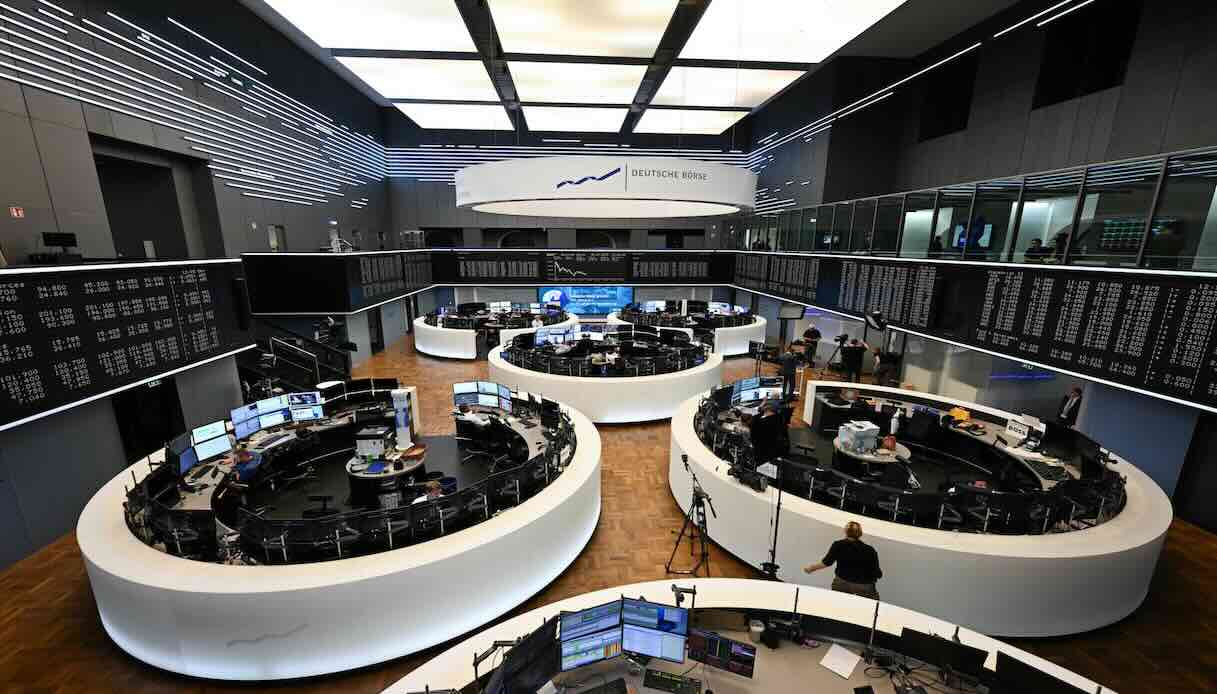
Negative closing for the European stock markets, which had gone green when Wall Street had opened in positive, only to then fall again towards the end of the session. The worsening of tensions on the conflict front in the Middle East weighs heavily. Session in fractional decline for the euro/US dollar, which leaves, for now, 0.66% on the floor. Slight decline in gold, which drops to 5,044.6 dollars an ounce. The spread rises significantly, reaching +81 basis points, with a sharp increase of 4 basis points, while the 10-year BTP reports a yield of 3.78%.
Among the main European stock exchanges, Frankfurt moves below parity, showing a decrease of 0.60%, a moderate contraction for London, which suffers a drop of 0.43%, and Paris, prey to sellers, with a decrease of 0.91%. The Milanese stock exchange closed the session just below parity, with the FTSE MIB shaving 0.31%, continuing on the bearish trail represented by three consecutive drops, in place since Wednesday.
The best and worst titles
Among the best performers in Milan, ENI (+2.69%), Saipem (+2.46%), Enel (+2.36%) and Snam (+2.26%) stand out. The strongest sales, however, hit Stellantis, which ended trading at -4.37%. Sales also concentrated on Fincantieri, which suffered a decline of 3.35%. Prysmian also did badly, recording a decline of 3.08%, and Brunello Cucinelli, which showed a loss of 2.44%.