In some ways, anxiety is a kind of trailblazer. We are obviously talking in a negative sense, given that it increases the risk of developing many other problems, from depression (just to stay with a mental health example) to digestive difficulties and insomnia, not to mention the role of stress on cardiovascular well-being. Social media, especially for young people but not only, can in some way represent both a source of potential risk and a sort of possible solution, if used correctly.
It is in this balance that we need to find the right balance, as reported by research coordinated by Renae Merrill, of the Fulbright College of Arts and Sciences of the University of Arkansas, and Chunhua Cao, of the Faculty of Educational Sciences of the University of Alabama, published in Psychiatry International.
Social media and anxiety, who drives the relationship?
Let’s say it. There are many observations that link anxiety to the excessive use of social media. But we still need to understand what really happens when we analyze this association. For this reason, the research aimed to evaluate what really happens, analyzing a sample of over 2,403 US adults aged between 18 and 30. Anxiety was measured using the scale Patient Reported Outcome Measurement Information System. Emotional support was measured by asking participants how much support they received on popular social media platforms, while personality was measured using the Big Five Inventory, which assesses open-mindedness, conscientiousness, extraversion, agreeableness and neuroticism.
What emerges? It is essentially confirmed that anxiety also increases the risk of stress-induced inflammation, sleep disorders, migraines, negative corporate culture, maladaptive perfectionism, low self-esteem, as well as having a negative impact on academic performance. But it cannot be said with certainty whether the relationship with social media is always negative. Or rather, the direction of this association cannot be determined. Think about it: as a note from the University of Arkansas reveals, it may be that emotional support on social media can reduce anxiety or that perhaps anxiety itself negatively affects perceived emotional support on social media. Suggests gender differences in how emotional support is perceived on social media.
The positive action of social media
What is certain is that emotional support helps to counteract anxiety. In this sense, therefore, even a “mediated” relationship, obviously if not pathological, could help, especially if we consider the “bubbles” in which we move on social media. What is certain is that the well-being of the individual increases when the person is appreciated and above all feels part of a cohesive group, therefore acceptance exists. In person, obviously this perception is particularly important and direct. But even with the mediation of social media it can have its usefulness in making us feel better. The important thing, as research advises, is to take the time to truly understand what others are thinking in order to offer as much positive and meaningful support as possible. Improving perception, communication and emotional awareness, both in person and on social media platforms, is critical to improving health and well-being. In this sense, therefore, social media can be helpful: a recent study has shown how for young people the emotional support deriving from the virtual world of social media is associated with an increase in the probability of reporting a reduction in anxiety symptoms.
Be careful not to be “fake”
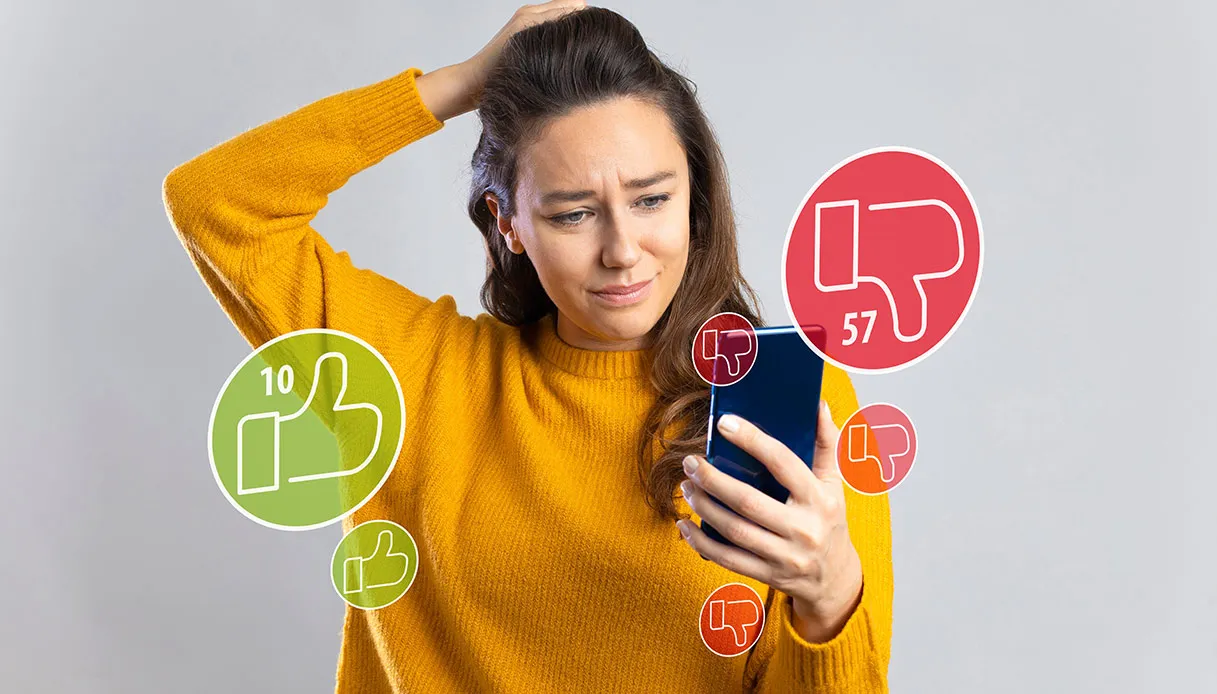
On social media, however, we must pay attention to sharing our perceptions, our moods and our personality traits. And above all, we need the awareness to understand that what we desire is not necessarily what is perceived by those on the other side of the network, reading a thought or reasoning about a reel or a photo. Let us take into account, in order not to find ourselves disappointed or feel misunderstood with an increase in the perception of anxiety, that those on the other side of the screen risk creating an improper, artificial image that does not adhere to who we are.
This was reported some time ago by research coordinated by Qi Wang, director of the Culture & Cognition Lab at Cornell University, published in Plos One. By analyzing Facebook status updates, according to experts, substantial discrepancies emerge between “how we are” and how others perceive us, with more or less gross alterations in personality. In short, what we propose may not be exactly close to the perception we have of ourselves. In this sense the virtual world of social media can be deceiving.