The structural solidity of a building can be compromised by sandy or clayey soil which, after an earthquake or other causes, moves: thanks to Systab, there is a solution for everything.
As regards liquefaction, the typical mechanism concerns non-plastic, loose, saturated sandy or silty soils with a relatively shallow water table; the classic trigger is seismic shaking, i.e. a cyclical dynamic action intense enough to rapidly increase neutral overpressures.
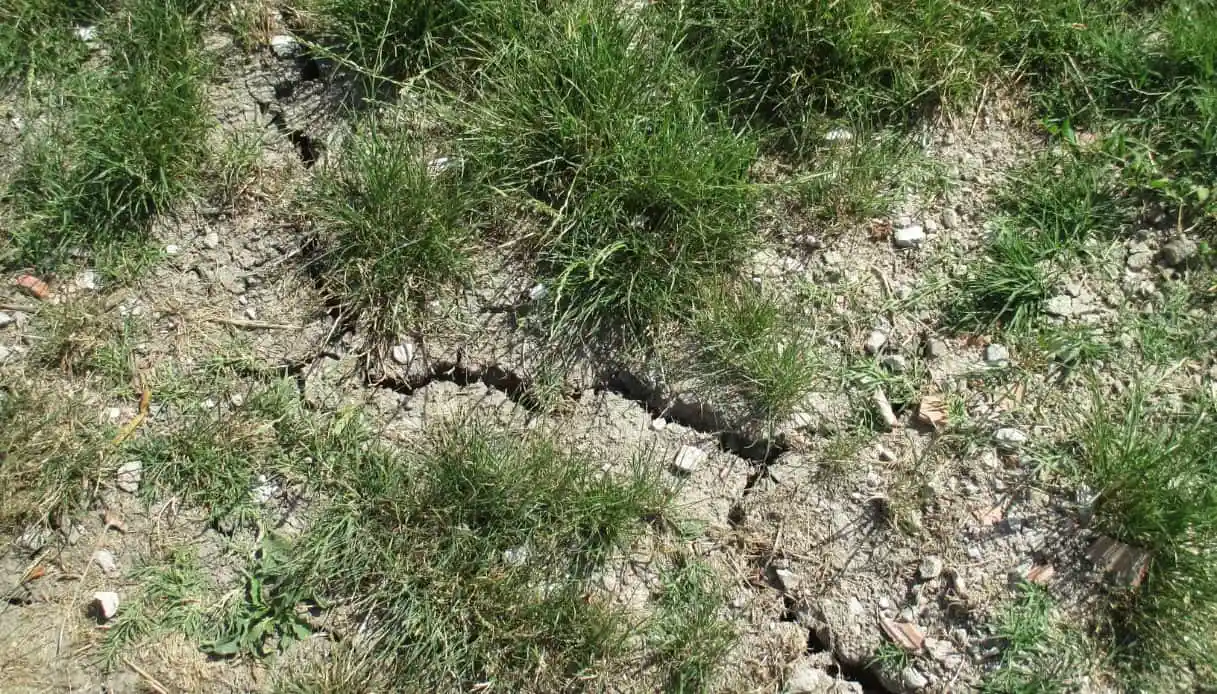
However, liquefaction is a phenomenon, although dangerous, quite rare. Much more frequent, however, are the failures of soils and foundations linked to the presence of clayey soils sensitive to variations in humidity.
When is a specialist evaluation needed?
From a practical point of view, the specialist assessment is appropriate when the building is located in alluvial plains, areas of ancient lakes, estuaries or saturated landfills, or when depressions, sand on the surface, rising floors, inclinations or localized settlements appear after an earthquake.
Paraphrasing the operational indications of ReLUIS (Network of University Laboratories of Earthquake and Structural Engineering), when there is a risk of soil liquefaction, superficial checks are not enough: more in-depth and detailed investigations are needed. Even if there are already general studies on the area, such as those of seismic microzonation, it is still necessary to check the ground precisely where the building is located, because each case can be different.
As regards clayey soils, however, a technical inspection is recommended when the first cracks appear on walls and/or floors or when signs of movement are noticed, such as doors or fixtures that do not function well.
In the event of failures, technicians such as those at Systab carry out an inspection and evaluate the appropriate investigations and checks to understand how the ground and the structure reacts. The interpretation of the crack pattern and the appropriate geological and geotechnical knowledge are fundamental.
Before deciding on any intervention, you need to know very well what happens under the foundations: that is where the stability of the entire house comes into play.
Why are blowing resins a targeted preventative measure?
In the case of existing buildings, injections of expanding resins for foundations have a clear advantage: they work from below, with small diameter holes, without demolition or large excavations.
The procedure involves the insertion of cannulae through the foundation and the incremental injection of a two-component which, by expanding, generates overpressure in the ground, fills voids and cavities, compacts the significant bulb and can reactivate the correct support of the foundation.
During the intervention, the structure is monitored with laser levels; in more rigorous approaches, the control is completed with pre- and post-treatment geotechnical and geophysical tests.
For the prevention of soil liquefaction and settlements in general, the technical point is not to “harden the ground”, but to locally improve density, continuity and response of the soil-foundation node, reducing compressibility and vulnerability to settlements.
The advantages, therefore, are clear: low invasiveness, speed, localized intervention, absence of large excavations and possibility of monitoring the effect during construction.
Systab’s role in these delicate operations
When you are faced with a case of soil liquefaction or foundation failure, there is only one priority: intervening effectively and promptly to make the house safe. Ignoring or putting it off means exposing yourself to progressive damage, which is often more complex and expensive to resolve.
In this scenario, Systab represents a point of reference in the foundation consolidation sector, thanks to a consolidated technical approach and solutions designed to act directly on the cause of the problem. The company operates right where it is needed: in the ground under the building, restoring the stability conditions necessary to guarantee safety over time.
One of the great advantages of this system is its speed: the interventions are generally quick, do not require invasive excavations and in most cases allow you to continue living in the home during the works. But above all, it is a concrete prevention action, fundamental in contexts where the risk of collapse or liquefaction can compromise the safety of the building.