Negative week for the real estate sector, which is affected by more restrictive policies by central banks, which are preparing for a series of interest rate increases to counteract the increase in inflation. After the ECB, which opened the dance last week, the spotlight was on the Federal Reserve, Bank of England and Bank of Japan.
From the Fed to the Bank of England: rates expected to rise
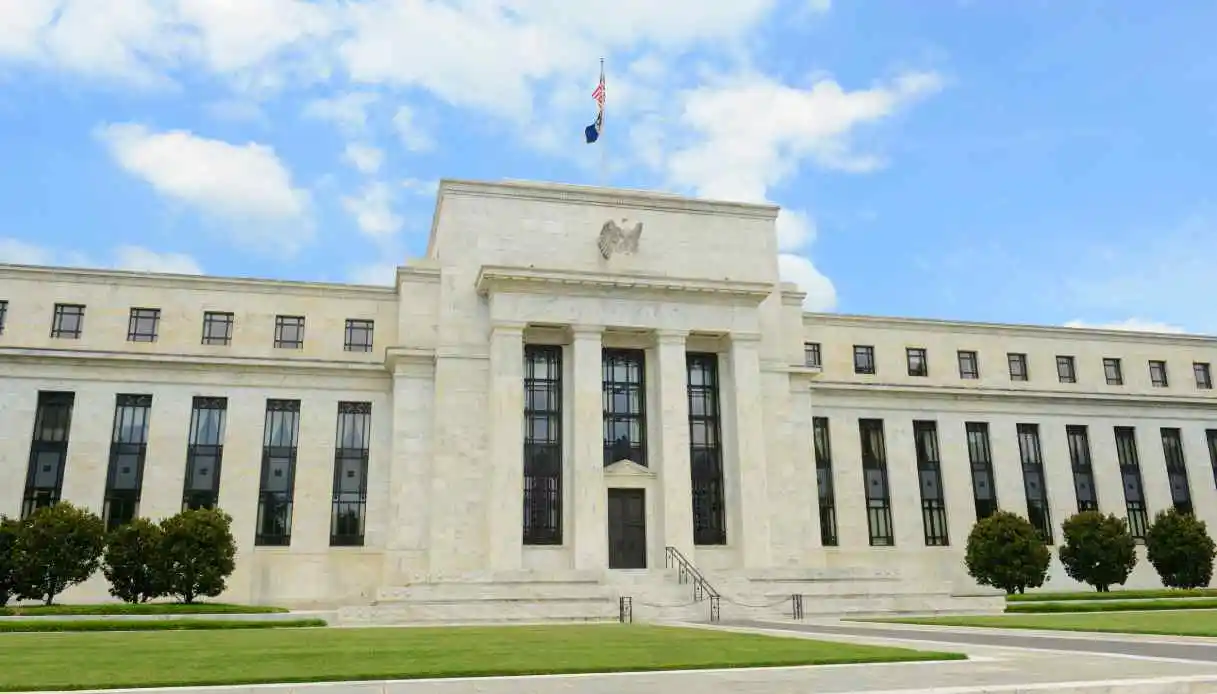
A stalemate was announced by the Warsh Federal Reserve. But although the FOMC voted to maintain the federal funds rate in the 3.5%-3.75% range without apparent dissent, the dot plot representing the expectations of individual Board members showed a clear split. The new president of the US central bank then clarified the scope of his revolution, making it clear that he will put aside the hated forward guidance and that the priority will be to fight inflation and restore price stability. A highly restrictive signal.
In line with expectations, the Bank of England kept interest rates at 3.75%, as it had done since the start of the war between the United States and Iran, deeming it premature to raise them now, given the uncertainty over the extent of inflationary pressures. The decision was voted on by a majority of 7 to 2. External member Megan Greene joined April’s sole dissenter, chief economist Huw Pill, in voting for an immediate increase in the key rate to 4%
The Bank of Japan instead decided to intervene, voting with a majority of 7 to 1, to increase the overnight rate to 1%. Member Asada Toichiro was against the decision, according to whom, “in relation to the impact of the situation in the Middle East, the downside risks for production and employment were greater than the upward risks for prices”.
The macro data of the week
Mortgage applications are decreasing in the United States. In the last week, the index measuring the volume of mortgage loan applications fell by 3.8%, after +10.8% in the previous week. The index relating to refinancing requests fell by 4.5%, while that relating to new applications recorded a decrease of 3.4%.
Istat announced that the seasonally adjusted construction production index increased by 0.3% compared to March, while the average for the February-April 2026 quarter saw an increase of 0.4%.
In the first quarter of 2026, the prices of homes purchased by families in Italy accelerated to 5.2%, favored by the prices of new homes, which increased by 6.7%, and existing homes, which rose by 4.8%.
In the USA, the NAHB real estate market index, which measures the confidence of American builders, fell by two points in June, reaching 35. Sales of existing homes in the United States recorded an increase of 3.8% on a monthly basis in May 2026, compared to an increase of 0.3% in March, while the index on the sale of homes in progress in May rose to 76.8 points from the previous one of 74 points.
The performance of the sector on the stock exchange
The real estate sector on the stock market experienced a negative week, reflecting the more restrictive policies of central banks. The pan-European Stoxx 600 Real Estate index lost 1.54% on a weekly basis.
At the same time, the Italian FTSE Italia All Share Real Estate index shows a decrease of 1.78%, underperforming the FTSE MIB market index which records a very positive balance (+4.32%).
Among the real estate companies listed on Piazza Affari, the best performance is that of AbitareIn which advances by 7% on a weekly basis. The others are all negative with IGD (-0.5%) and Brioschi (-2.6%), Bastogi (-2.8%) and Aedes (-3.5%). The worst is Risanamento, with a loss of 7.3%.









