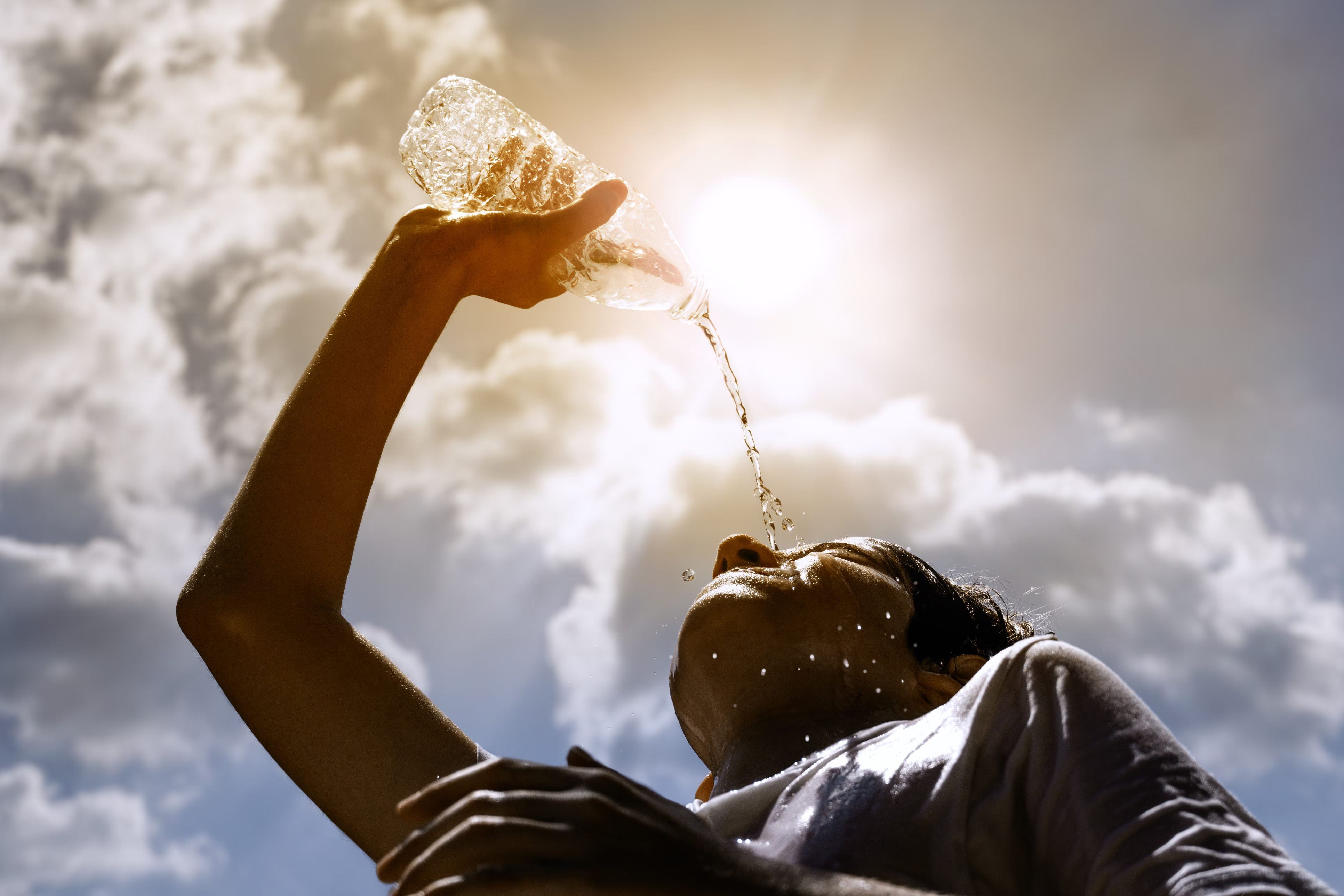
Italy, and much of Western Europe, are in the grip of a new heat wave: as we have seen several times, the blame cannot be attributed to El Niño, but to the subtropical anticyclone which is bringing temperatures 10/12 °C above average, with peaks of 40 °C in several cities. For today, Tuesday 23 June, the Ministry of Health has classified 15 Italian cities as red flags, with the situation expected to worsen tomorrow, 24 June, with 16 red flag cities. The problem is that, during the night, minimum temperatures will hardly drop below 20°C, giving rise to the so-called tropical nights.
But what can we do to best face and prepare for this heat? The Ministry of Health, on its website, has drawn up a list of 10 tips, ranging from the most common – such as drinking lots of water and not going out during the hottest hours – up to more targeted suggestions for improving the home and work environment.
In the meantime, since yesterday 22 June, the public utility number 1500 has been active, available from Monday to Friday from 9am to 5pm and created with the aim of offering listening and information to citizens (especially the most fragile and at risk people) with the aim of mitigating the effects of heat waves on health.
Prevention measures according to the Ministry of Health
As anticipated, the Ministry of Health has developed a list that includes behavioral habits and prevention measures to be adopted to try to reduce the harmful consequences of heat waves. The final objective is to limit the risks for the population and, above all, for the most fragile people (very elderly people, people with health problems, those taking medicines, newborns and very young children).
In more detail, these are:
- Do not go out during the hottest hours, which tend to occur between 11.00 and 18.00/19.00.
- Improve the home and work environment. In this case, the Ministry indicates as the simplest measure the screening of windows facing south and south-west with curtains and blinds (such as shutters) that block the passage of light, but not that of air. If air conditioning is available, its use should be moderate, avoiding regulating the temperature at levels that are too low compared to the outside temperature. A temperature between 25-27°C with a low humidity level is sufficient to guarantee well-being and does not expose you to sudden temperature changes compared to the outside. Fans, on the other hand, accelerate the movement of air but do not lower the ambient temperature: this is why, when the internal temperature exceeds 32°C, the use of the fan is not recommended because it is not effective in combating the effects of the heat. In any case, they should never be directed directly onto the body.
- Drink plenty of water (at least 1 and a half liters per day), moderate the intake of drinks containing caffeine, avoid alcoholic beverages. The Ministry, however, highlights how there are particular health conditions (such as epilepsy, heart, kidney or liver diseases) for which excessive fluid intake is contraindicated. In these cases, therefore, it is necessary to consult your doctor before increasing your fluid intake.
- Follow a correct diet. The dose recommended by the Ministry is 5 portions of seasonal fruit and vegetables per day, moderating the consumption of elaborate dishes rich in fat and favoring fresh, easily digestible and water-rich foods.
- Pay attention to the correct storage of food. Among the Ministry’s advice there is also an important habit, to be applied not only in summer: respecting the cold chain to guarantee maximum food safety.
- Dress comfortably and lightly, with clothing made of cotton, linen or natural fibres, avoiding synthetic fibres. Also protect your eyes with sunglasses with UV filters and your skin with high protection factor sunscreens.
- In a car, you must remember to ventilate the passenger compartment before starting a journey, even if the car is equipped with a ventilation system. In this case, the Ministry recommends adjusting the temperature to values approximately 5 degrees lower than the outside temperature, avoiding aiming the air conditioning vents directly at the passengers.
- Avoid exercise during the hottest hours of the day. For athletes, in particular, it is important at the beginning of the season to gradually adapt to the heat with training sessions of increasing intensity and exposure.
- Offer assistance to people at greater risk (such as the elderly who live alone, non-self-sufficient people) and report any situations that require intervention to the social and health services.
- Give pets plenty of fresh water, avoiding going out with them during the hottest hours of the day and without letting them walk on hot asphalt.
The 16 red-sticker cities and the problem of tropical nights
Bulletins on heat waves are also available on the Ministry of Health portal, in which the famous “red stickers” are assigned to the main Italian cities. For today, June 23, there are 15 cities classified as red dots (which indicates emergency conditions with possible negative effects on the health of healthy and active people), 2 as orange dots and 10 as yellow dots. For tomorrow 24 June the situation should worsen with 16 cities with a red sticker (from Milan, Turin and Bolzano to Ancona, Perugia and Viterbo), 2 with an orange sticker and 9 with a yellow sticker.
The problem is, during heat waves, the heat doesn’t decrease dramatically after sunset. In Italy, in fact, the so-called tropical nights are increasingly frequent, i.e. the nights in which the temperature measured on the ground always remains above 20 °C. According to data collected by ISPRA, in 2024 an increase of 25.2 tropical nights was observed compared to the average value calculated in the thirty-year reference period (1991-2020)
And it’s not just a question of comfort: increasingly higher minimum temperatures have a direct impact on health, with worse sleep quality, risk of dehydration and heat stroke, and also on energy consumption, because air conditioners, dehumidifiers and fans stay on for longer.