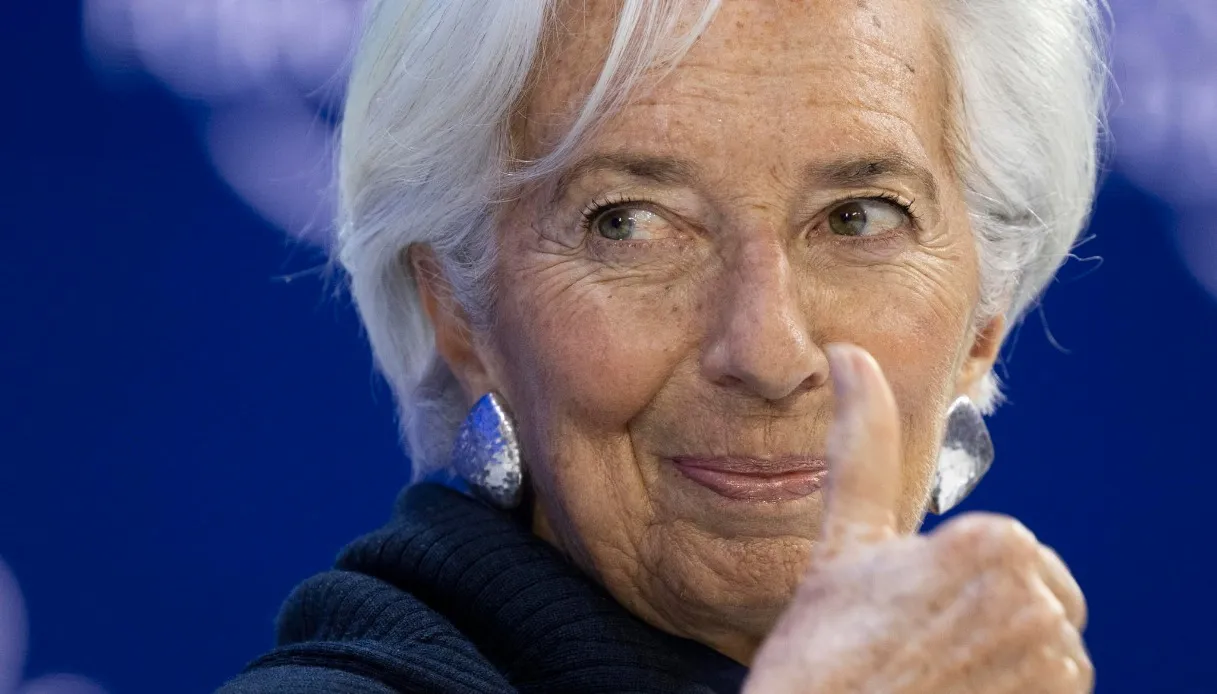
Faced with an uncertain scenario, the ECB reacts with pragmatism. In her opening speech at the usual Sintra Forum in 2026, the President of the ECB, Christine Lagarde, broke with the more recent past: with the “extraordinary” measures and the “forward guidance” to return to relying on the fundamental pillars of monetary policy. The message launched is a manifesto of prudence and stability. The ECB does not intend to make bets on the future or tie its hands with long-term promises. In an unstable world, the central bank’s only certainty remains the 2% inflation target. A return to the past, summarized in a clear slogan: “Back to basics”, guided by concrete data and decisions taken “meeting by meeting”.
The end of an extraordinary era
Over the last fifteen years, the ECB has had to navigate decidedly troubled waters, responding to symmetric and asymmetric crises with unconventional tools: from negative interest rates to massive purchases of government bonds (APP and PEPP), up to long-term liquidity injections (TLTRO). Today, explains Lagarde, that context has structurally changed.
While the Eurosystem’s balance sheet is shrinking at a measured and predictable pace, today’s economic shocks primarily affect the supply side (such as geopolitical tensions and energy costs), rather than the demand side. In this new framework, Europe has demonstrated remarkable resilience, creating the ideal space for monetary policy to return to its main mission: stabilizing inflation using interest rates as the primary instrument.
The June increase is not “precautionary”
A key passage of the speech concerned the analysis of the ECB’s latest monetary policy move, which saw an increase in interest rates at the beginning of June 2026. Lagarde firmly rejected the interpretations of some analysts who had defined the maneuver as a “precautionary increase” (insurance hike).
“It was a decision based entirely on what we had before our eyes,” the President specified. In fact, the staff’s projections showed an increase in overall and underlying inflation (core), with a return to the 2% target postponed only to the last quarter of 2027. Leaving rates unchanged would have meant condemning inflation to remain permanently above the 2% threshold in both 2027 and 2028. The ECB’s reaction was therefore a calibrated and necessary choice, made possible by years of internal investments to improve the reliability of predictive models and macroeconomic data.
The new approach to “Framework Guidance”
The real methodological novelty lies in the management of uncertainty. Lagarde explained that, in a world where geopolitical shocks can change or reabsorb quickly (as recently happened with tensions in the Strait of Hormuz), anchoring oneself rigidly to a single forecast or promising future moves in advance (the old forward guidance) has become counterproductive.
In its place, the ECB implemented the “framework guidance” (guidance based on reaction to different scenarios). The institute now evaluates its decisions based on three criteria well known to the markets: the inflation outlook, the dynamics of underlying inflation and the strength of monetary policy transmission.
By adding alternative scenarios to its analyzes — including milder models if energy prices fall faster than expected — the ECB ensures that each decision is “robust,” meaning justified in multiple future contexts.
The market as a preventative ally
This paradigm shift offers a fundamental advantage: the predictability of the ECB’s reaction function allows financial markets to understand in advance how the institution will react to changing data.
“Monetary policy begins to produce its effects even before an official decision is taken,” Lagarde underlined. This is what happened last spring: when the energy shock resulting from the conflict in the Middle East began to be reflected in inflation expectations, market rates began to self-correct and tighten as early as March, giving the ECB the time necessary to collect further data before the Governing Council meeting in June. A mirror mechanism to what happened in April 2025, when the markets had initially overestimated the impact of US tariffs, only to then realign when the ECB maintained a wait-and-see posture, closing the easing cycle at 2%.